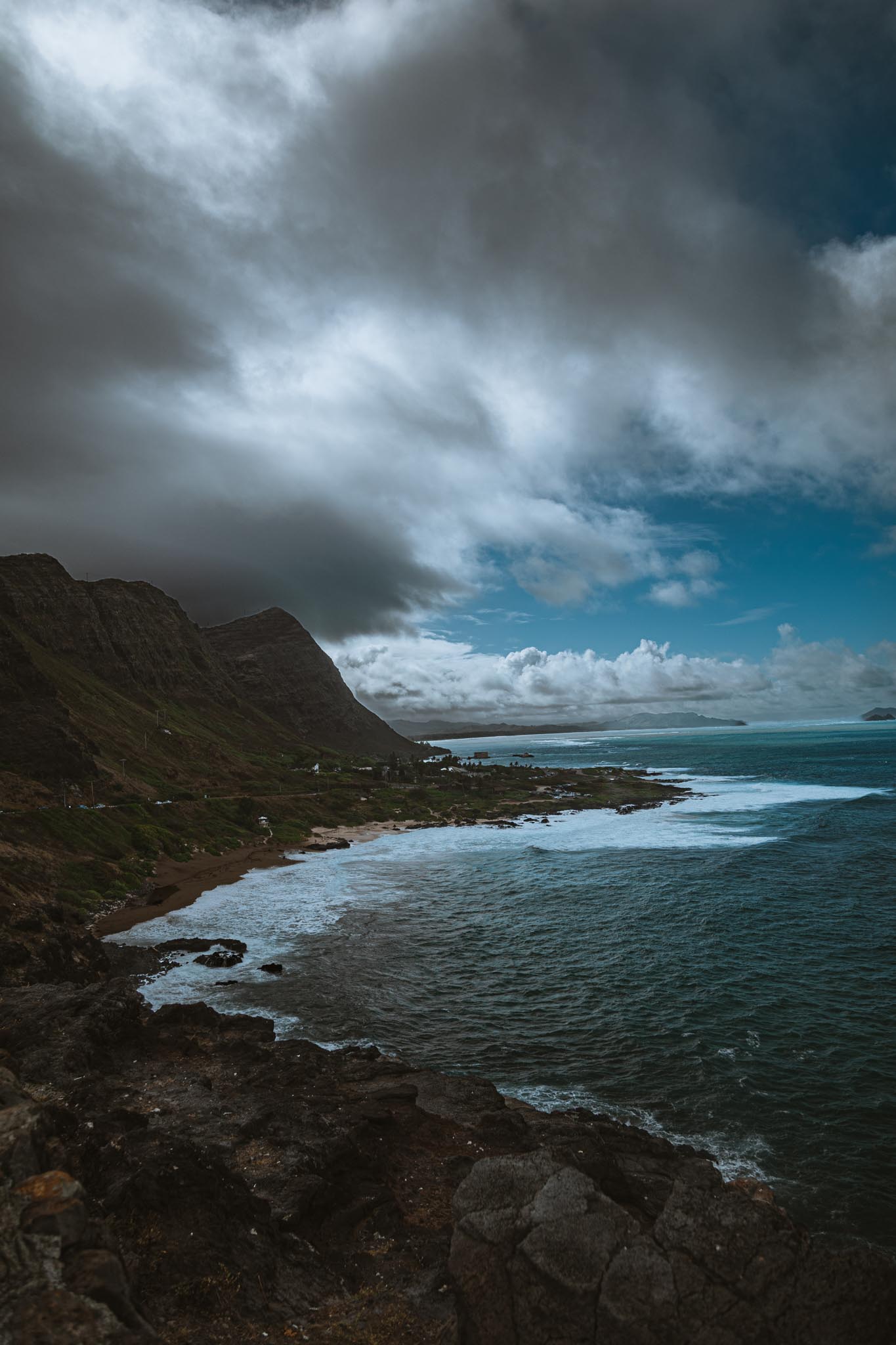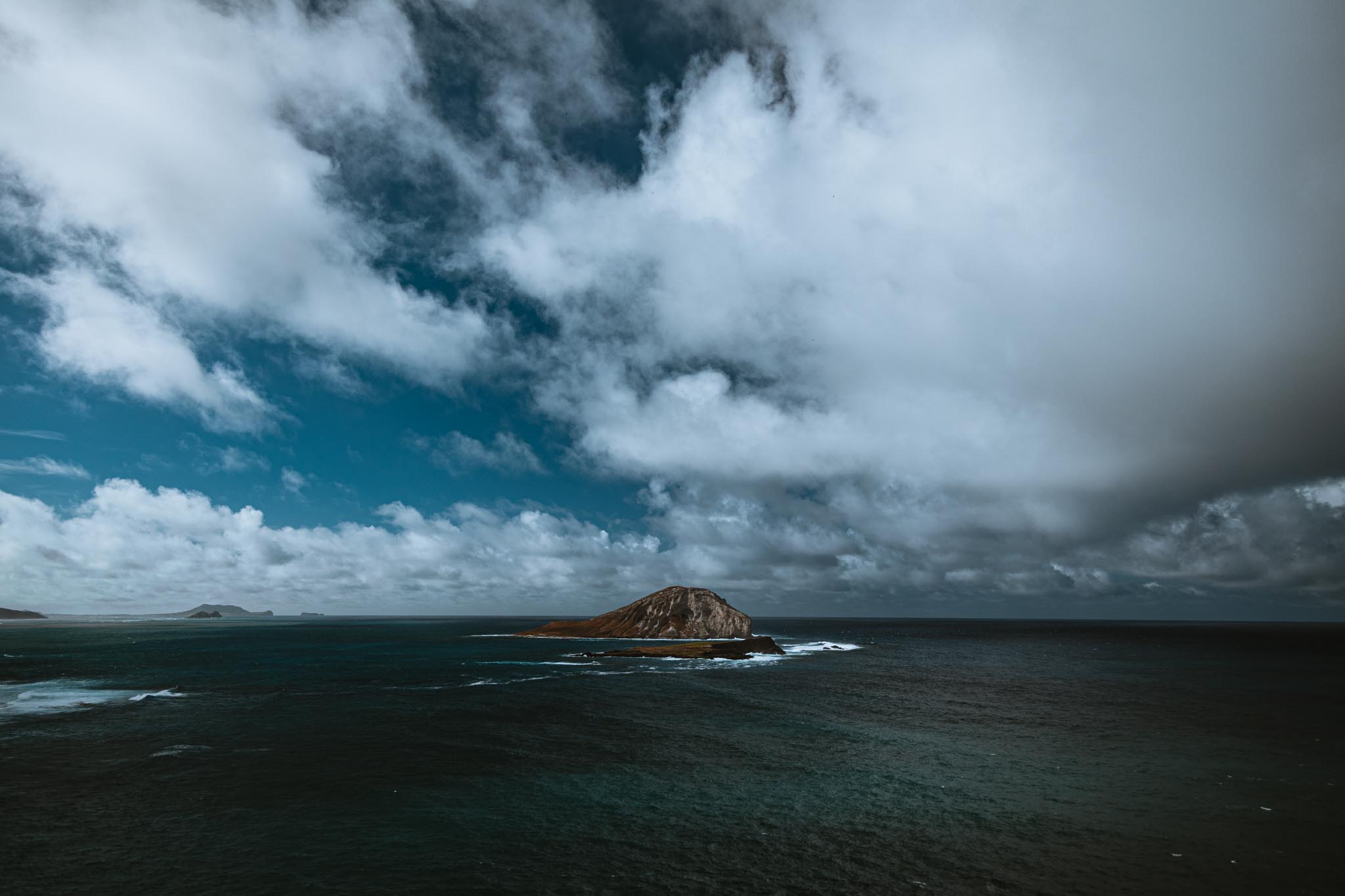
Rabbit Island under storm clouds off Oahu

OAHU

Field record - 06 entries 21.4389 N, 158.0001 W R6 - RF 24-105L - Sigma 150-600 Colour = now - Sepia = then

Orientation

where this happened
C1 - Pacific context
NC2 - Sector Oahu
10 km
AO 21.4389N / 158.0001W - grid ref island-wide

Geology

Active erosion laid over ancient volcanism - and the myths that explained both before the geology did.
01 / 06
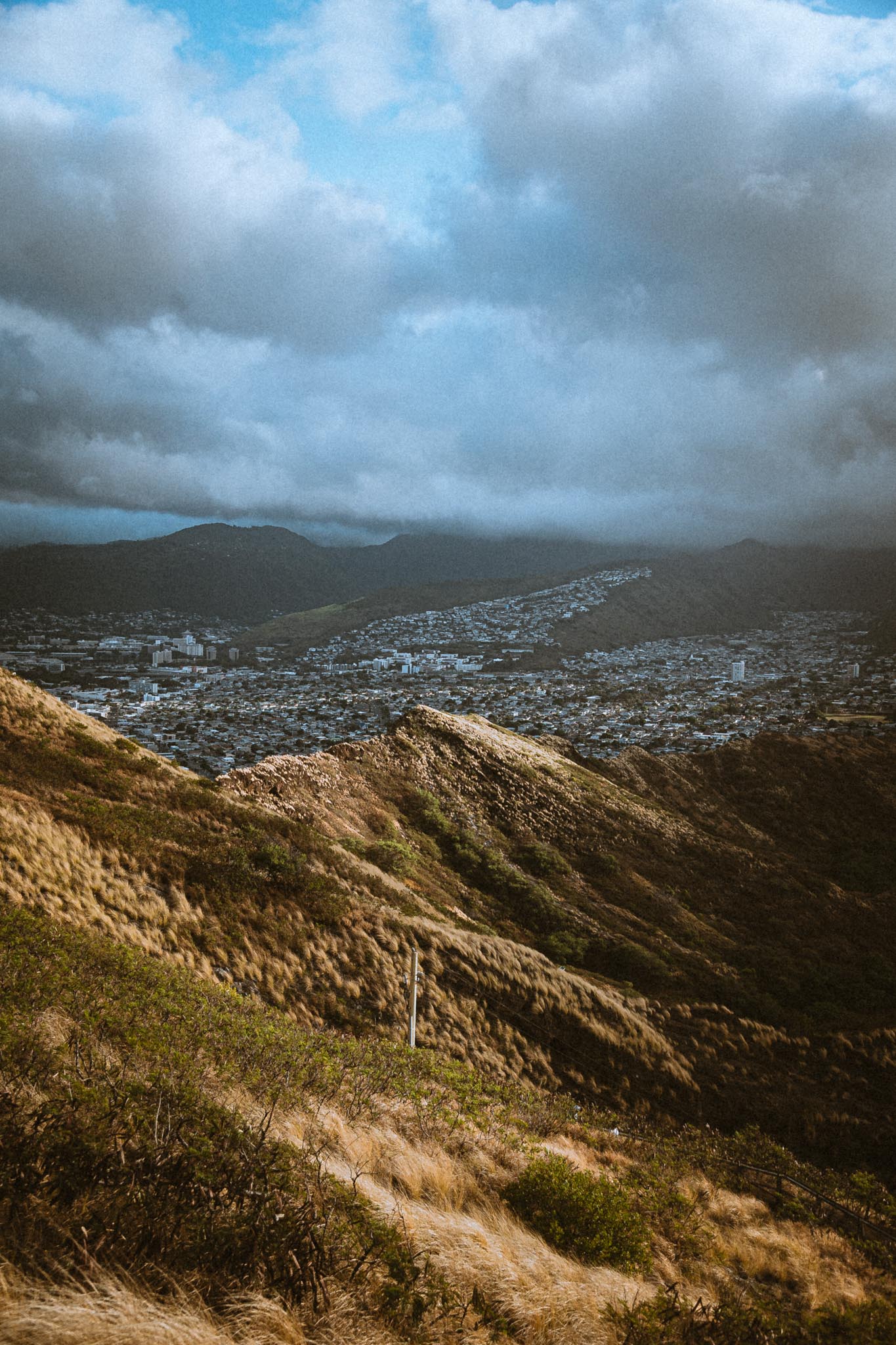
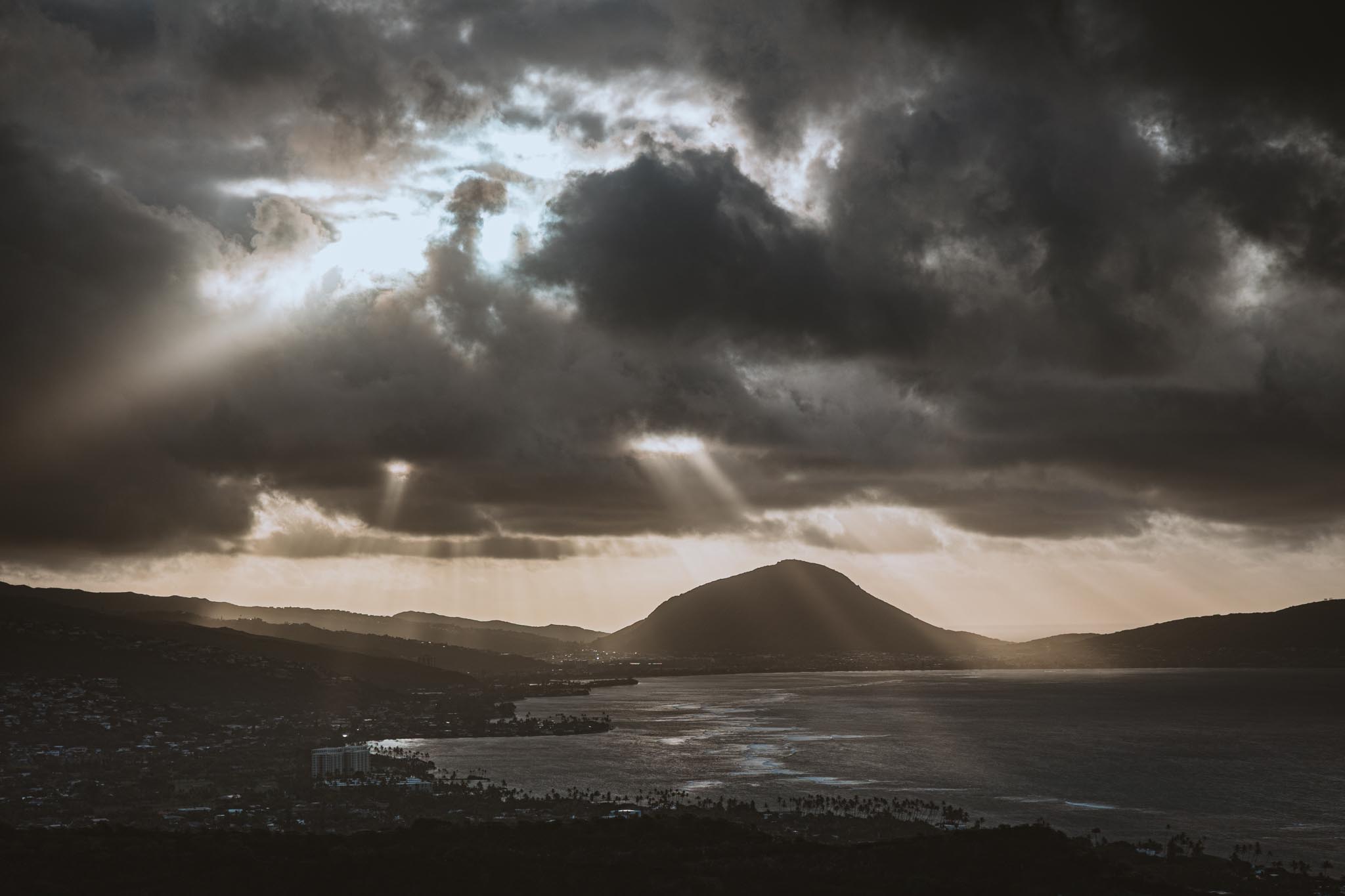
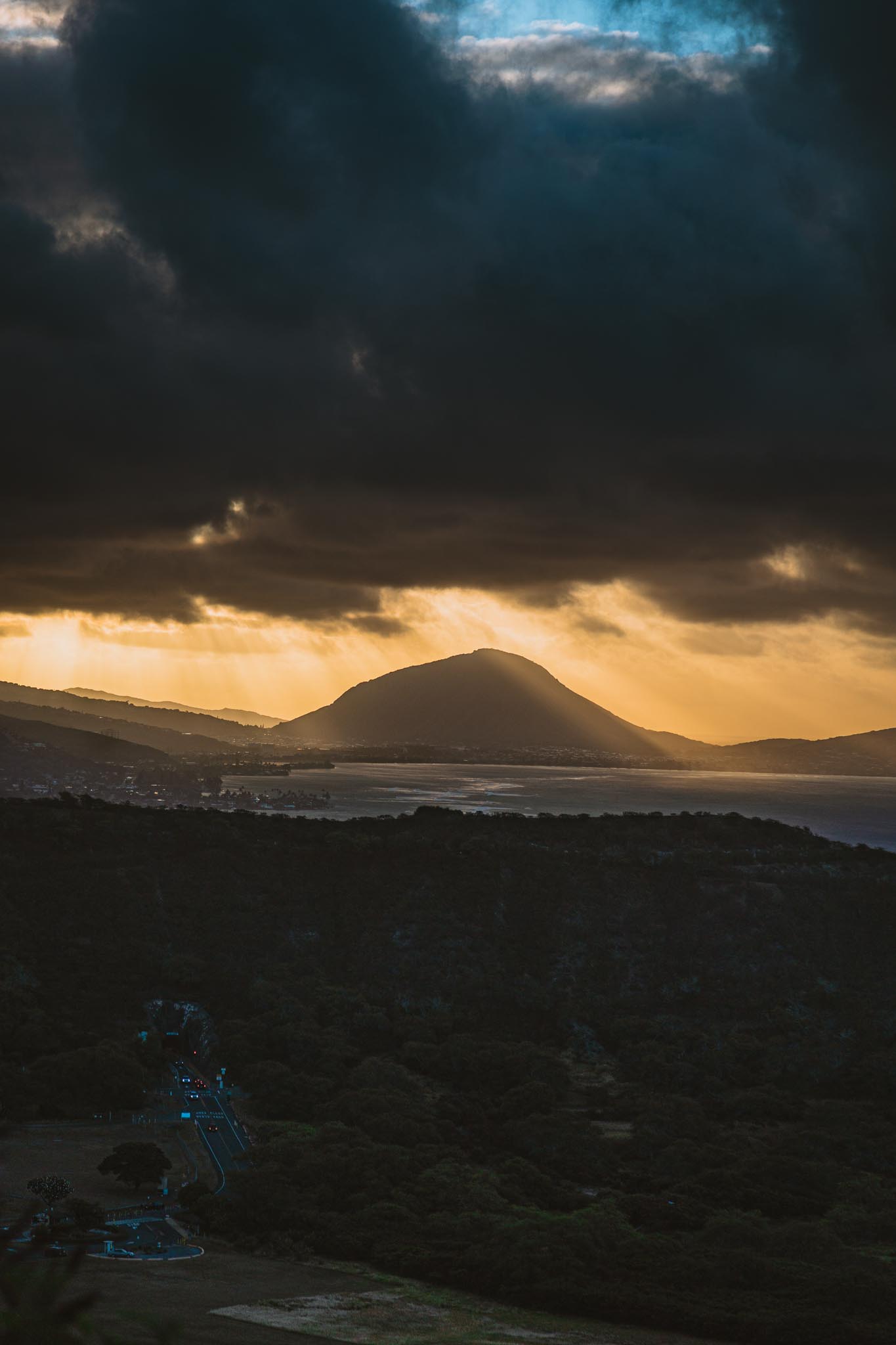
Crepuscular rays over the ridge
Leahi - Diamond Head Named by Hiiaka for the brow of the ahi. 21.2620N 157.8057W - PL-01 - 2024
Layered ridgelines fading into haze
Leahi - Diamond Head PL-01b
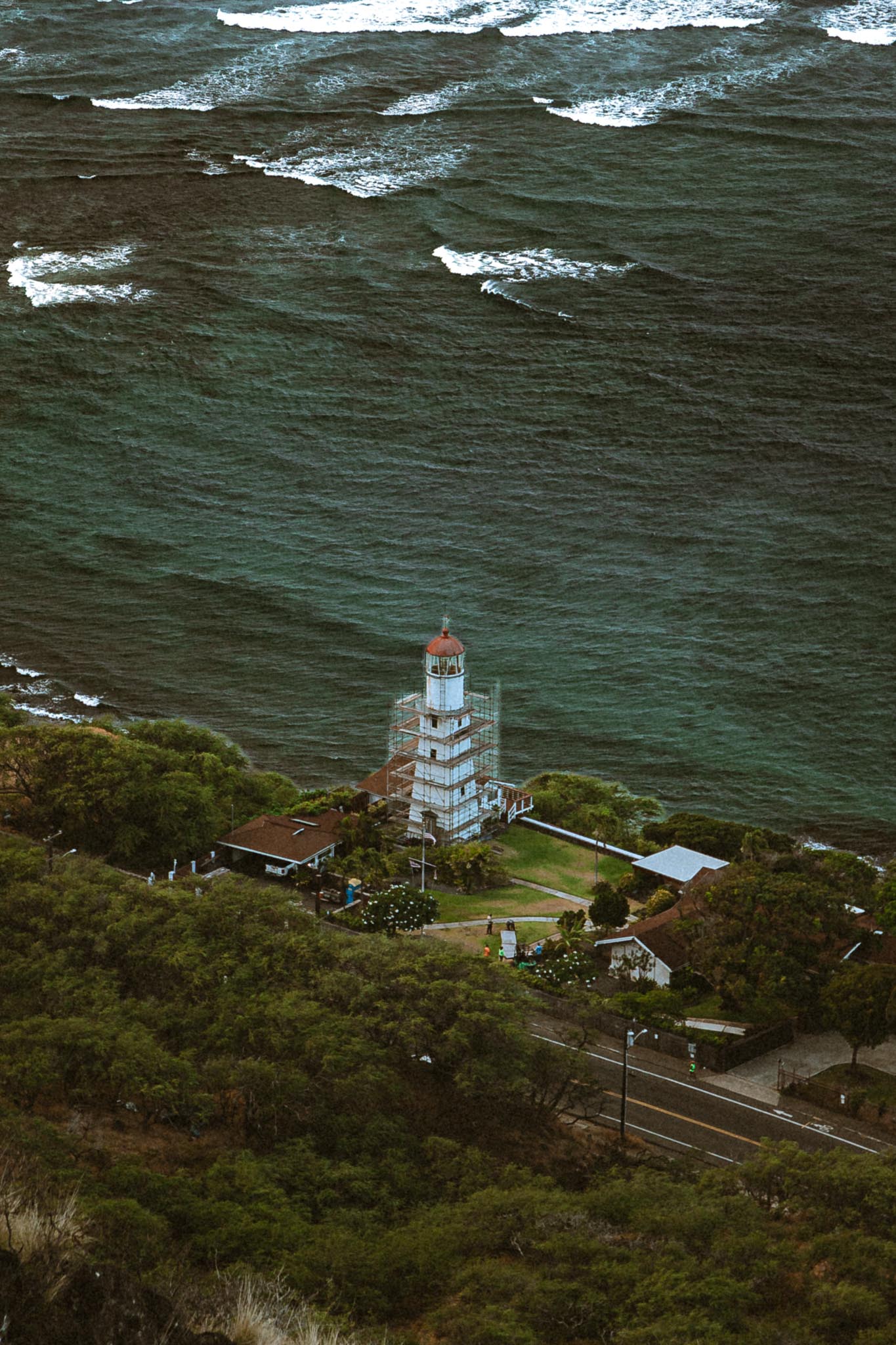
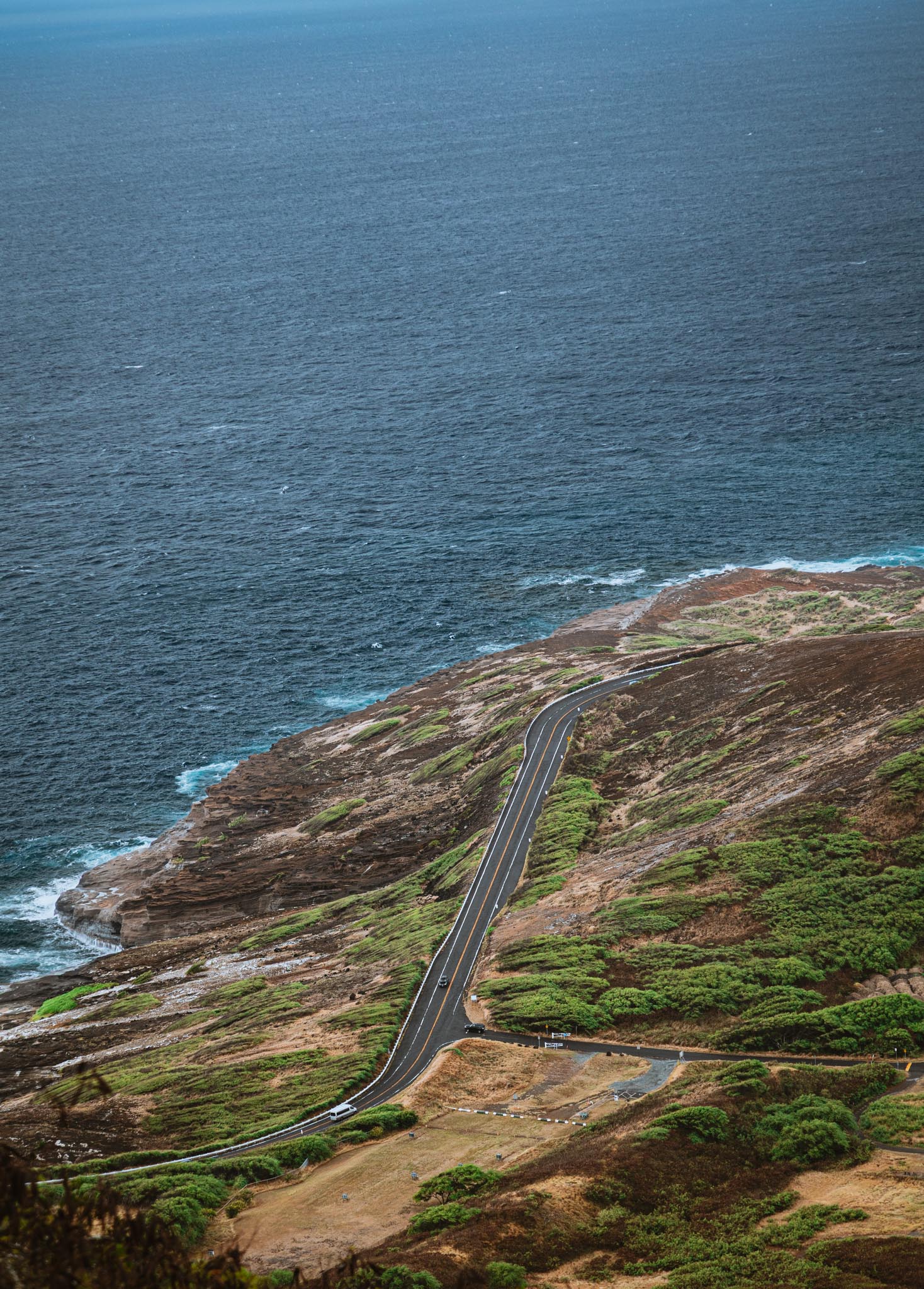
Makapuu lighthouse from the overlook
Leahi - Diamond Head PL-01c

tuff cone, 300ka

Leahi - Diamond Head

Storm light broke over the ridge for maybe twenty seconds - long enough to catch the rays cutting through cloud and landing on the bay below. Oahu's peaks are the eroded remains of a shield volcano that went quiet roughly two million years ago; the light just makes the timeline feel closer than it is.
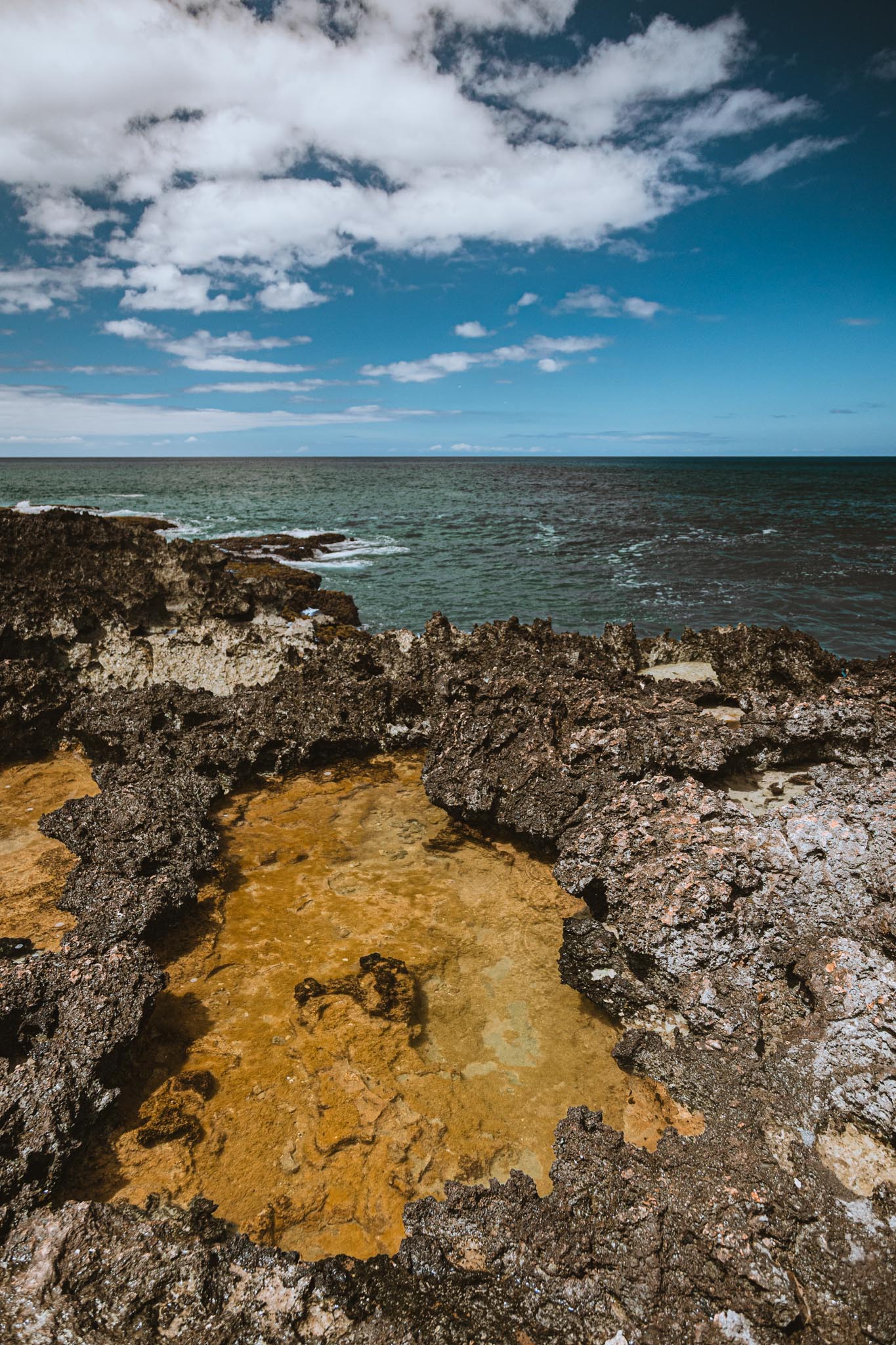
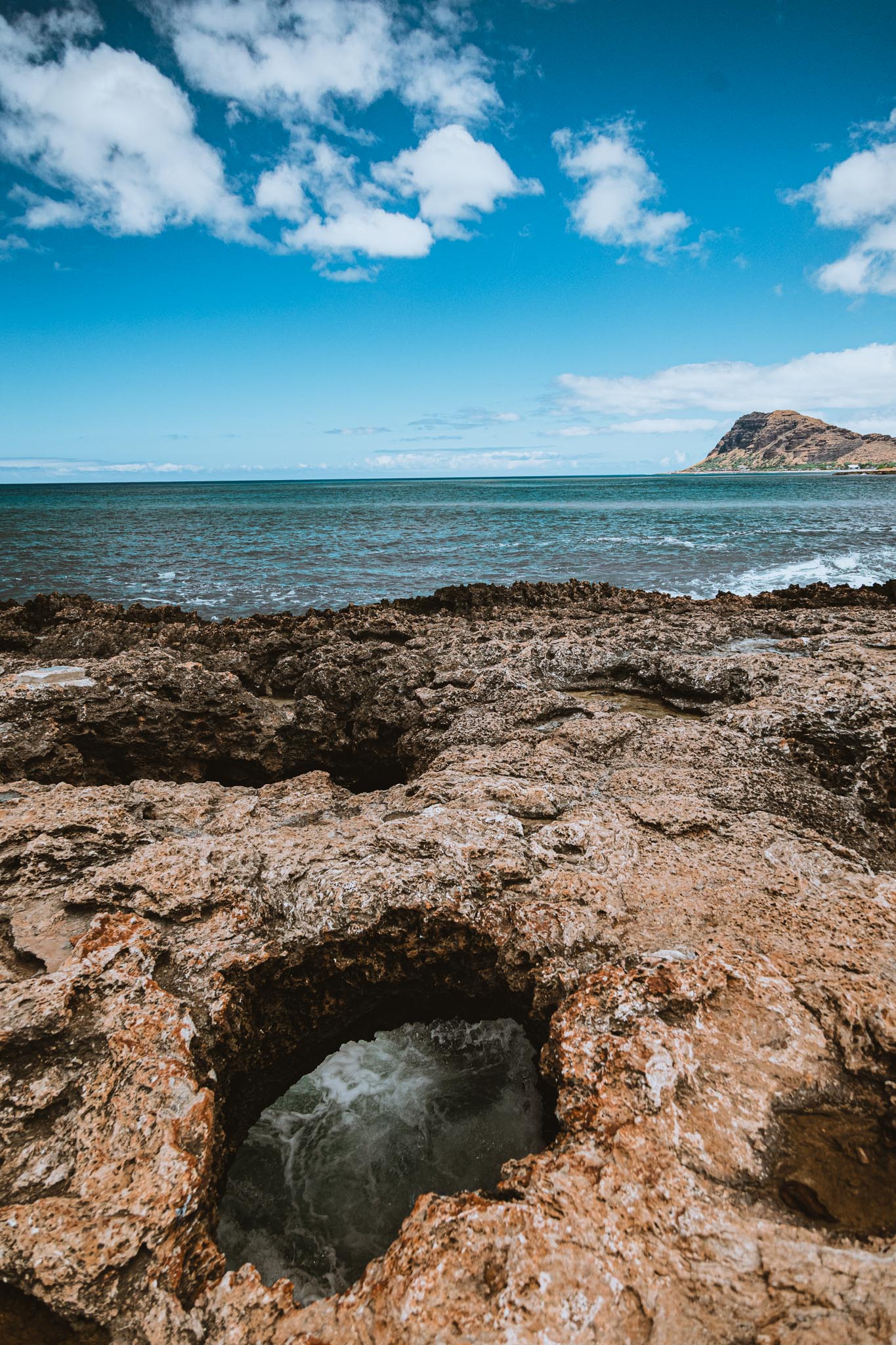
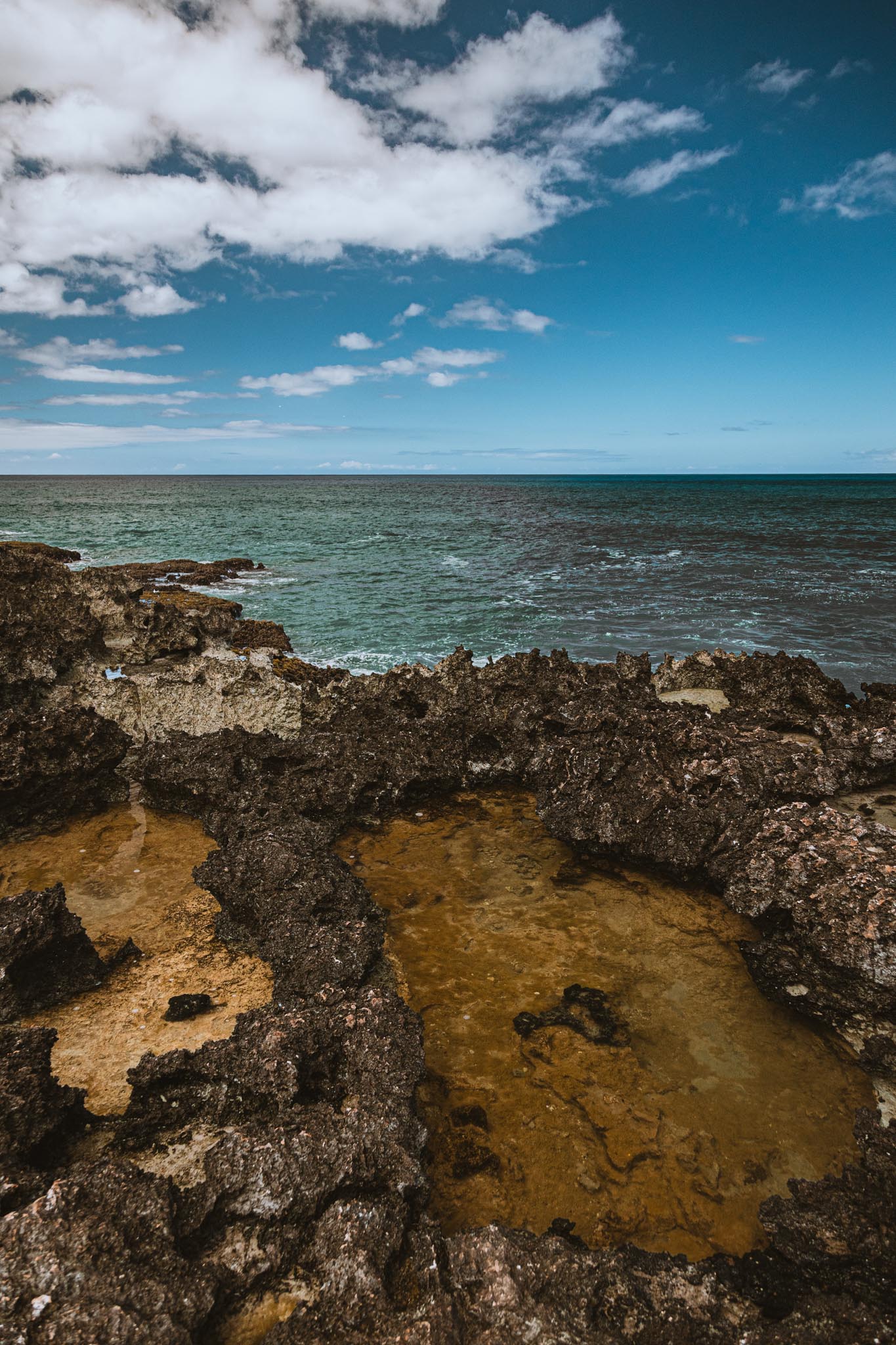
Rust-gold tide pool against black lava
Tide Pools, Southeast Shore Fe-oxide weathering of tholeiitic basalt. 21.2810N 157.6890W - PL-02 - 2024
Natural hole in the rock shelf
Tide Pools, Southeast Shore PL-02b
Tide pool shelf and distant peninsula
Tide Pools, Southeast Shore PL-02c
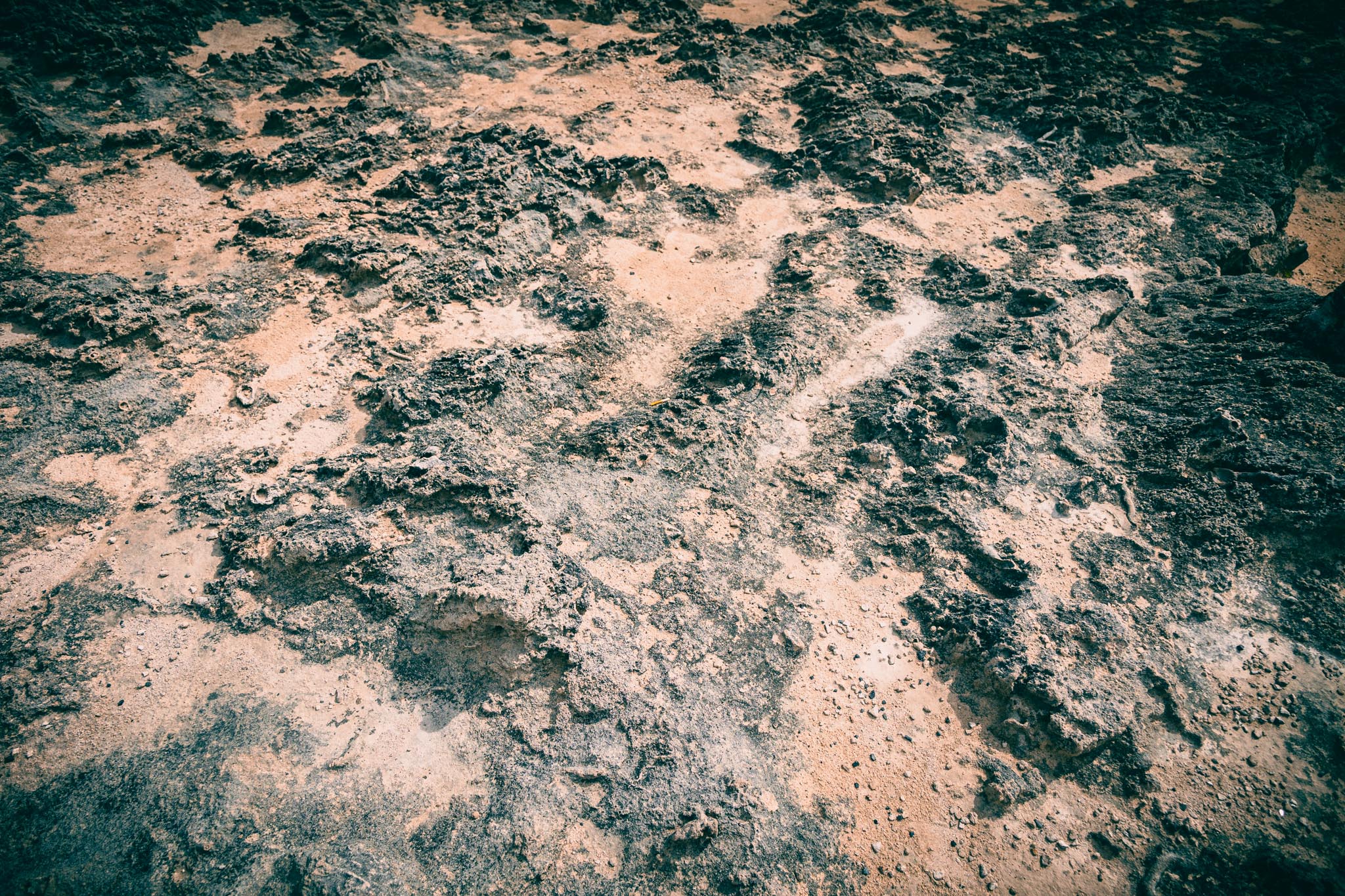
Foam patterning a shallow lava shelf
Tide Pools, Southeast Shore PL-02d

iron oxide staining

Tide Pools, Southeast Shore

The rust colour staining these rocks is iron oxide, leached out of the basalt as seawater works it over centuries. What looks like a paint spill is the island slowly rusting - the same reaction that gives the palette of this whole archive its first accent.
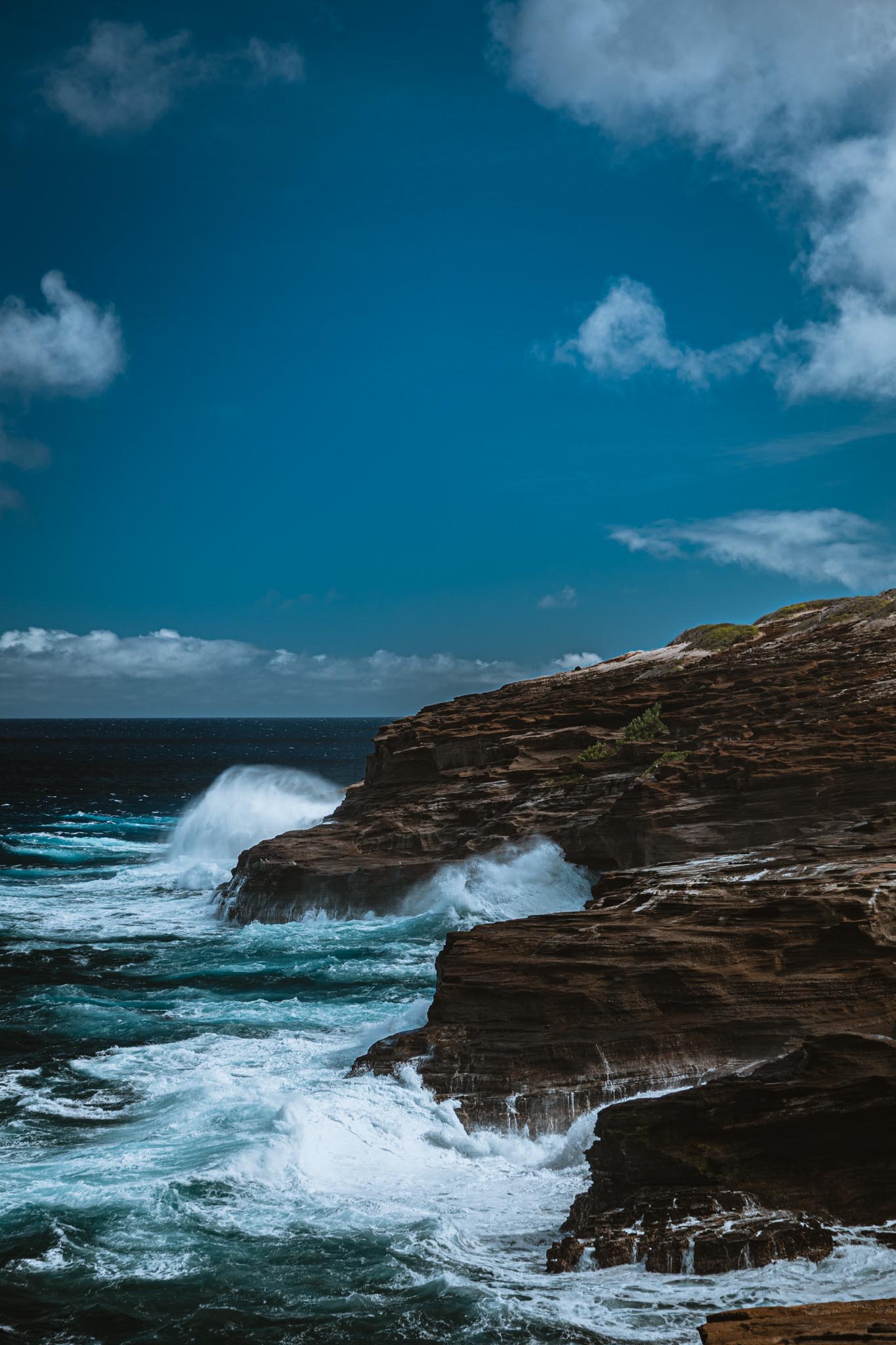
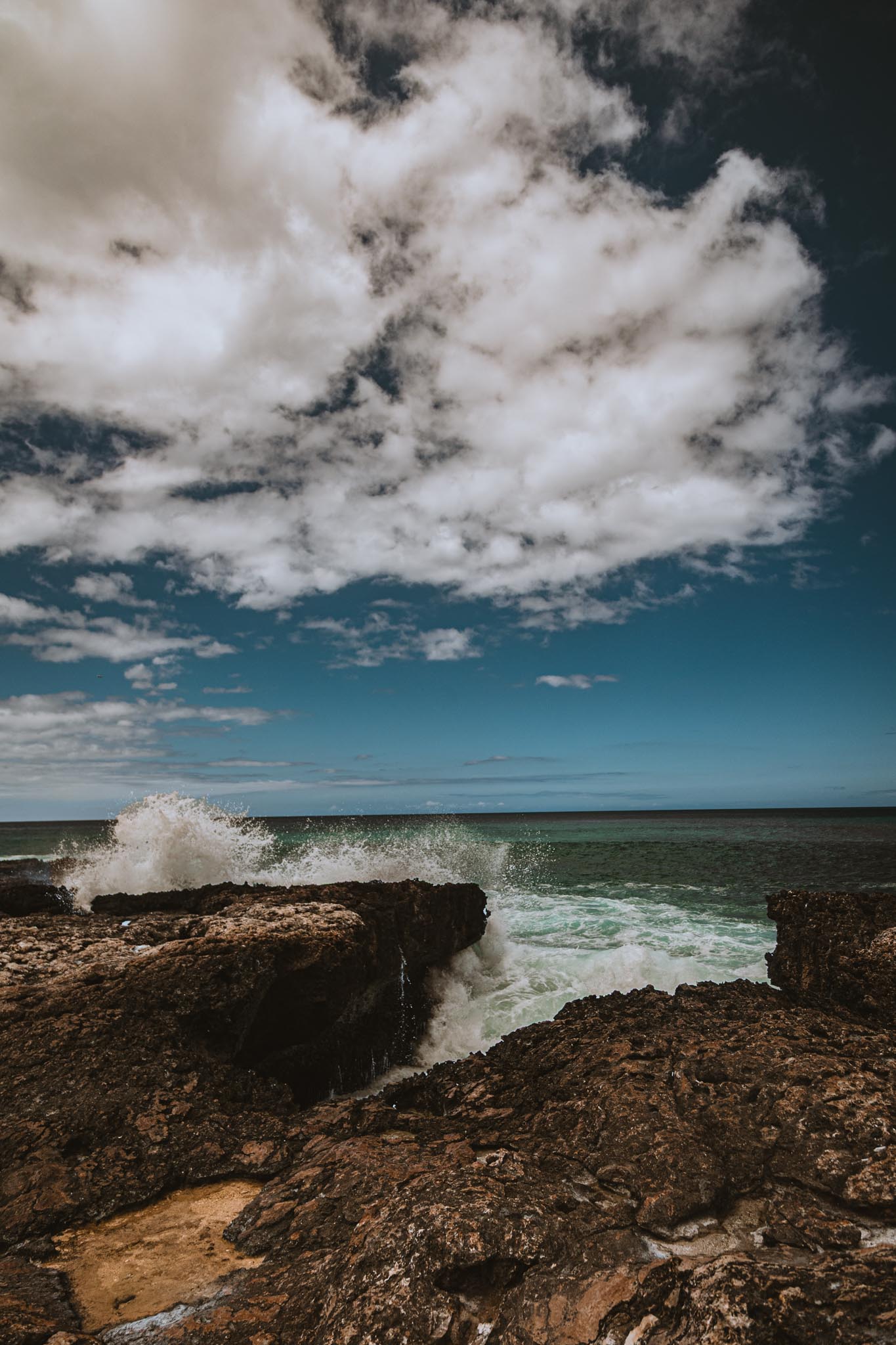
Wave at peak impact against lava cliff
Halona Blowhole Spray reaches ~30 ft on a good set. 21.2810N 157.6800W - PL-03 - 2024
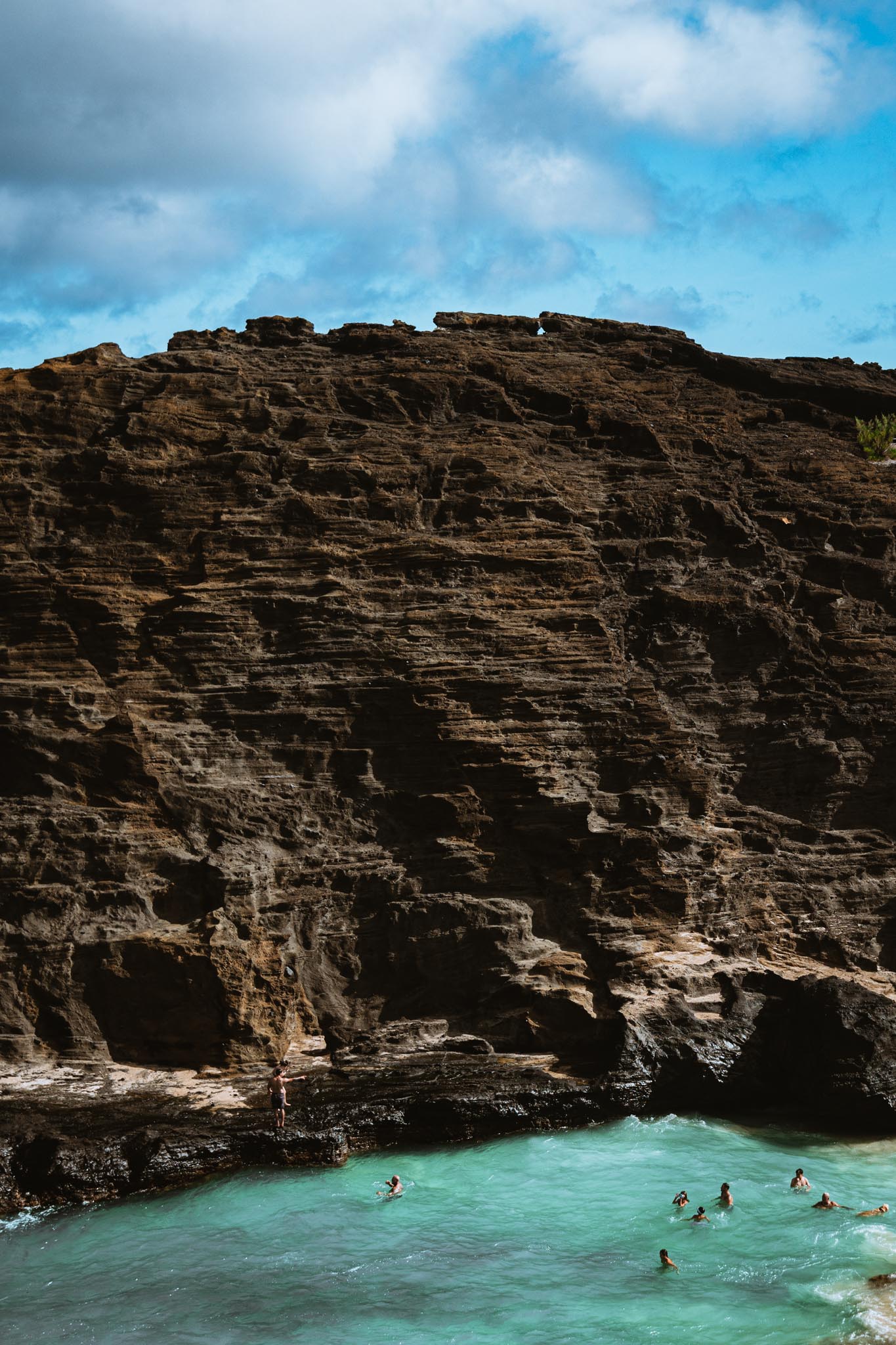
Layered cliff face above a turquoise cove
Halona Blowhole PL-03b
Surf breaking over dark rock
Halona Blowhole PL-03c
Blue water under a weathered sea cliff
Halona Blowhole PL-03d

lava tube - moo

Halona Blowhole

Hawaiian legend holds that a moo - a shapeshifting lizard spirit - carved this blowhole with her own breath, and still takes the shape of a woman on the rock beside it. Geologically it's simpler but no less dramatic: an old lava tube off Koko Crater, opened by erosion, now doubling as plumbing for the ocean.
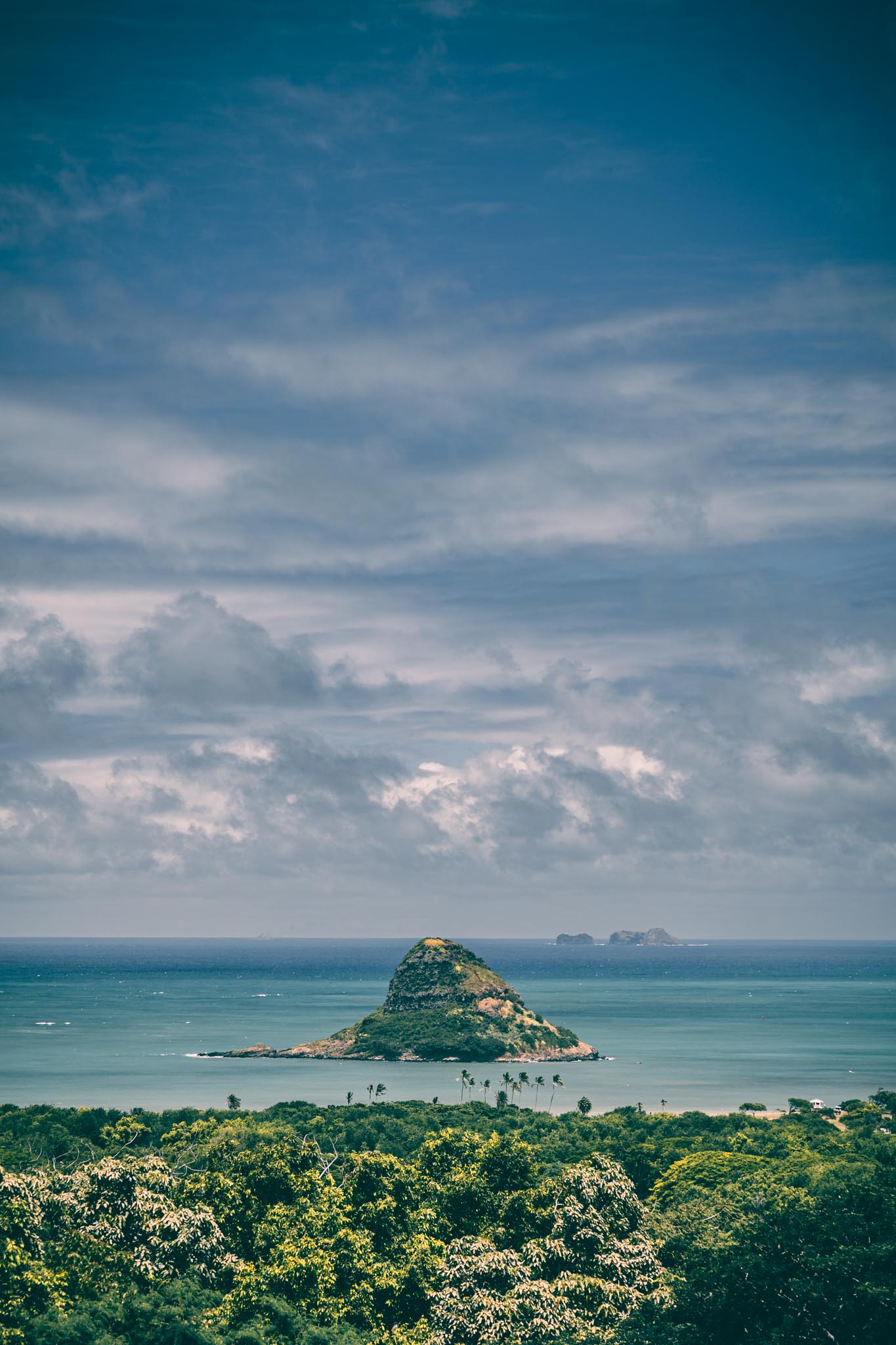
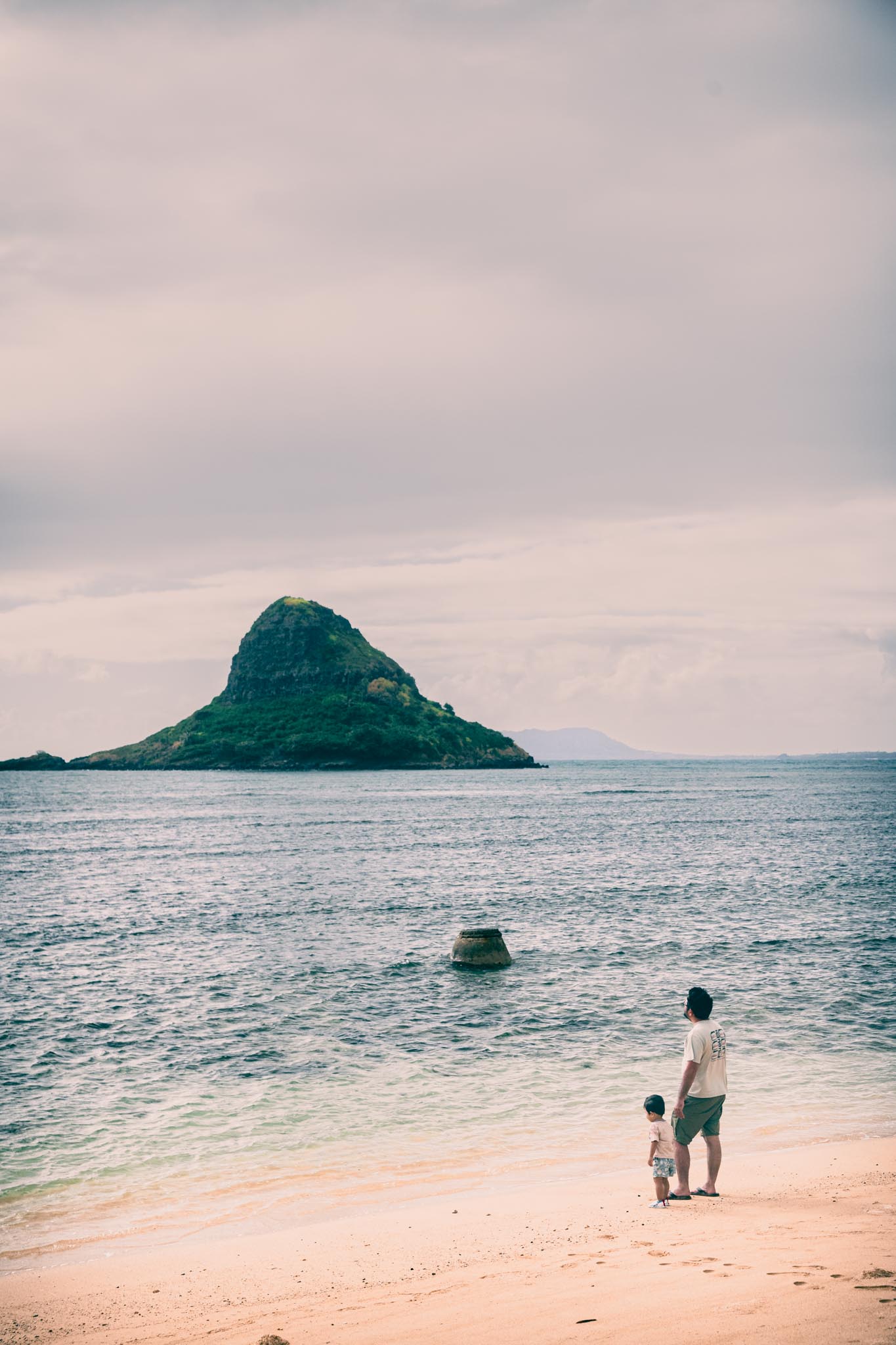
Mokolii under a heavy sky
Mokolii "Little lizard" - tail of Hiiaka's moo. 21.5150N 157.8400W - PL-04 - 2024
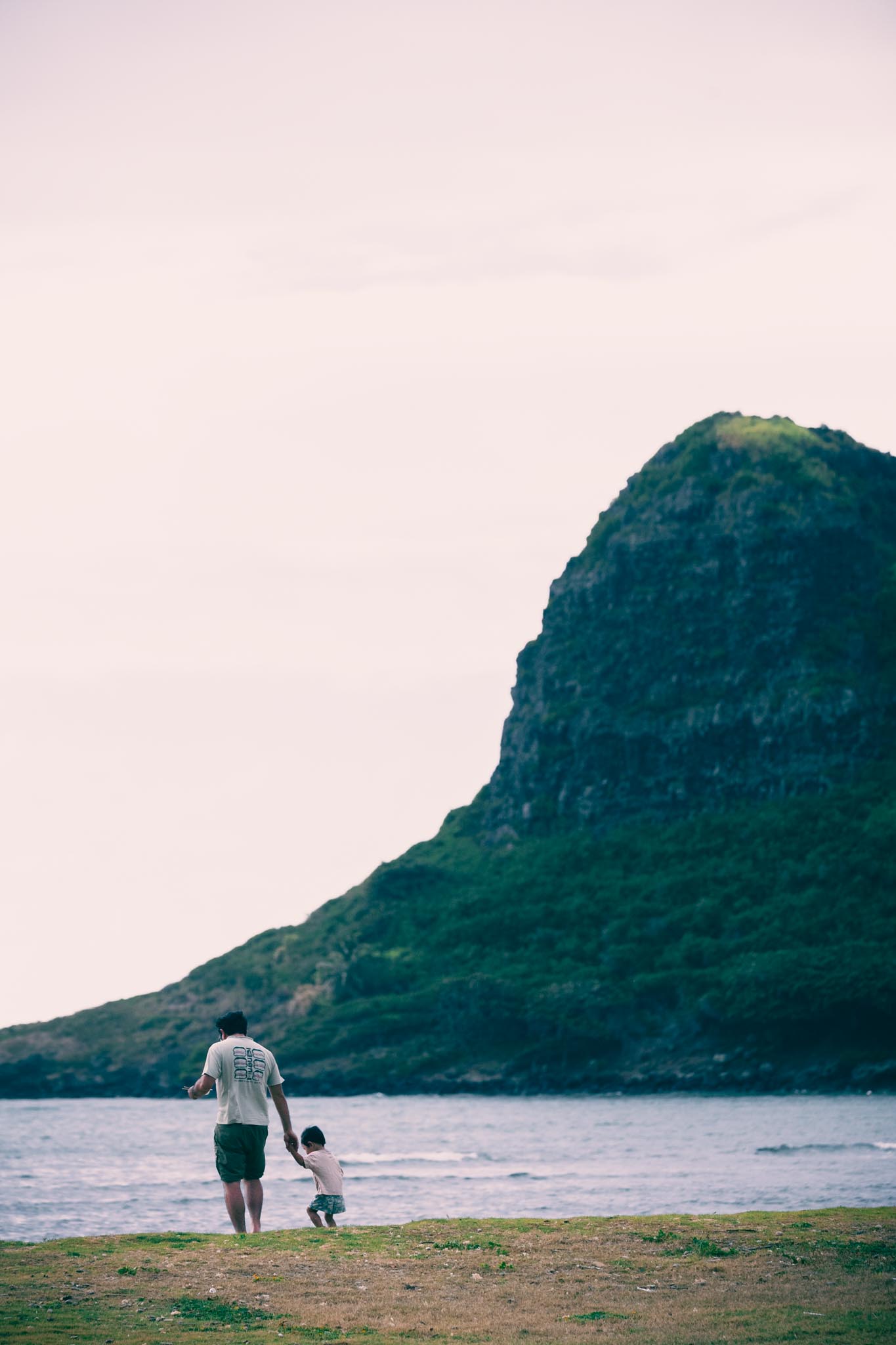
Father and child at the water's edge
Mokolii PL-04b
Walking toward the green cone
Mokolii PL-04c
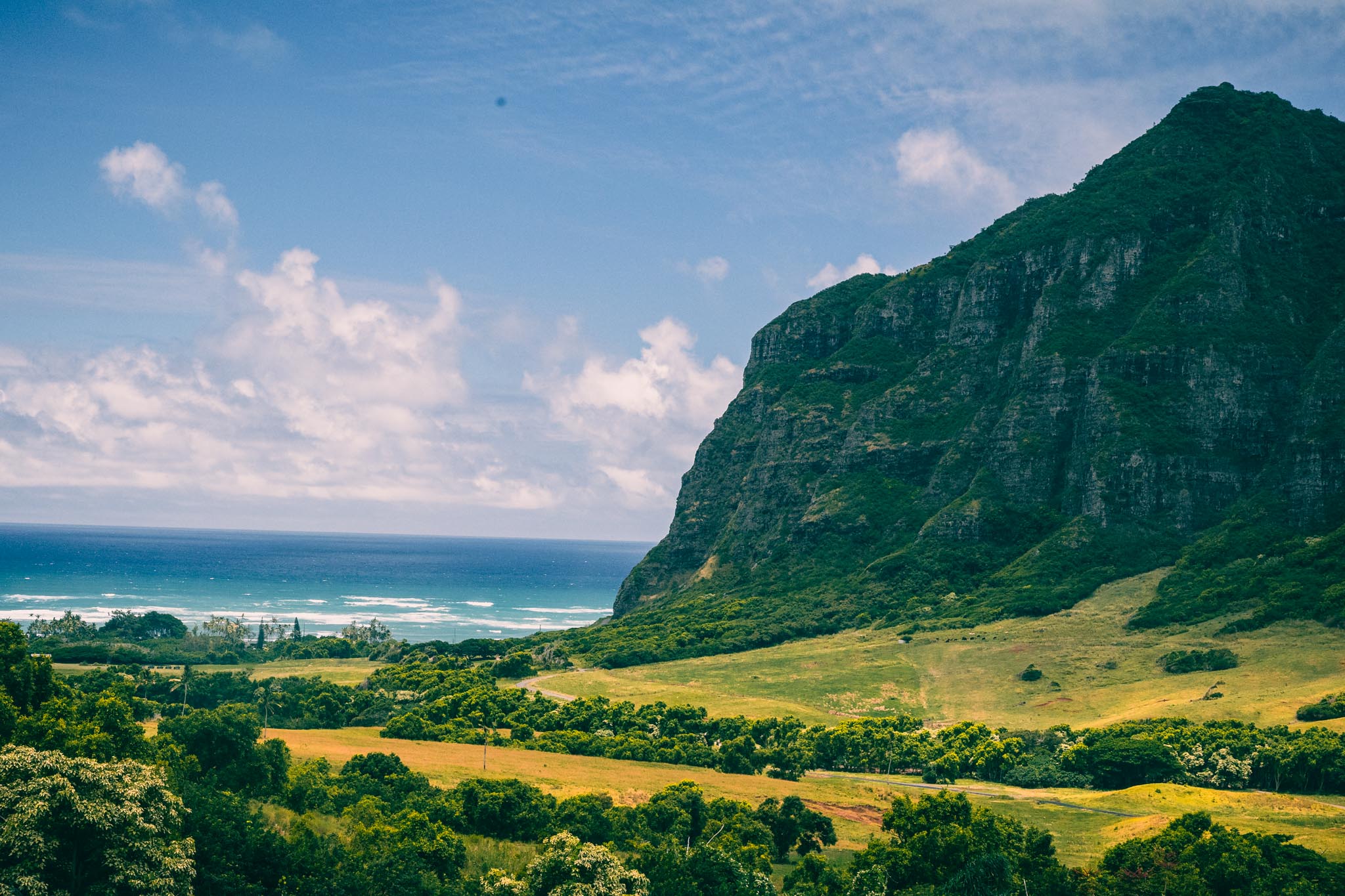
Wide view of Kualoa cliffs and offshore cone
Mokolii PL-04d

basalt sea stack

Mokolii

Legend says this is the tail of a giant lizard, slain by the fire goddess Hiiaka and left in the bay as a warning. Geologically it's a basalt sea stack - the last visible fragment of the Koolau range's original coastline.

Military

Coastal defence dug into sacred ground. Two histories stacked on the same mountains.
02 / 06
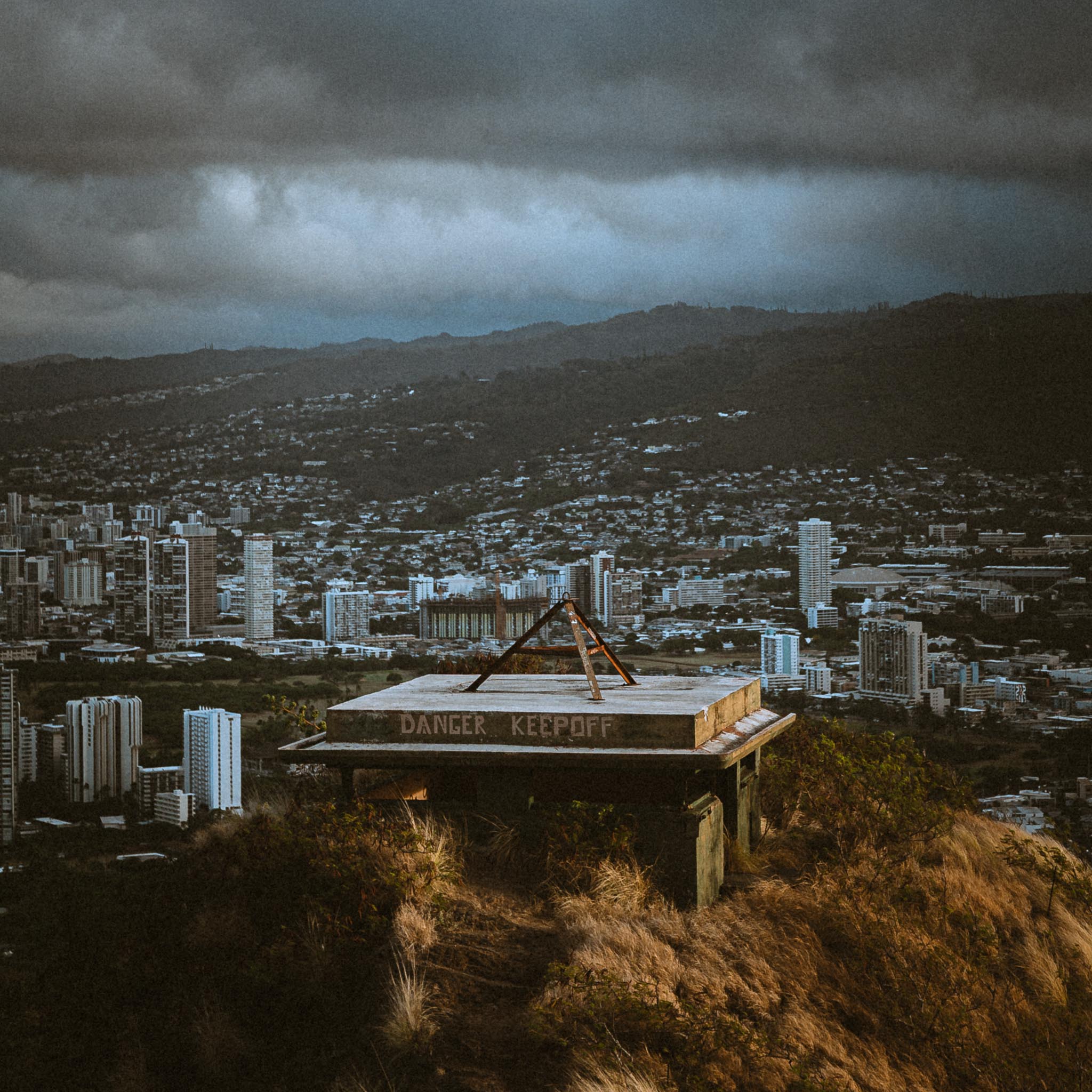
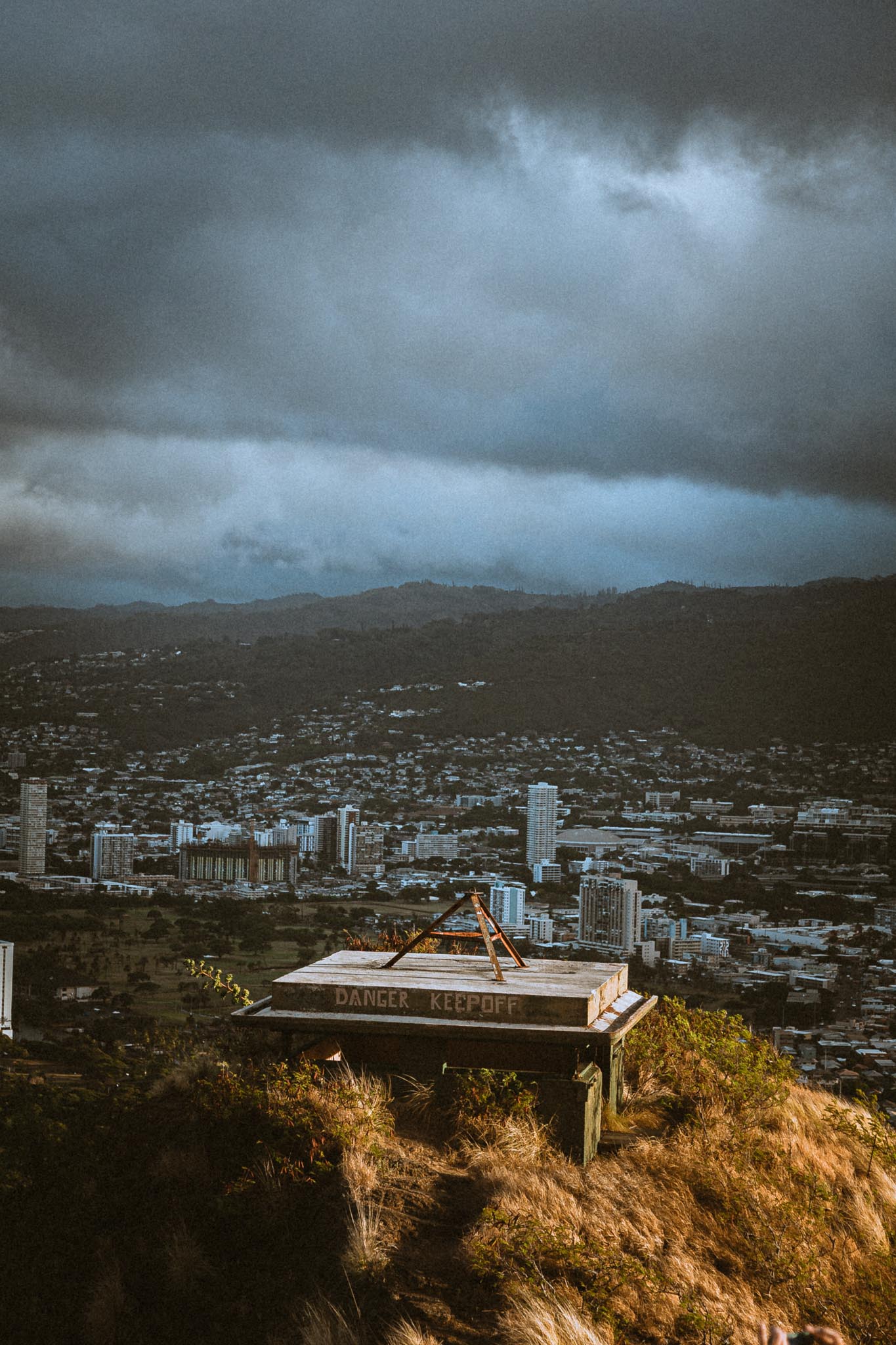
DANGER KEEPOFF bunker above the Honolulu skyline
Diamond Head Summit Battery Battery Birkhimer, 1916 - largely below grade. 21.2620N 157.8057W - ML-01 - 2024
Wider view of bunker and storm-lit city
Diamond Head Summit Battery ML-01b
Summit trail looking down into the city
Diamond Head Summit Battery ML-01c

Fort Ruger - 1908-

Diamond Head Summit Battery

Two histories stacked on one mountain. Hiiaka named it Leahi - "brow of the tuna" - long before anyone thought to fortify it. In the early 1900s the Army dug battery emplacements into the crater to cover Honolulu Harbor from a naval assault that never came. Today the tunnels are the state's emergency-response bunker; the DANGER sign is the only thing that's changed jobs less than twice.
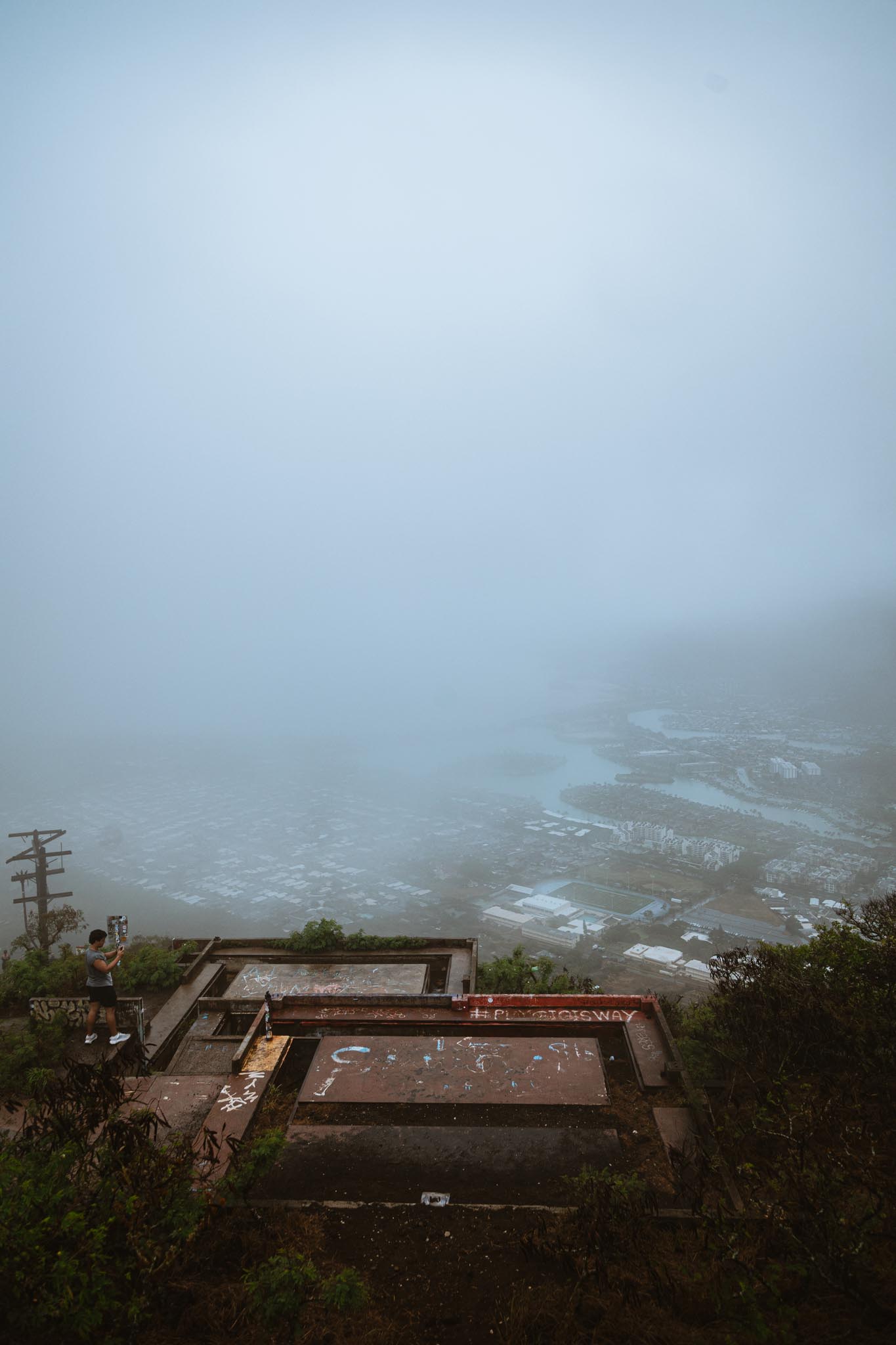
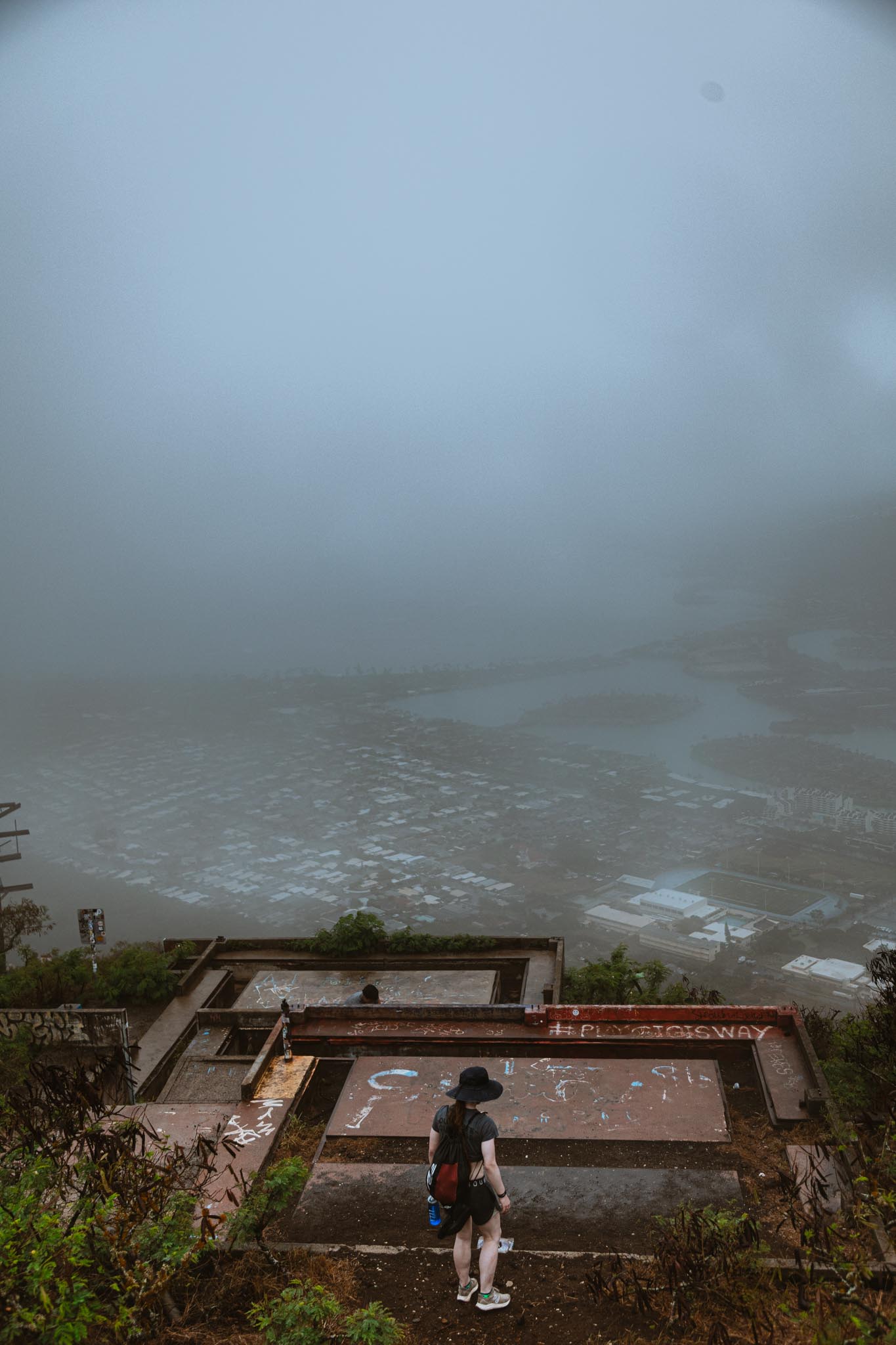
Bunker ruins above a fog-erased valley
Koko Crater Radar Station One of two vital radar sites on Oahu. 21.2810N 157.6940W - ML-02 - 2024
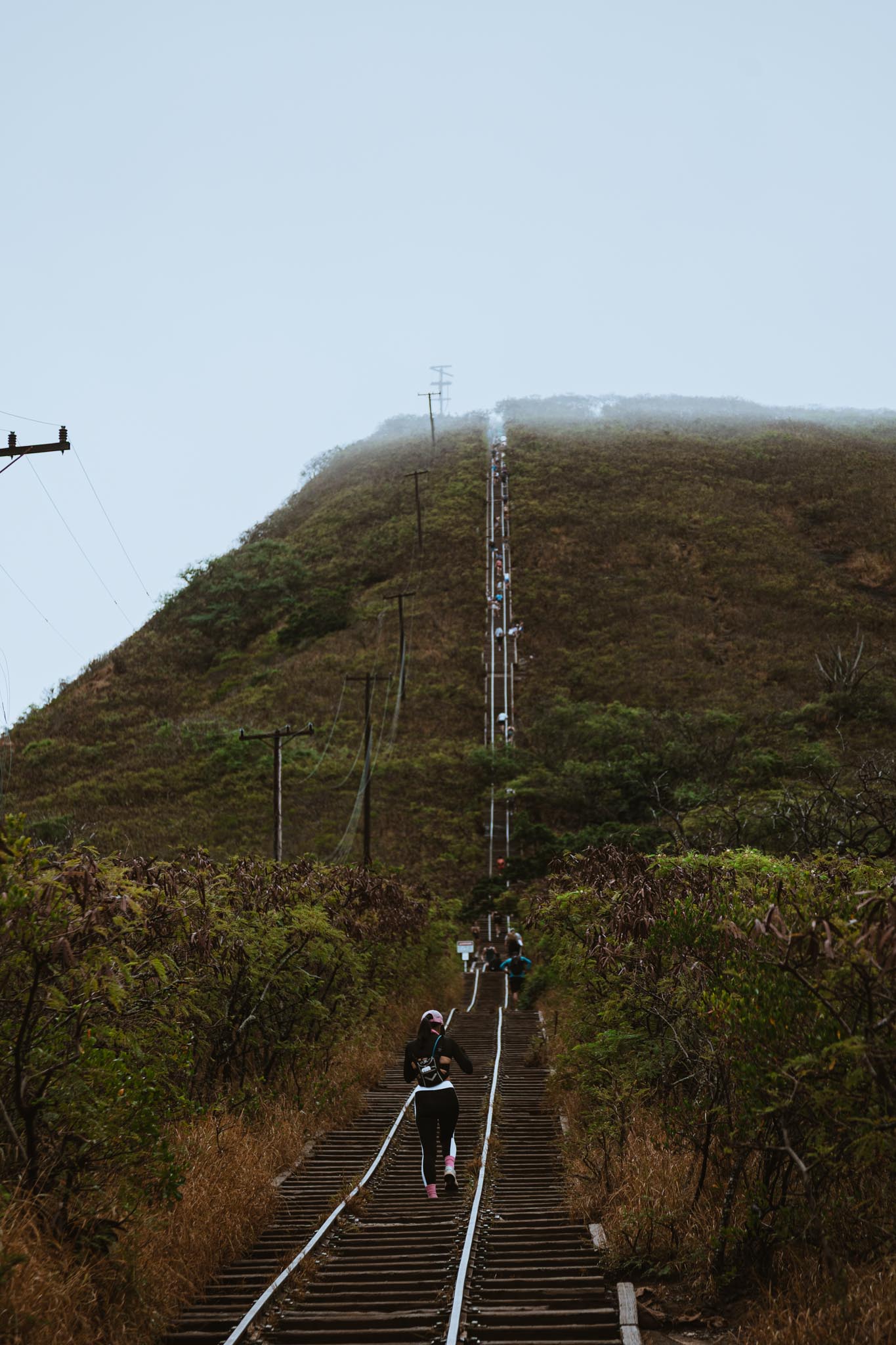
Hiker mid-stride on the rail-tie stairs
Koko Crater Radar Station ML-02b
Overlook toward the fogged lagoon
Koko Crater Radar Station ML-02c
Railway line tracing the crater ridge
Koko Crater Radar Station ML-02d

Kohelepelepe - 1942-66

Koko Crater Radar Station

Long before the radar dishes, Hawaiian tradition already had a story for this crater: Kapo sent a flying decoy to pull the pig-god Kamapuaa off her sister Pele's trail, and it landed here, leaving its shape in the hillside. The Army built a tramway up the same slope in 1942-43 to haul equipment to a radar station tracking incoming aircraft - decommissioned in 1966, it's been a stair-climb ever since.
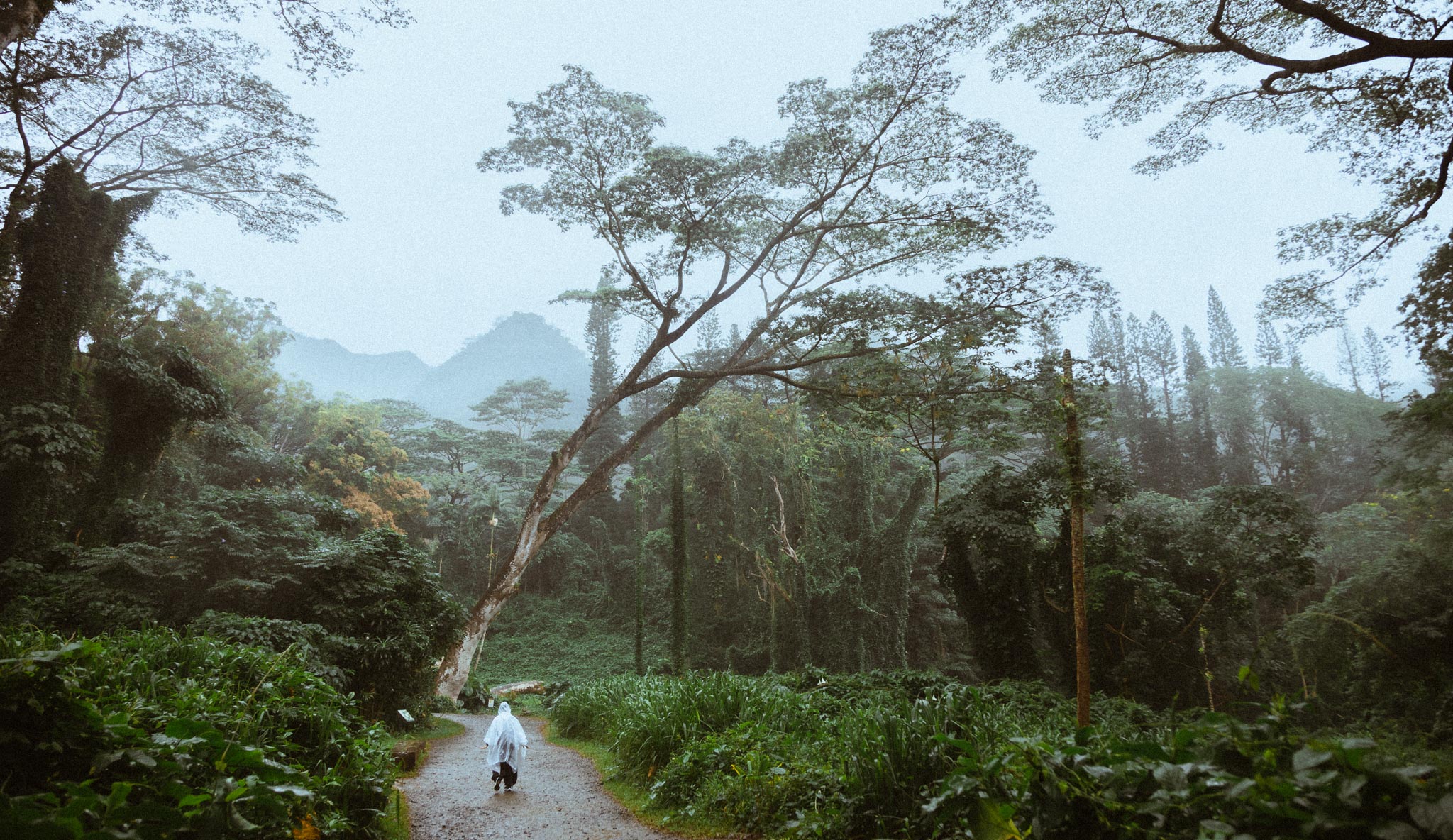
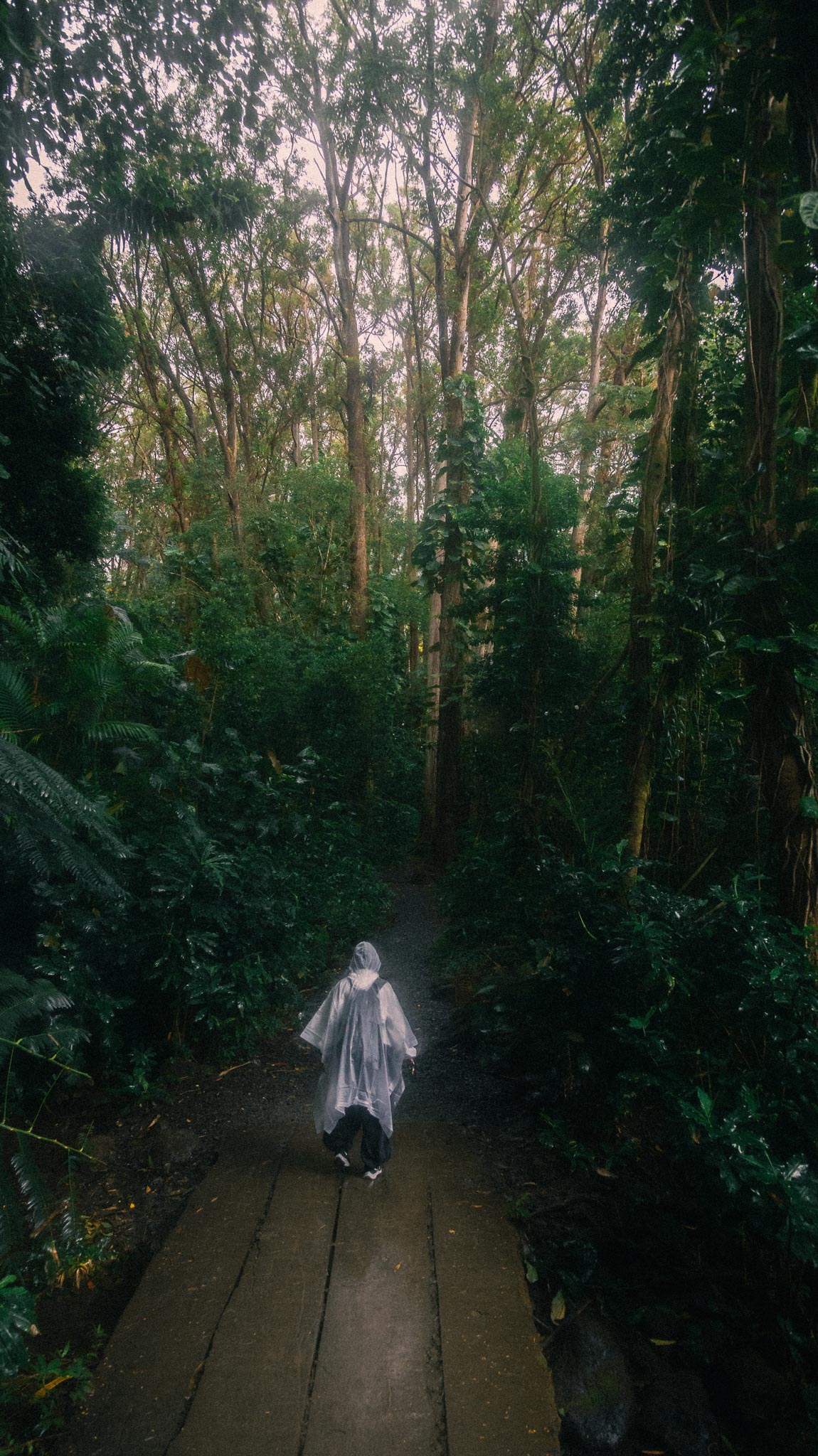
Manoa Falls trail crossing through wet valley forest
Manoa Falls Rainforest valley trail below the Koolau range. 21.3330N 157.8008W - ML-03 - 2024
Person walking through dense Manoa forest
Manoa Falls ML-03b
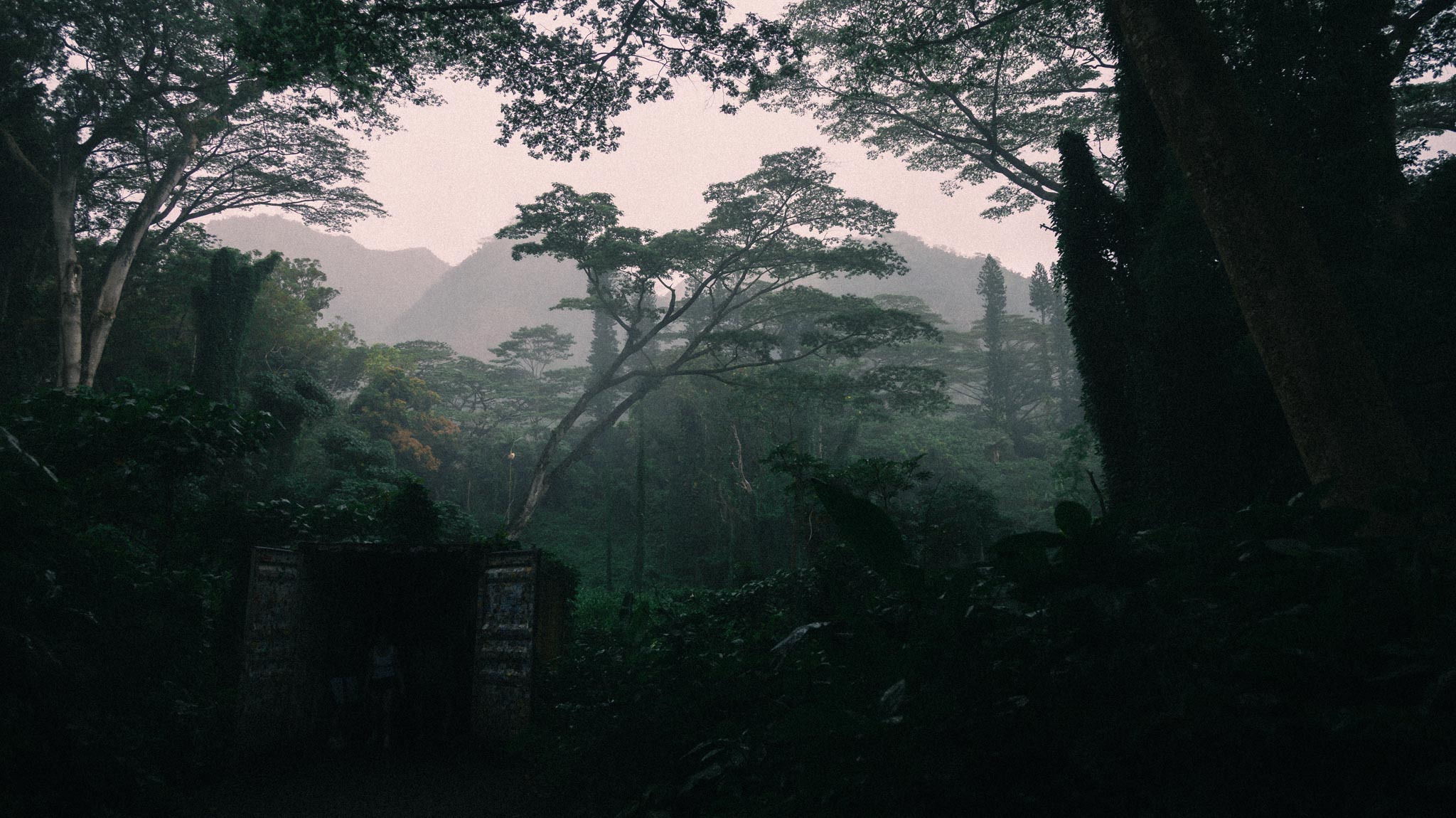
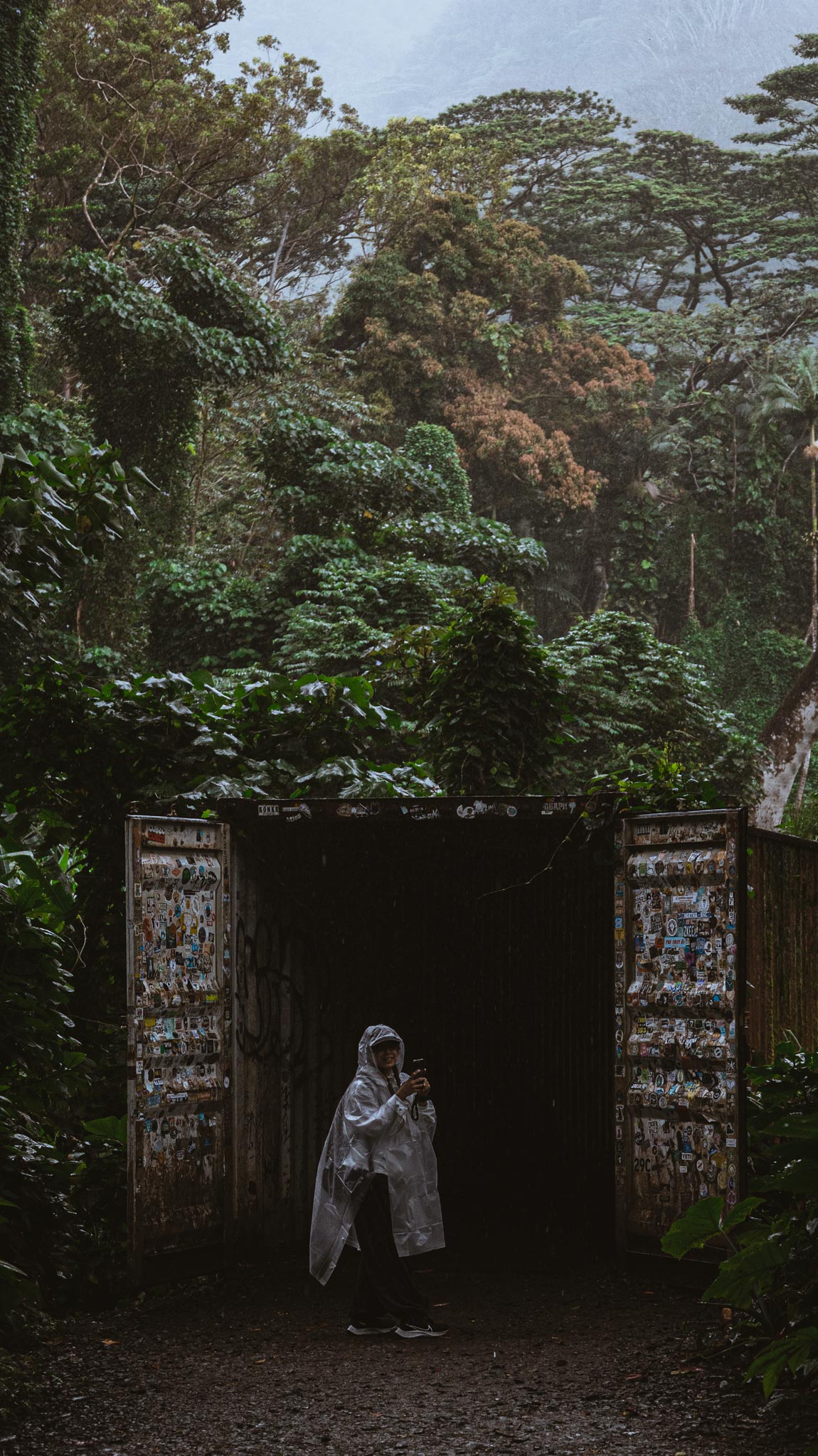
Dark forest gate in misty light
Manoa Falls ML-03c
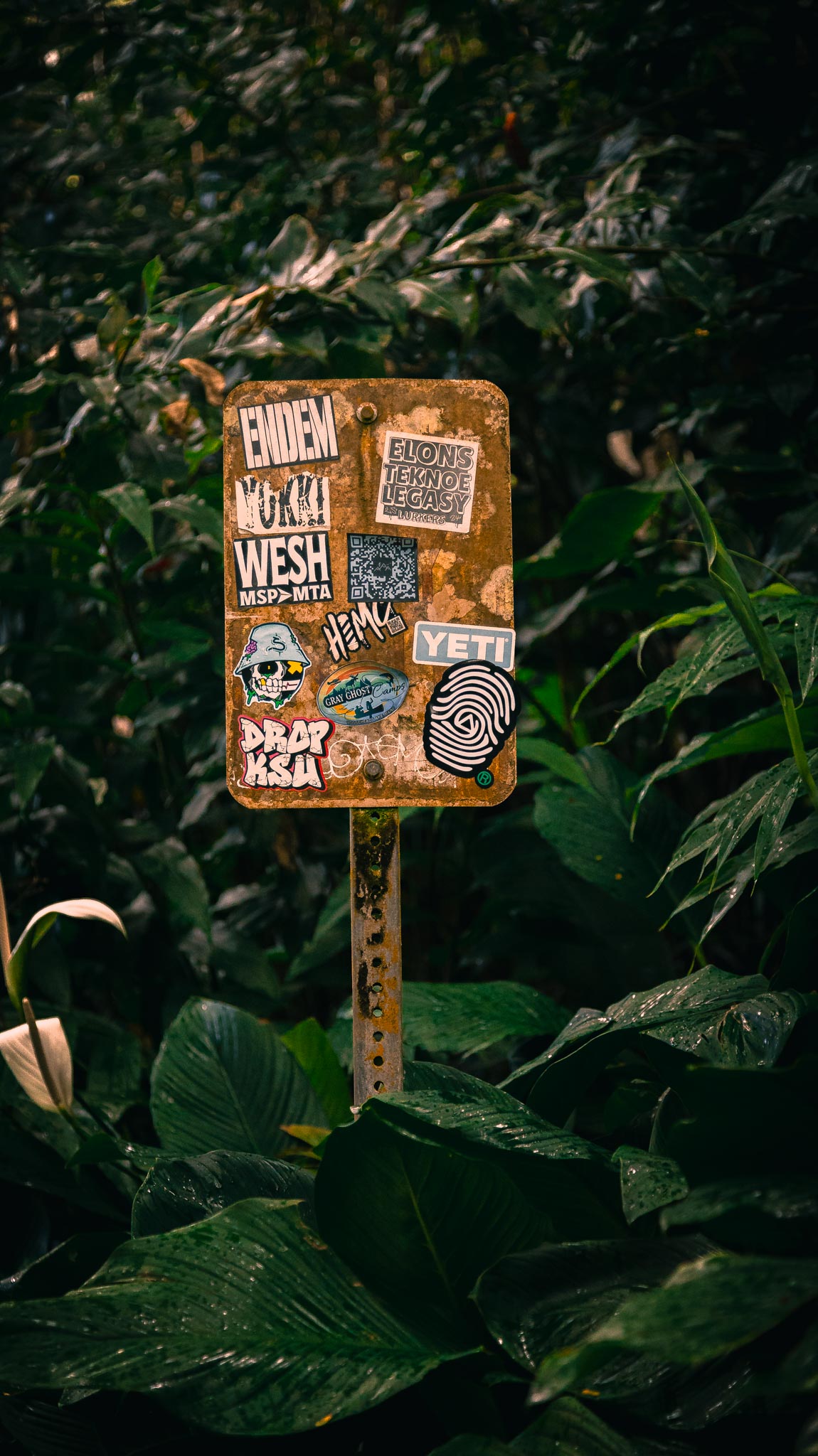
Trail sign and figure in Manoa Falls greenery
Manoa Falls ML-03d
Trail marker tucked into wet foliage
Manoa Falls ML-03e

rainforest trail - waterfall

Manoa Falls

Manoa Falls turns the archive inland: wet forest, trail markers, fern walls, and a valley floor that feels completely separate from the coastline only a few miles away.

Culture

Indigenous performance, immigrant heritage, and whatever went up on the wall last week.
03 / 06
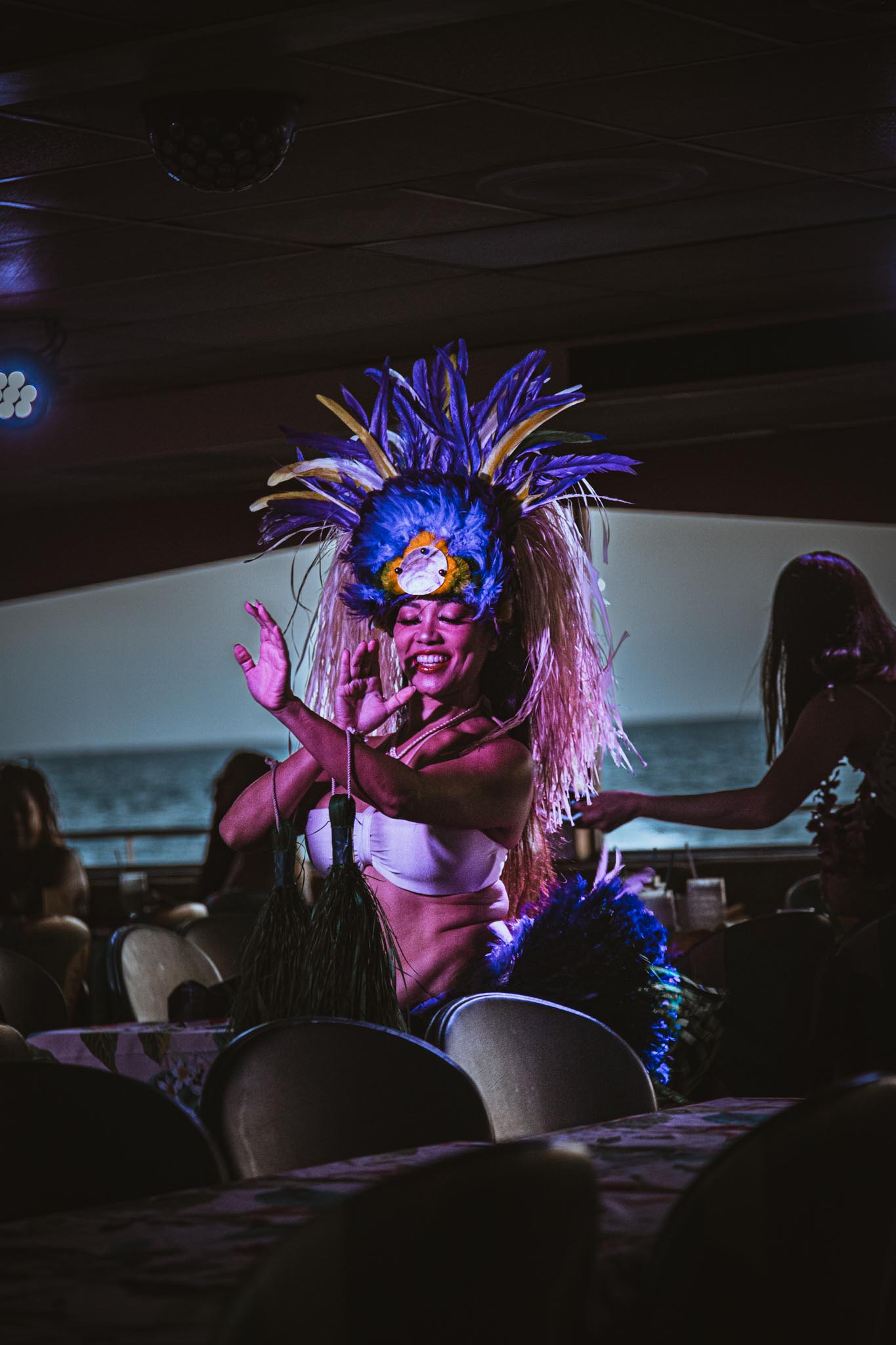
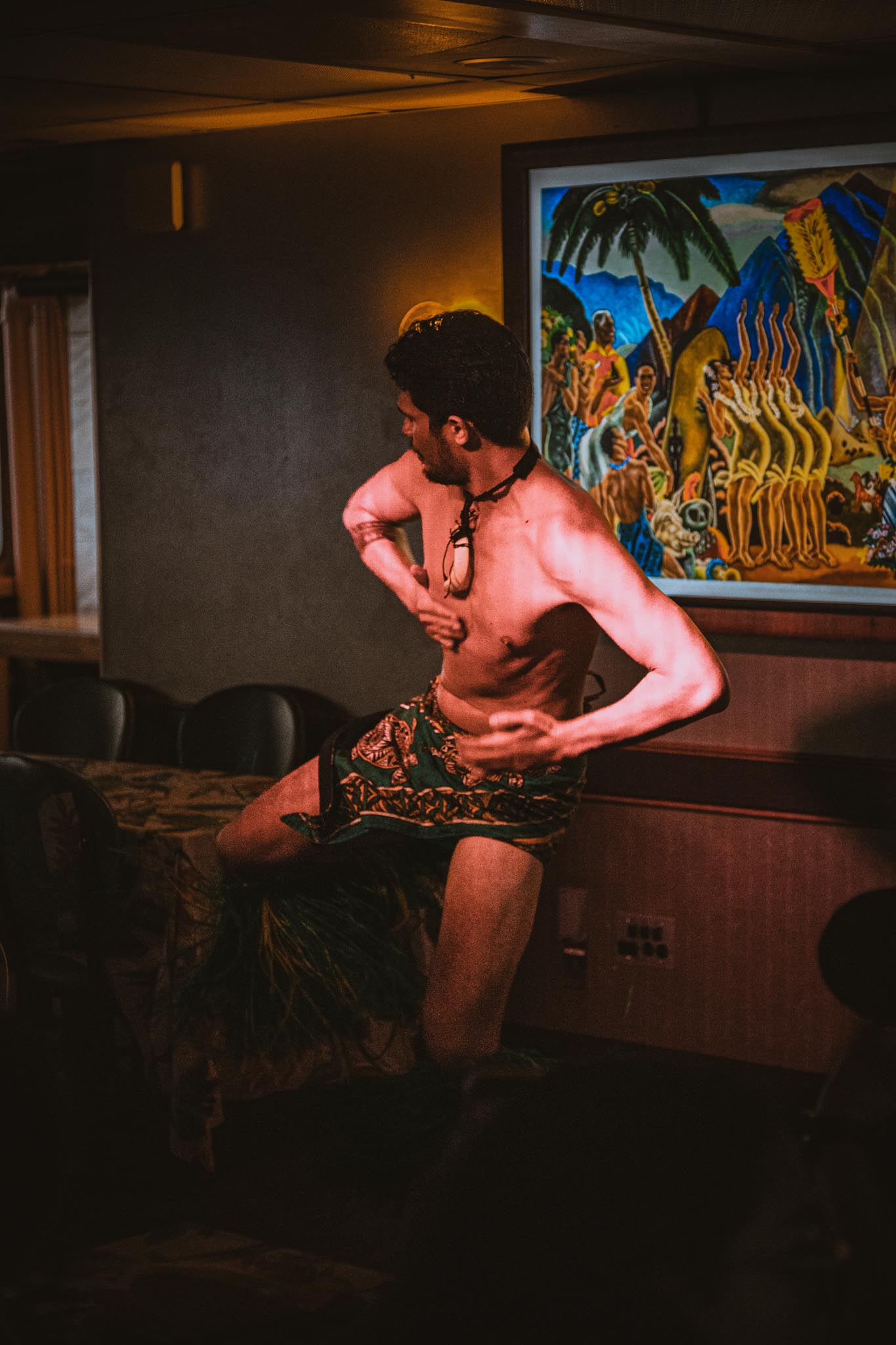
Dancer at the peak of a lunge, mural behind
Hula Featured at Kalakaua's 1883 coronation. 21.2760N 157.8270W - CL-01 - 2024
Dancer framed in warm performance light
Hula CL-01b
Performer mid-gesture under stage light
Hula CL-01c

banned 1830 - revived 1874

Hula

Hula was banned outright in 1830 and driven into the forests for decades before King Kalakaua brought it back into public life in 1874, calling it "the heartbeat of the Hawaiian people." What's on stage at tonight's dinner show is a direct descendant of a tradition that was once illegal to perform.
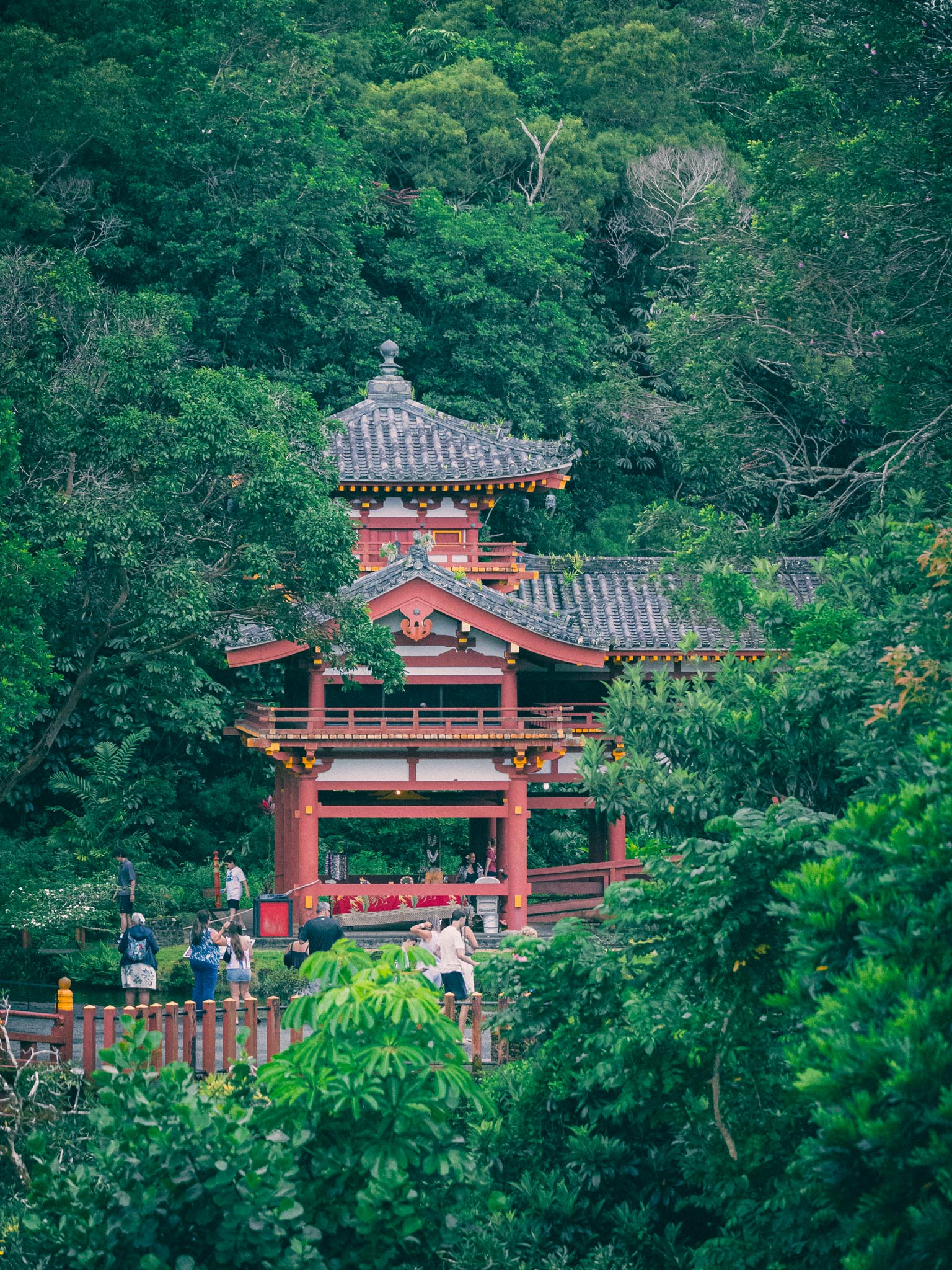
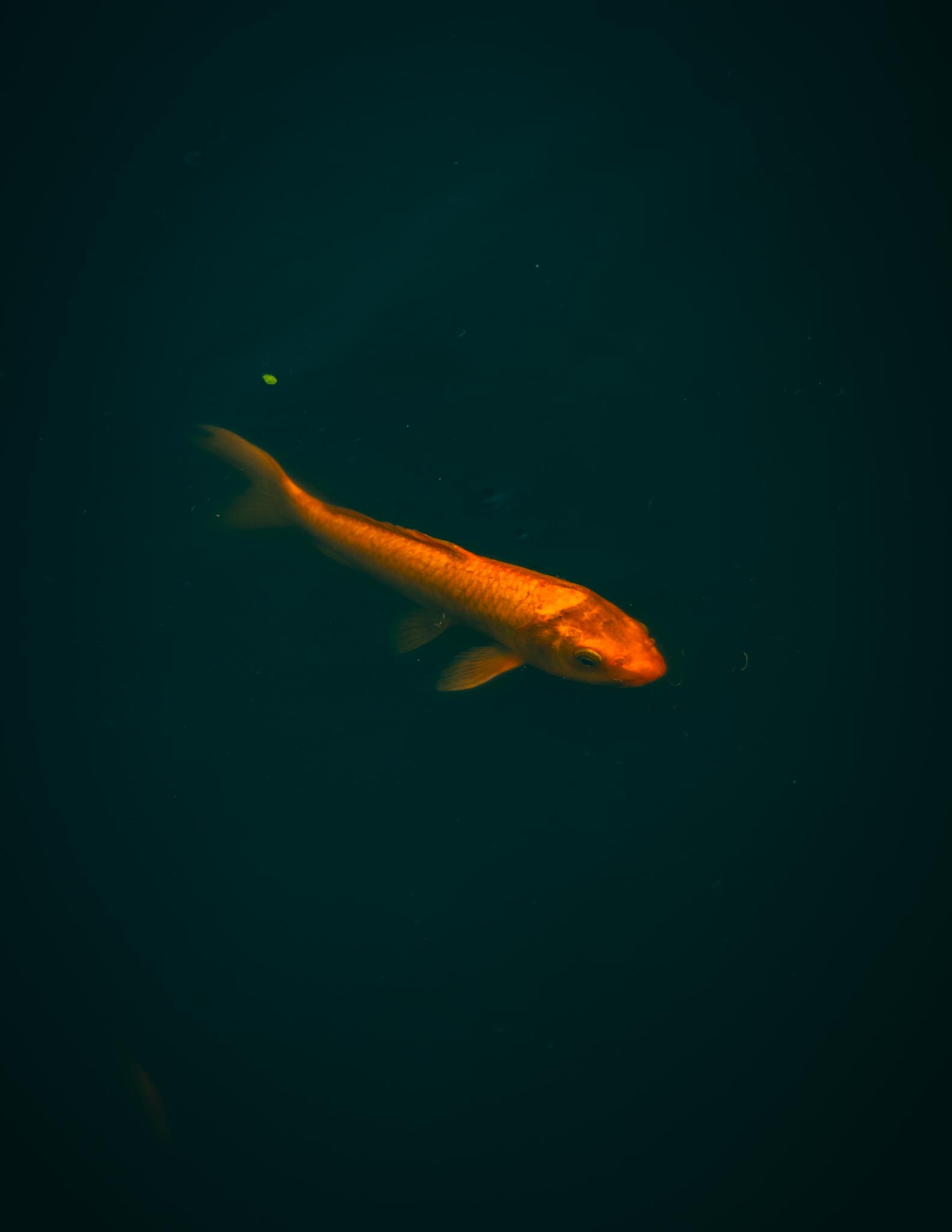
Byodo-In Temple seen through green valley foliage
Byodo-In Temple Dedicated June 7, 1968 for the Japanese immigrant centennial. 21.4306N 157.8319W - CL-02 - 2024
Single koi suspended in dark pond water
Byodo-In Temple CL-02b
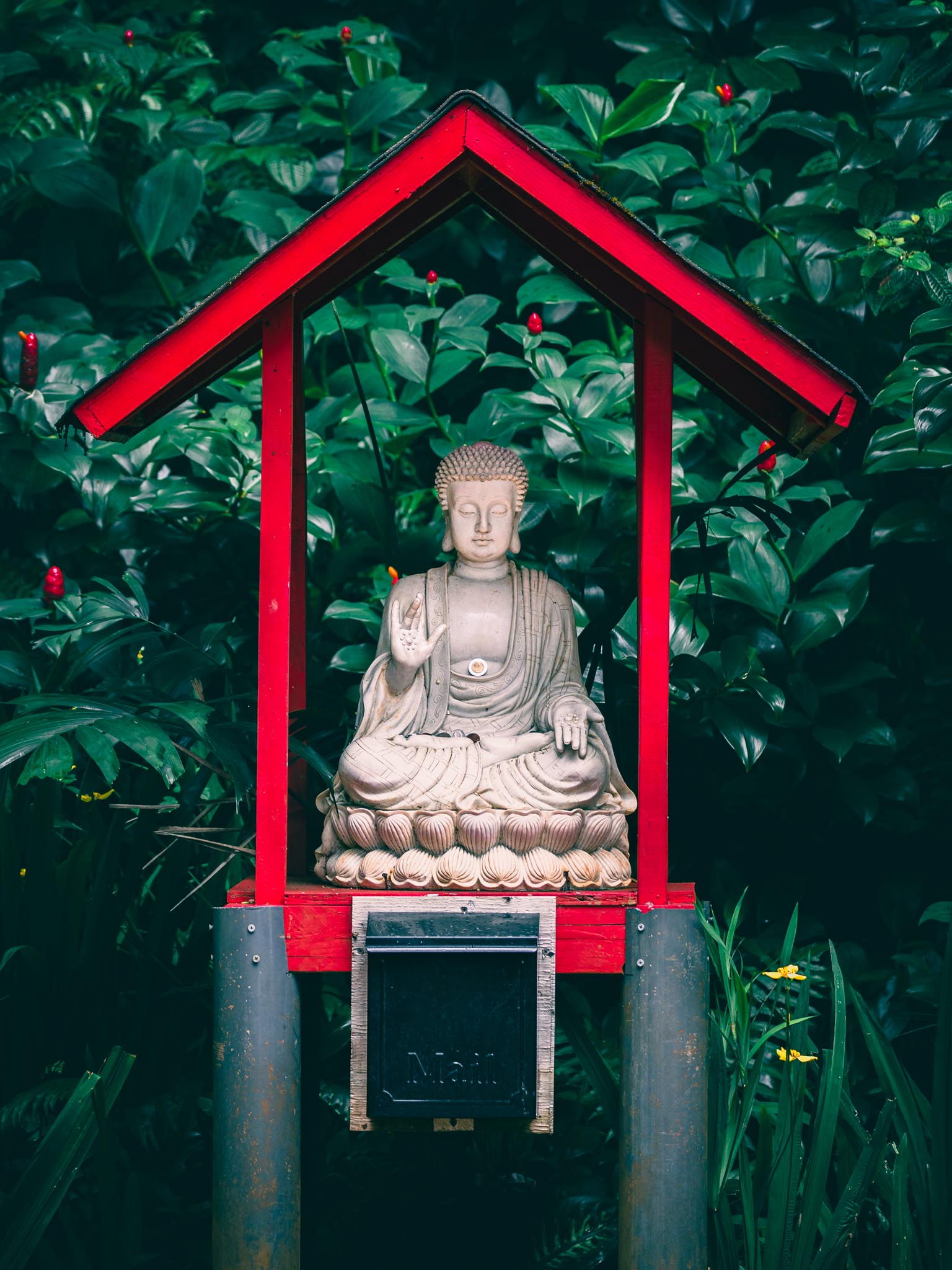
Temple Buddha detail framed by a red roofline
Byodo-In Temple CL-02c
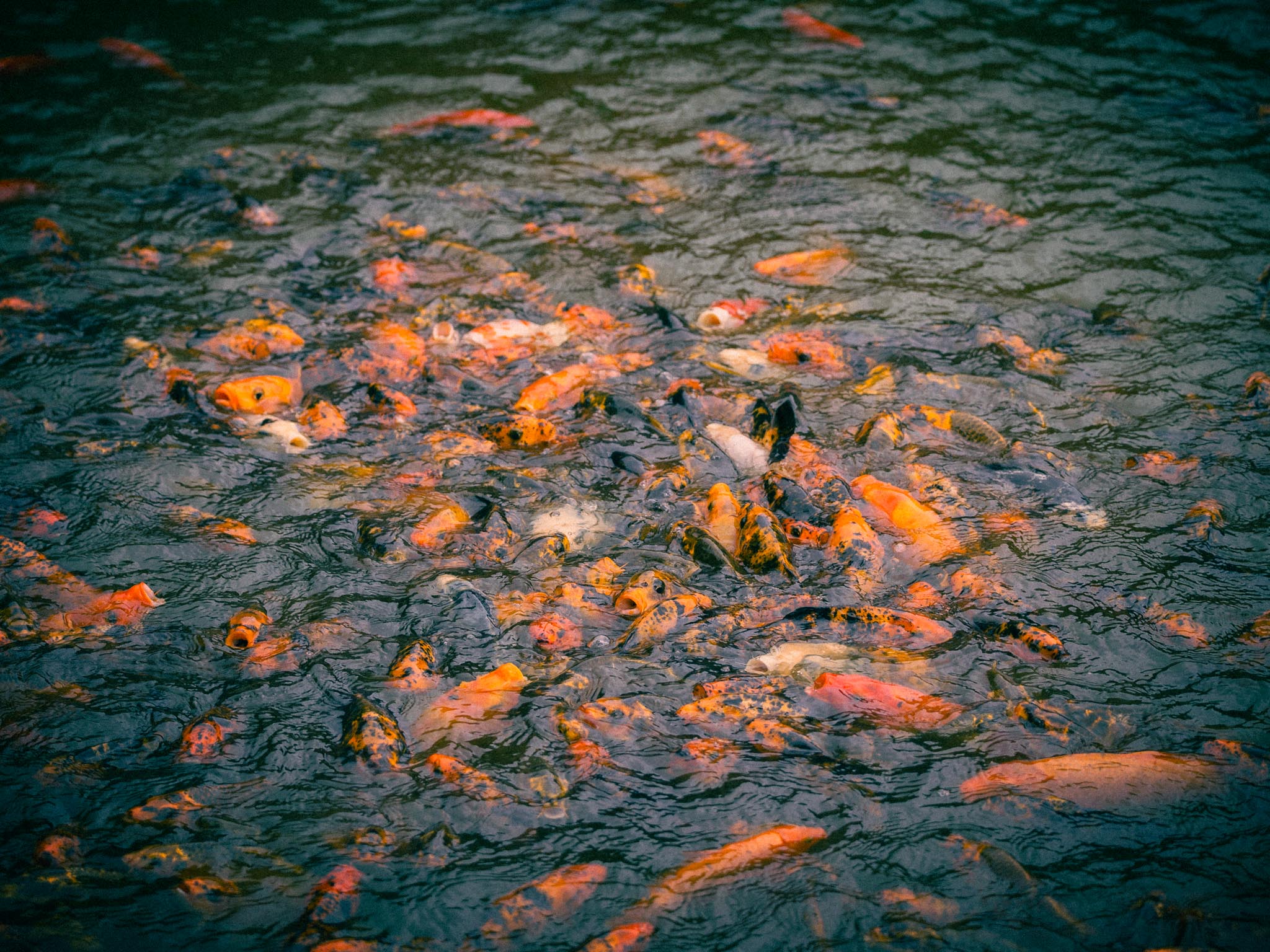
Koi pond surface crowded with orange fish
Byodo-In Temple CL-02d
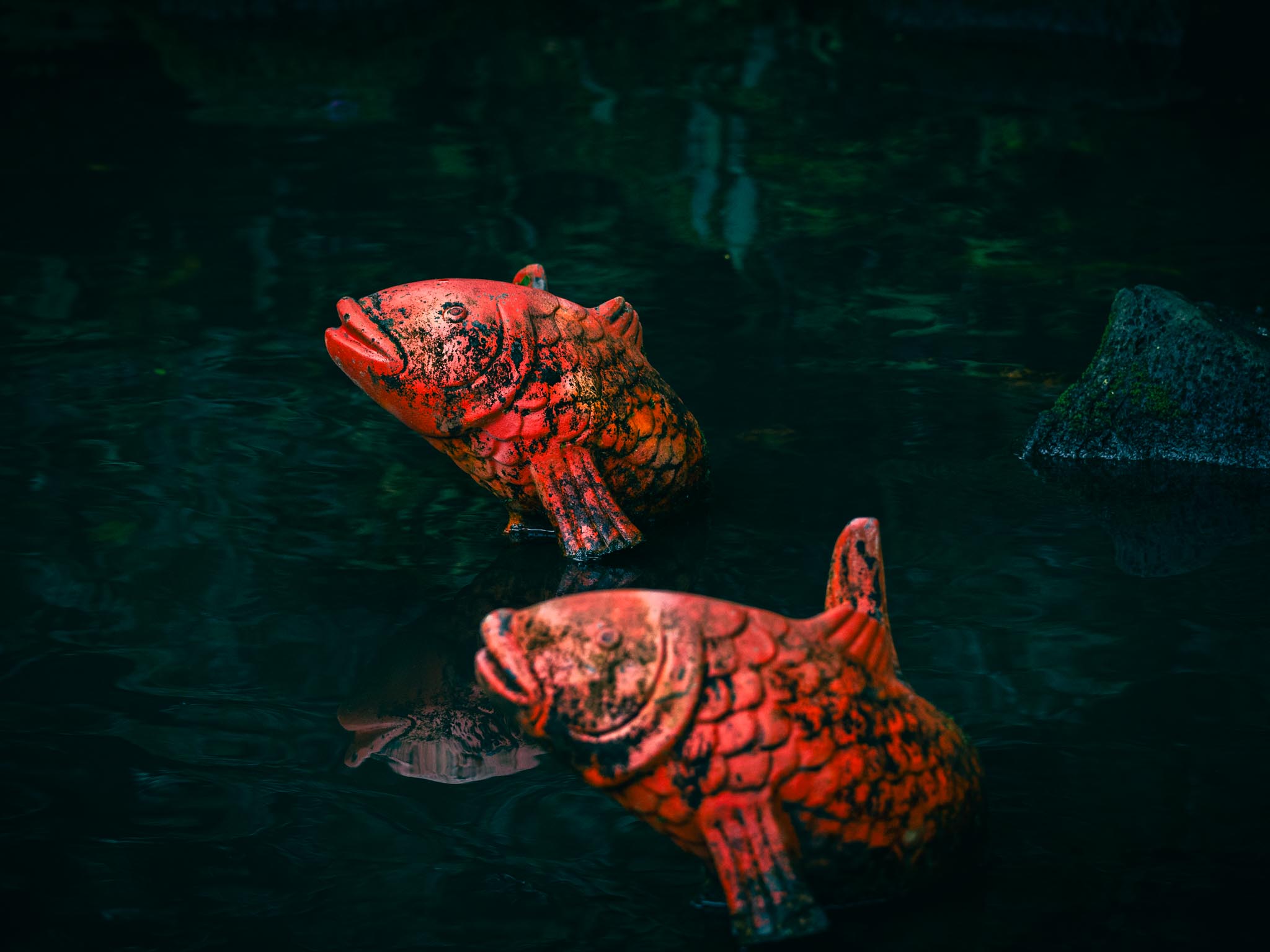
Two koi in deep green water
Byodo-In Temple CL-02e

Japanese immigrant centennial - koi pond

Byodo-In Temple

Built in 1968 to mark one hundred years since the first Japanese laborers arrived in Hawaii, the temple is a scale replica of an 11th-century original in Uji, built without a single nail. The koi ponds carry the card from architecture into daily ritual.
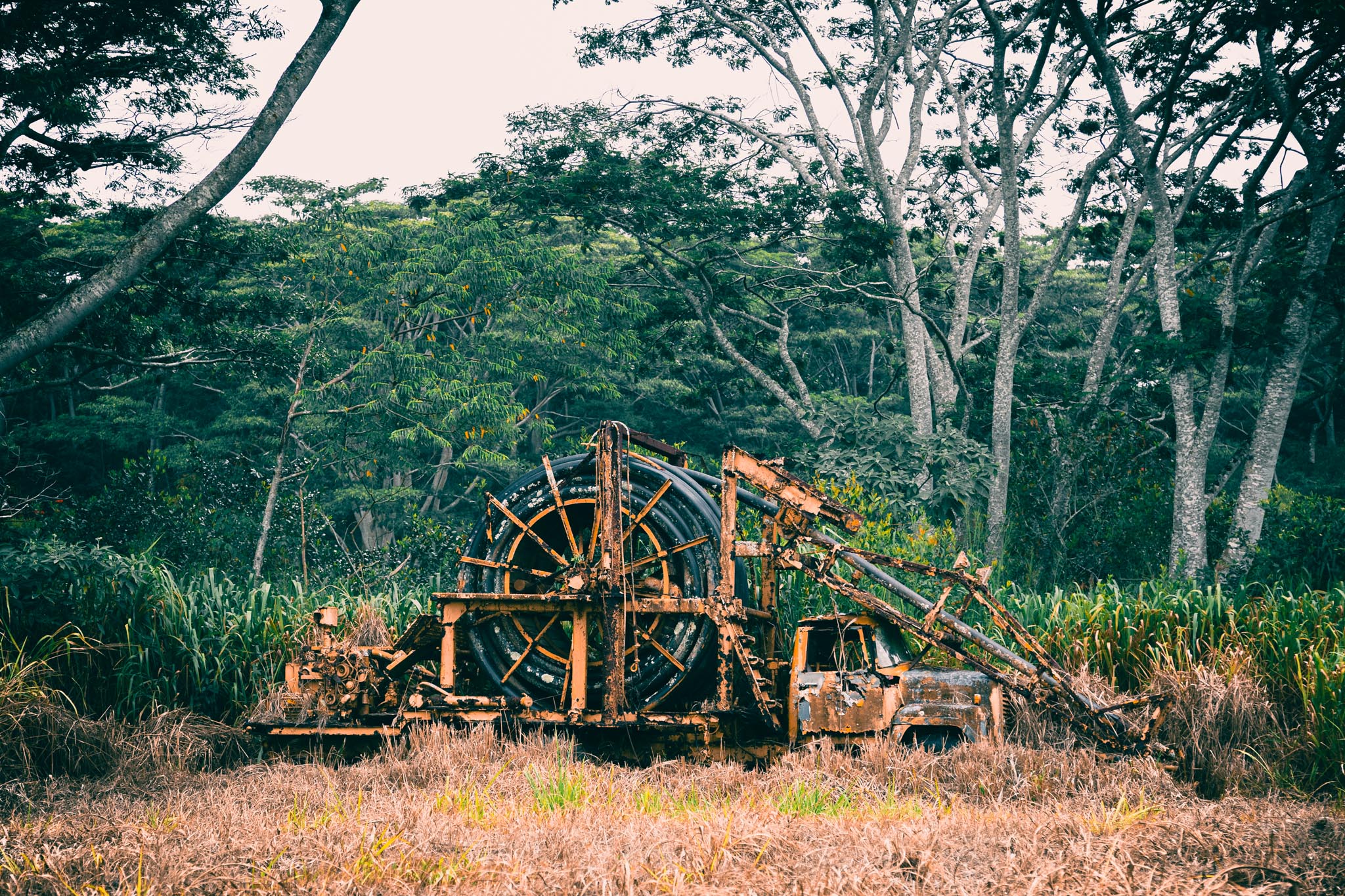
Rusted plantation winch in the grass
Wahiawa Plantation Lands 125,000 Filipino workers recruited 1906-46. 21.5250N 158.0390W - CL-03 - 2024
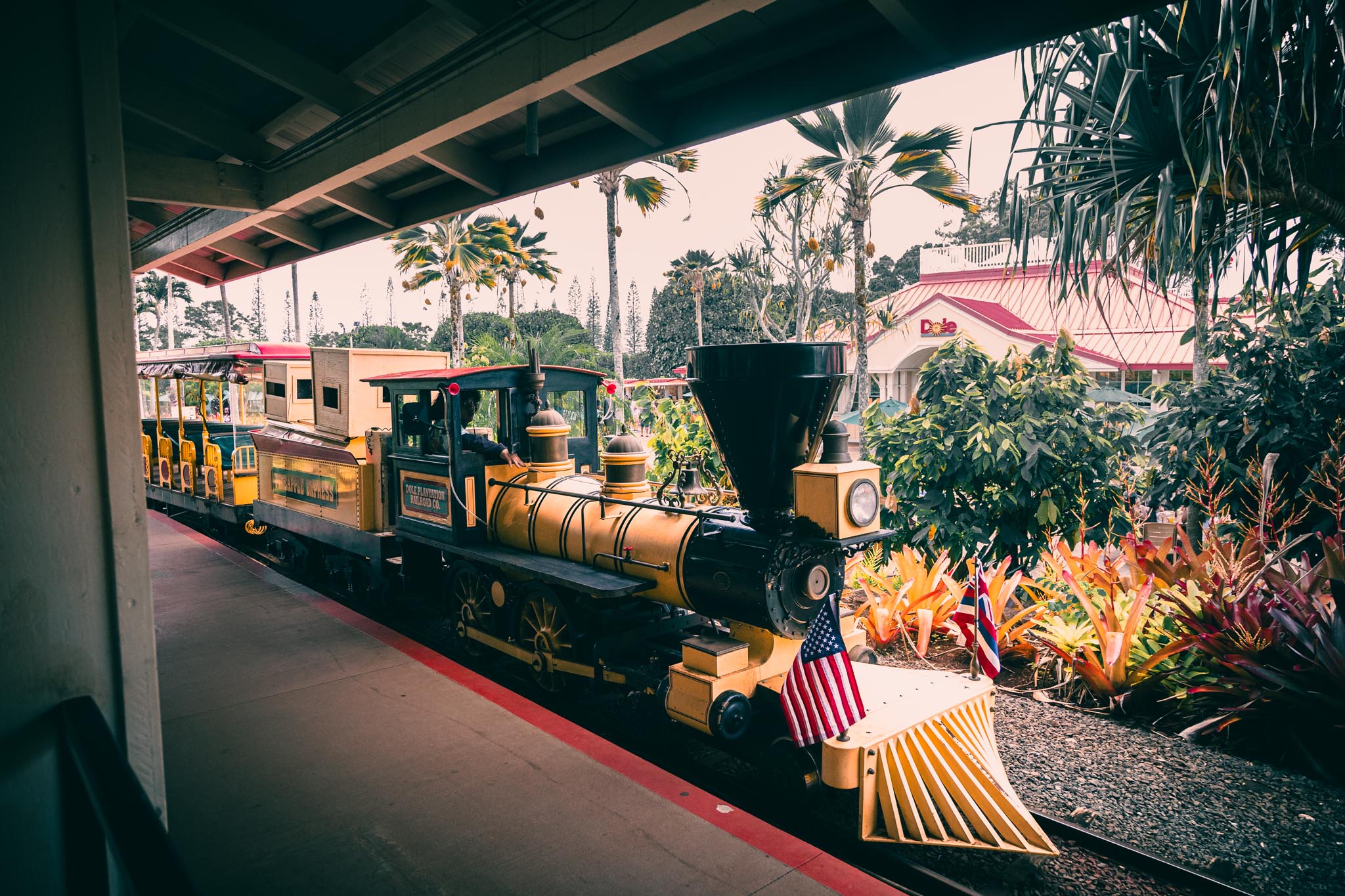
Plantation train under the station roofline
Wahiawa Plantation Lands CL-03b
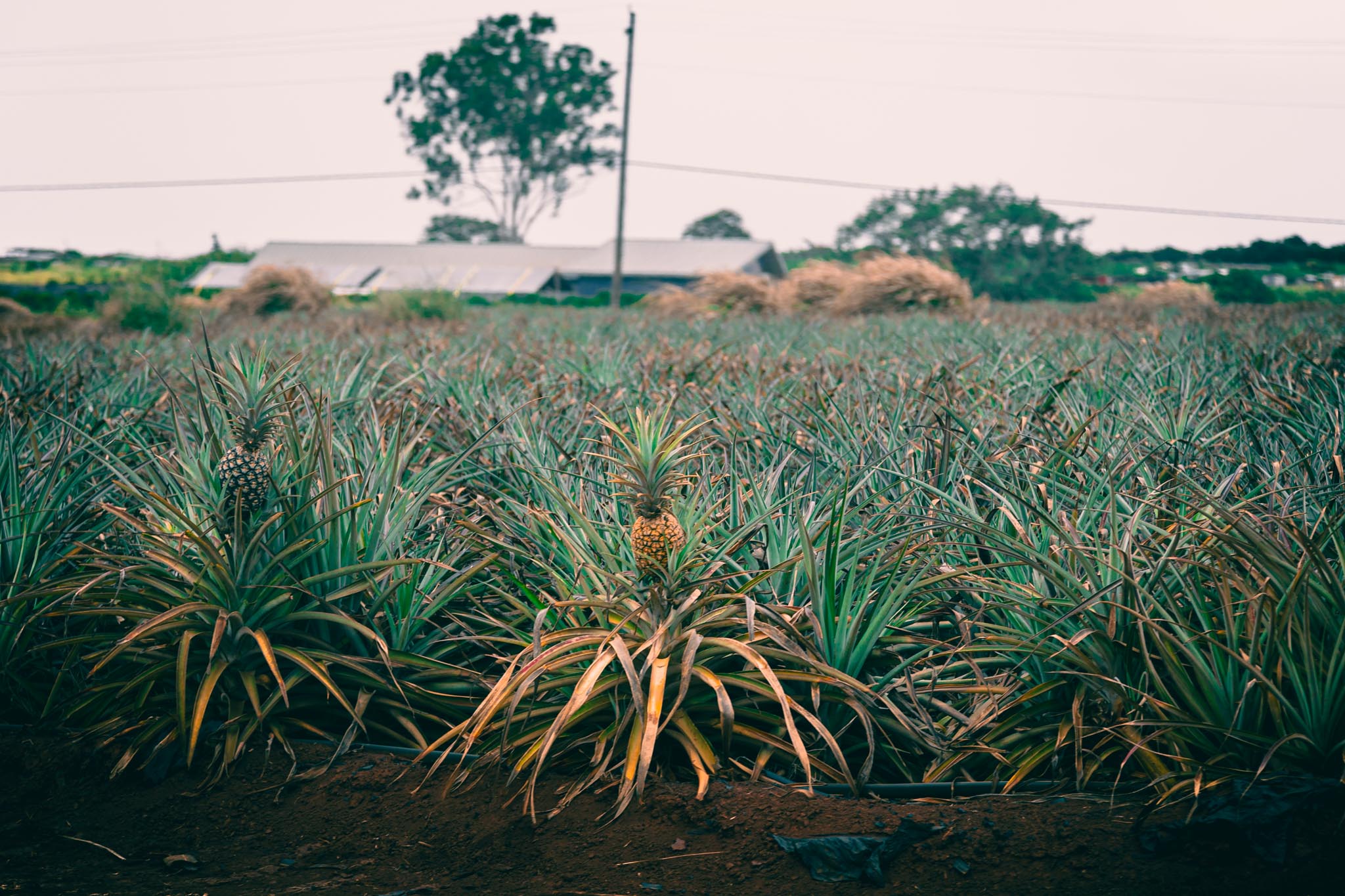
Pineapple rows receding to the barn
Wahiawa Plantation Lands CL-03c

sakada - 1906-

Wahiawa Plantation Lands

By 1902, Japanese labourers made up nearly three-quarters of the plantation workforce; when they organised, planters brought in the first Filipino sakada in 1906 and kept doing it for forty years. The rusted winch in the grass is what's left of the machinery that made the pineapple rows behind it possible.
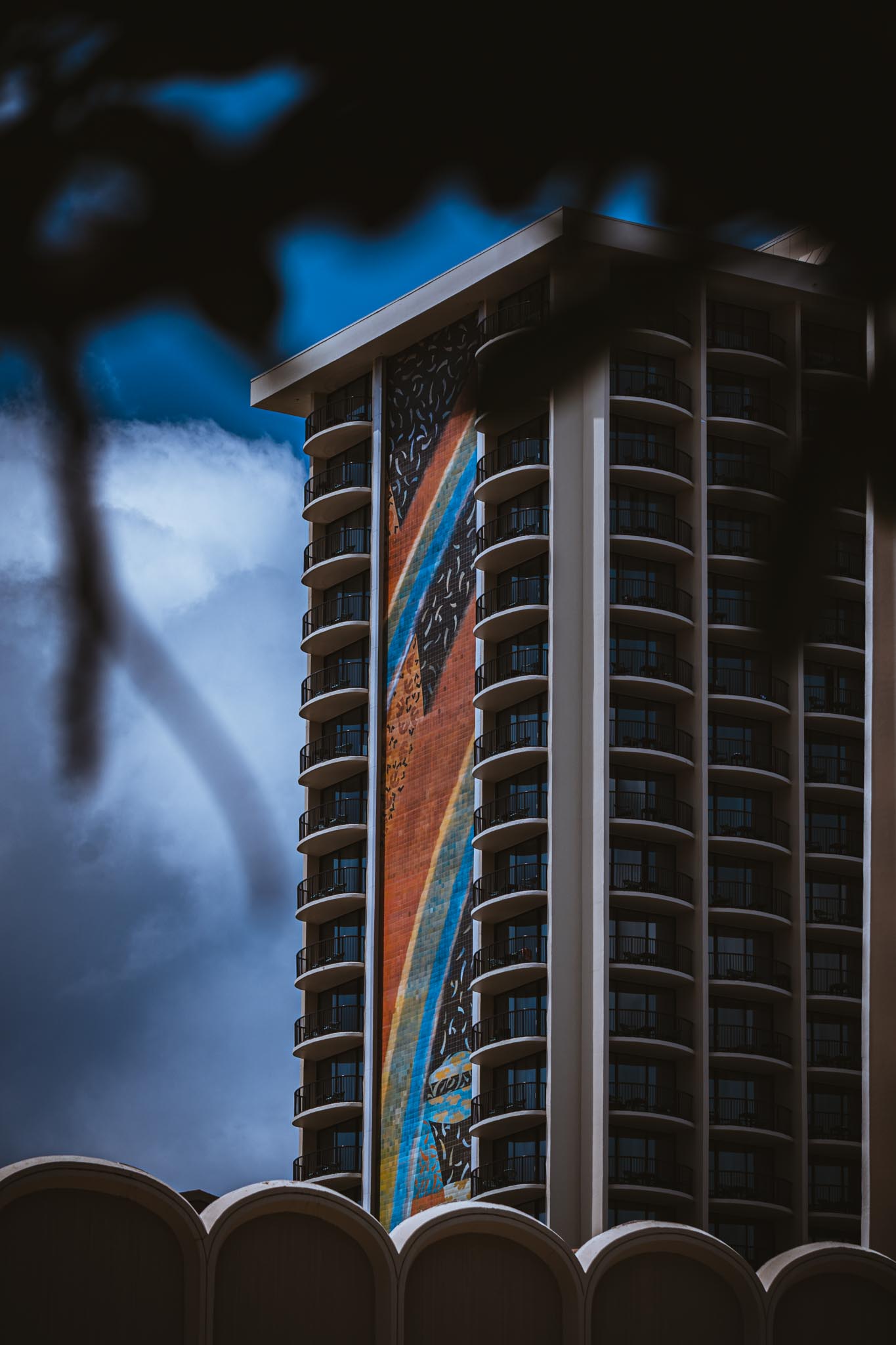
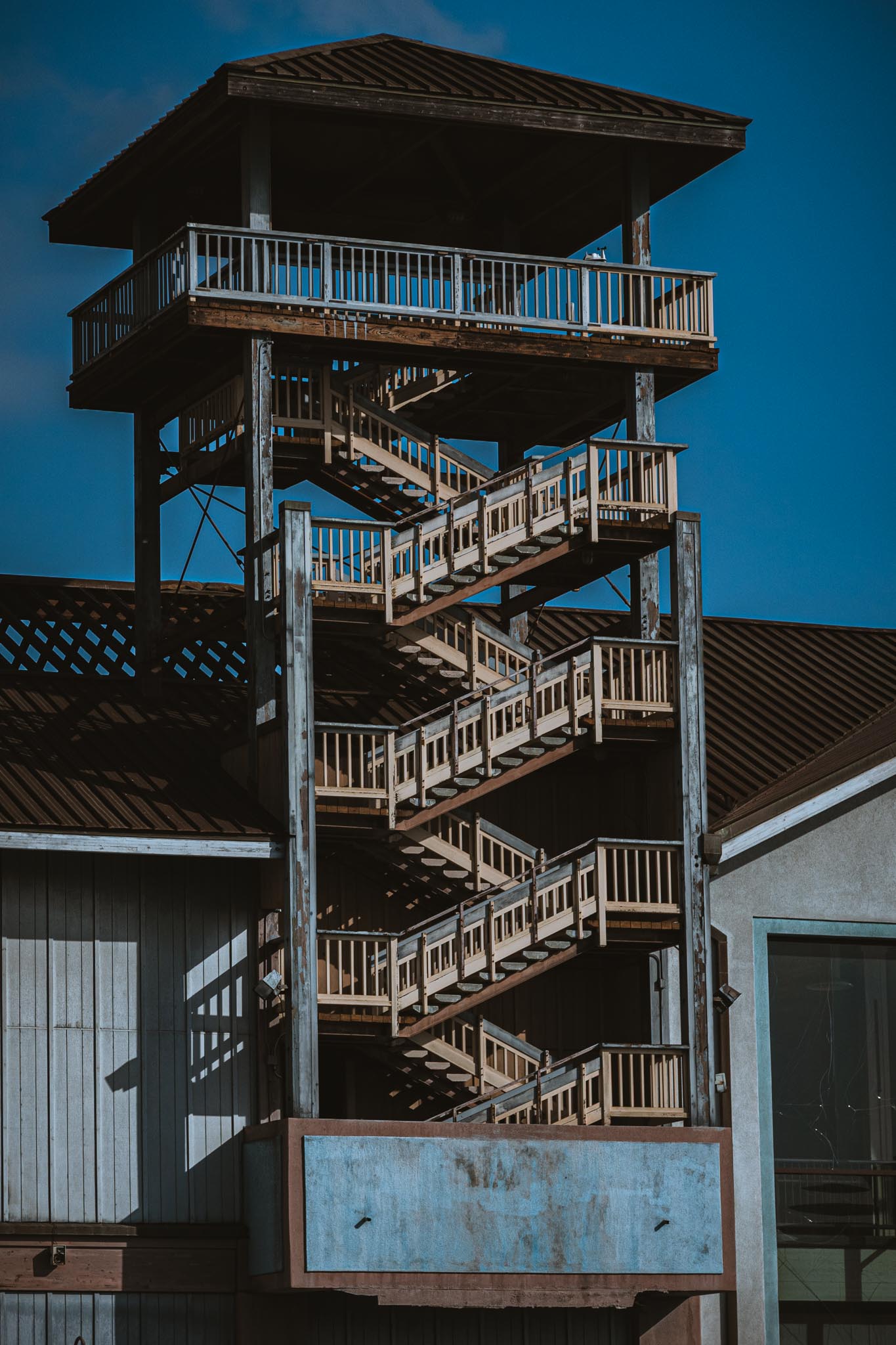
Diagonal mural on a tower against storm sky
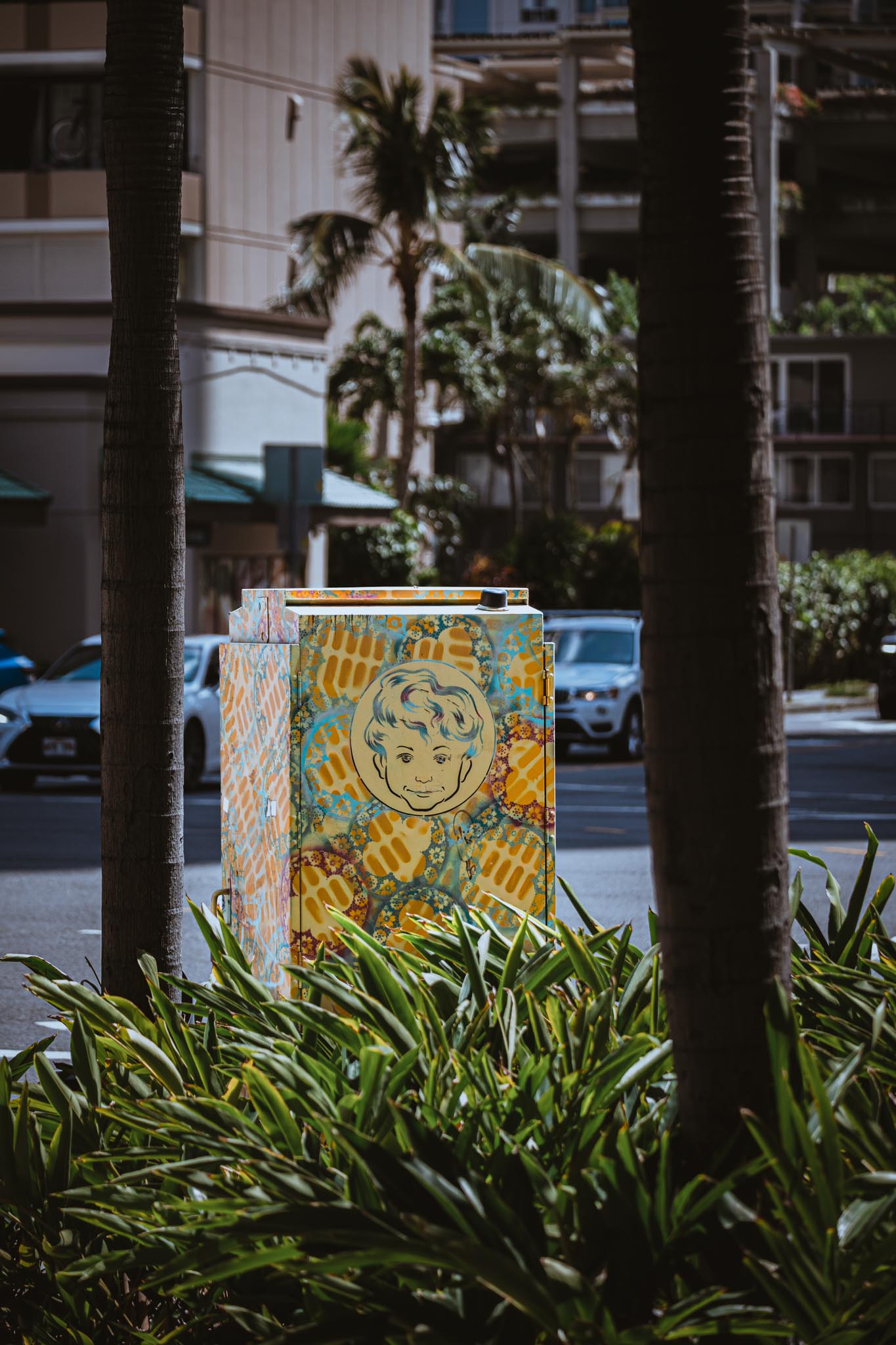
Painted Walls, Honolulu Deliberately unpaired - this card has no "then". 21.3070N 157.8580W - CL-04 - 2024
Painted utility box framed by palms
Painted Walls, Honolulu CL-04b
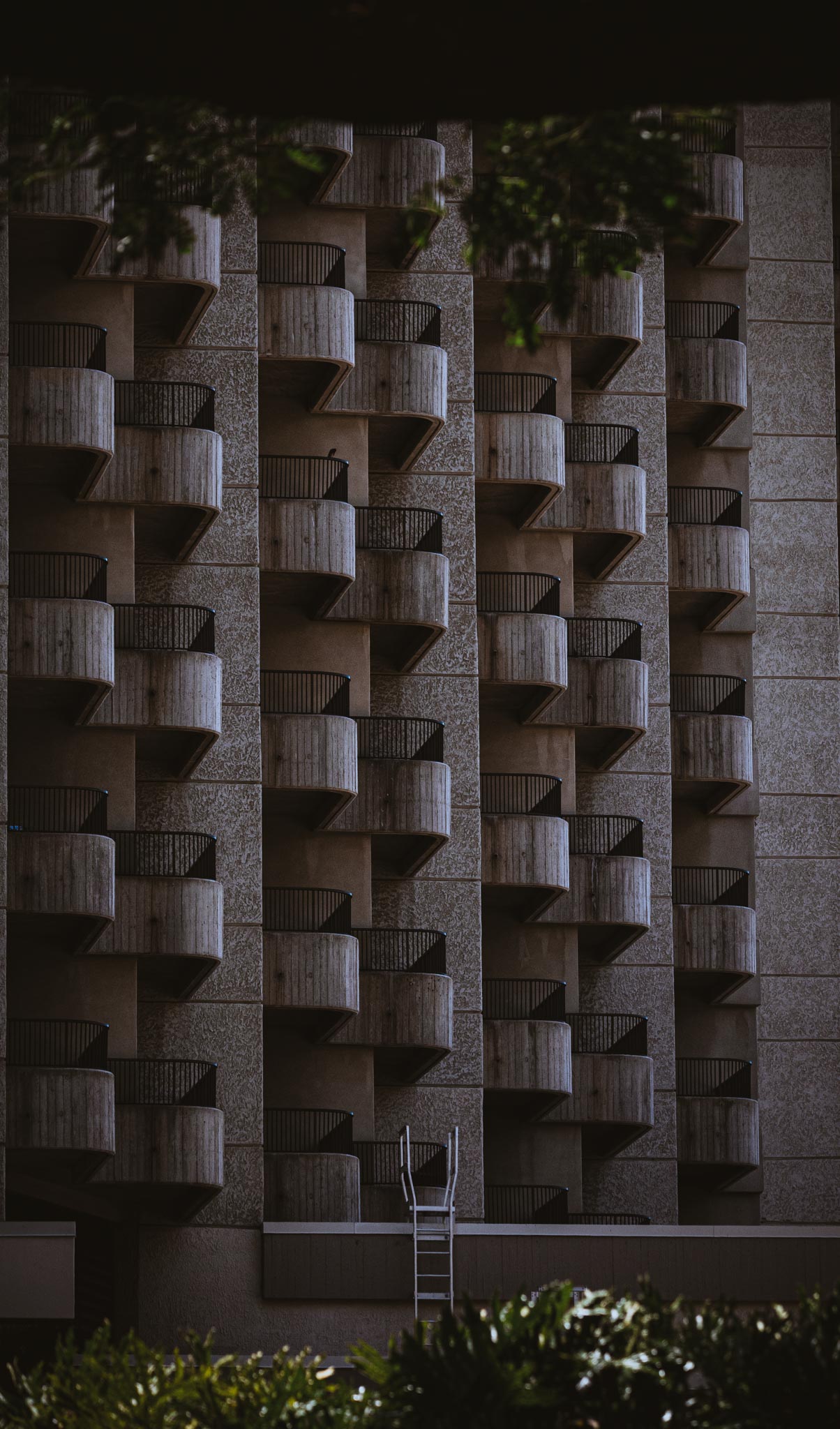
Repeating scalloped balconies
Painted Walls, Honolulu CL-04c
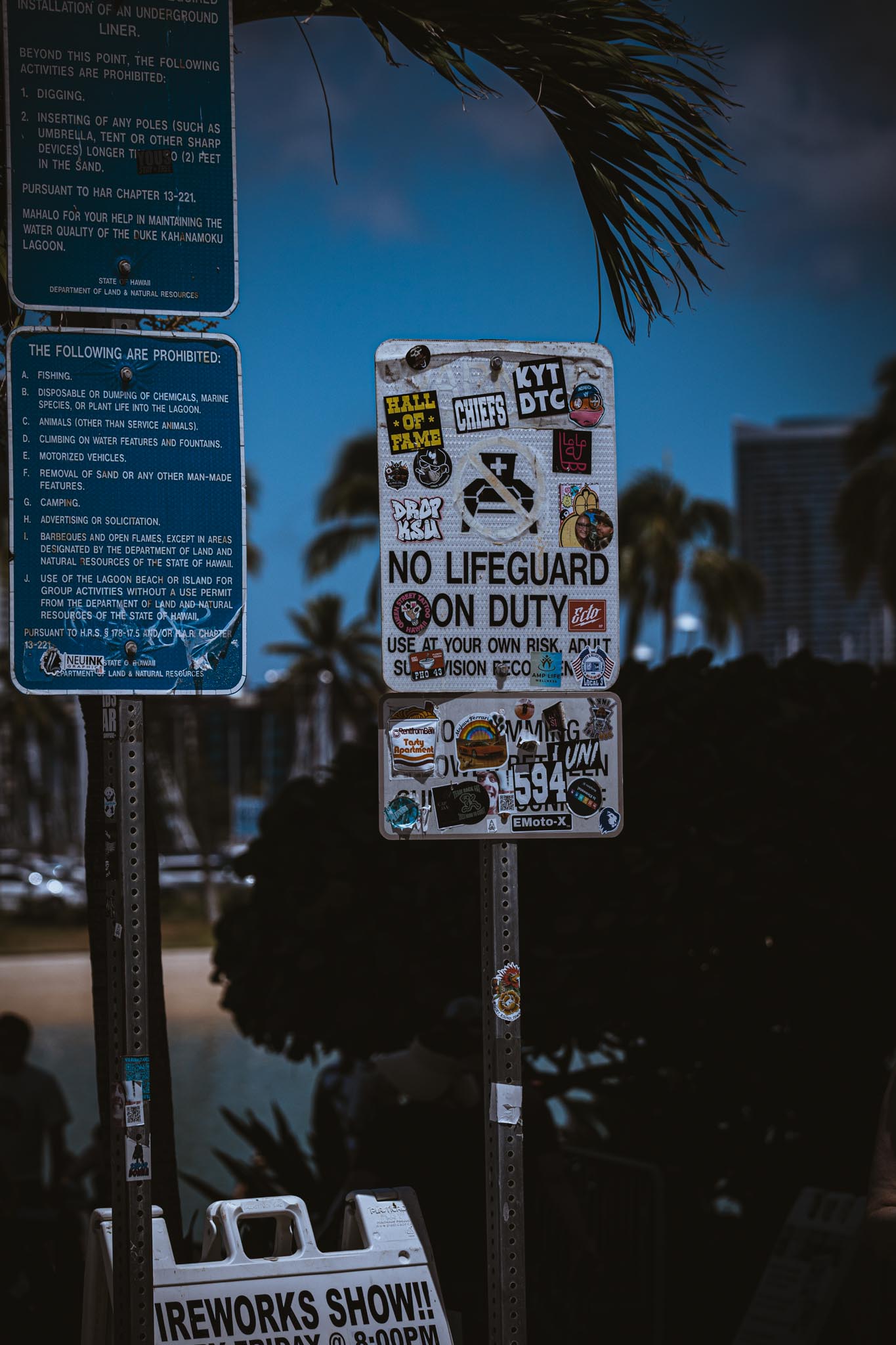
Stickered street sign at dusk
Painted Walls, Honolulu CL-04d

now - no then

Painted Walls, Honolulu

No history lesson here - just what's on the wall right now. Contemporary murals and painted utility boxes are the newest layer on an island that keeps writing over itself. This is the one card where the colour rule has nothing to pair against.

Wildlife

Native and introduced, told as one arc: what belonged here, and what we brought with good intentions.
04 / 06
Front-on turtle portrait, both eyes visible
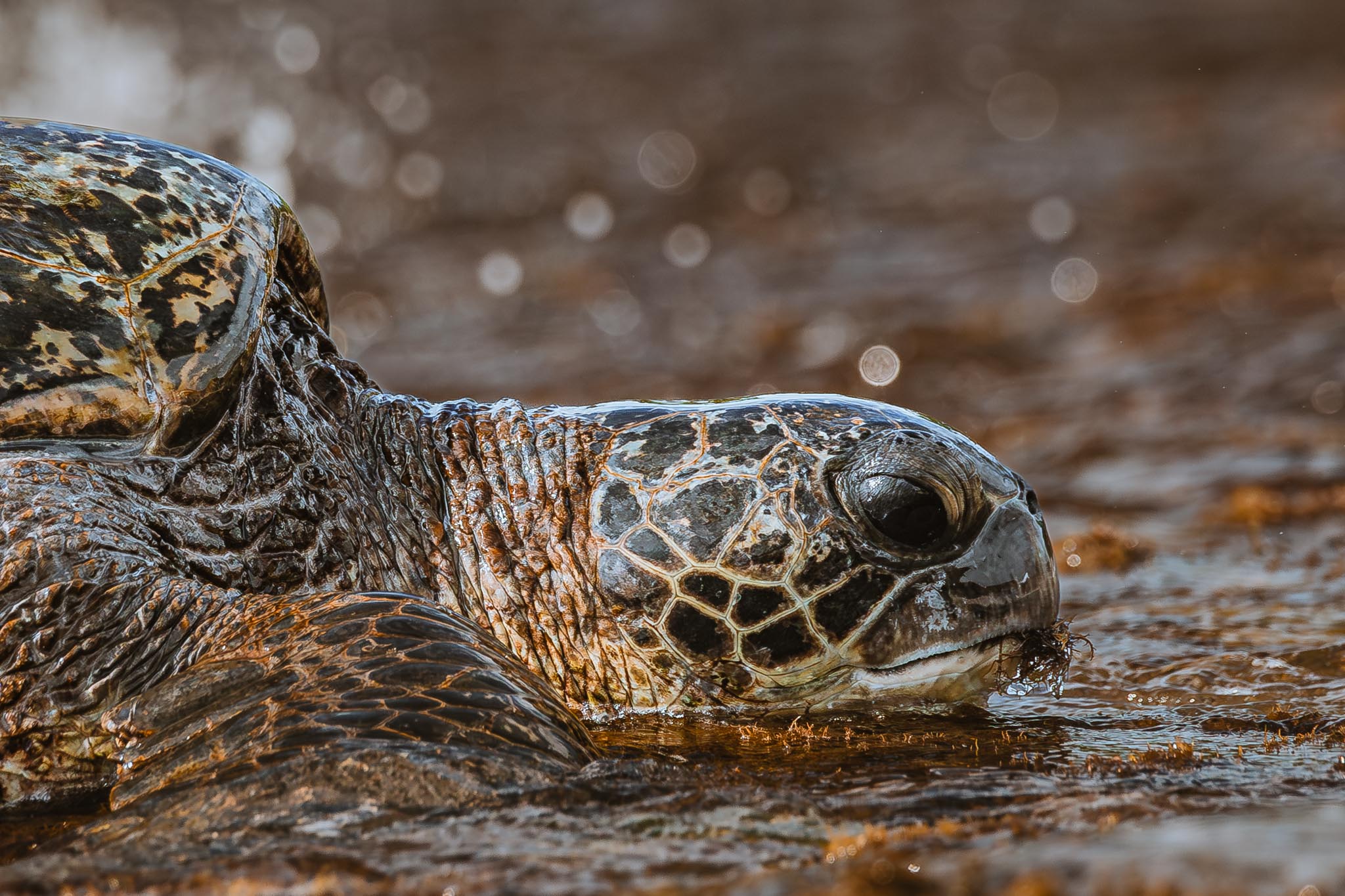
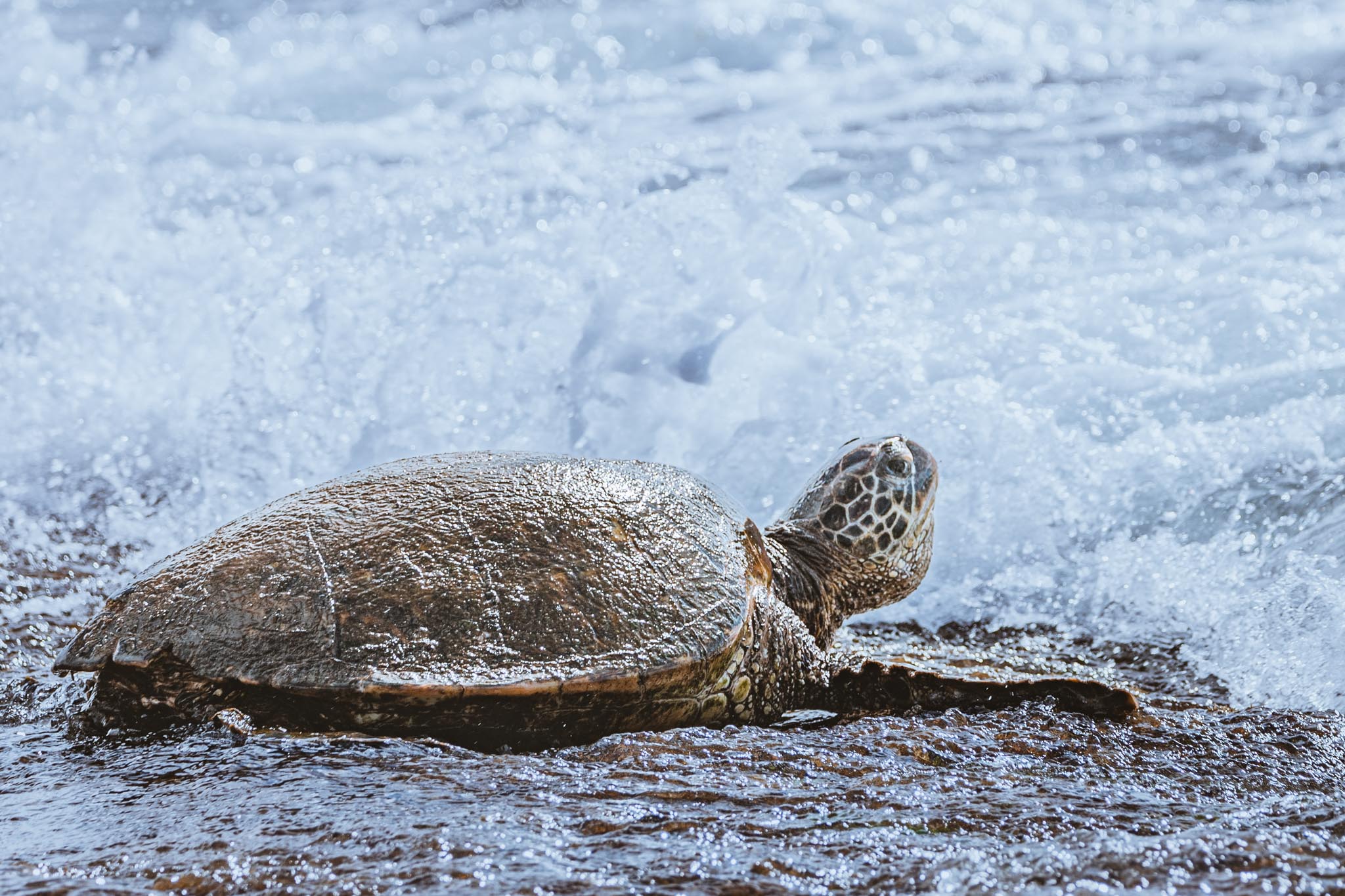
Honu - Green Sea Turtle Downlisted endangered -> threatened, 2015. 21.6180N 158.0870W - WL-01 - 2024
Head raised against a crashing wave
Honu - Green Sea Turtle WL-01b
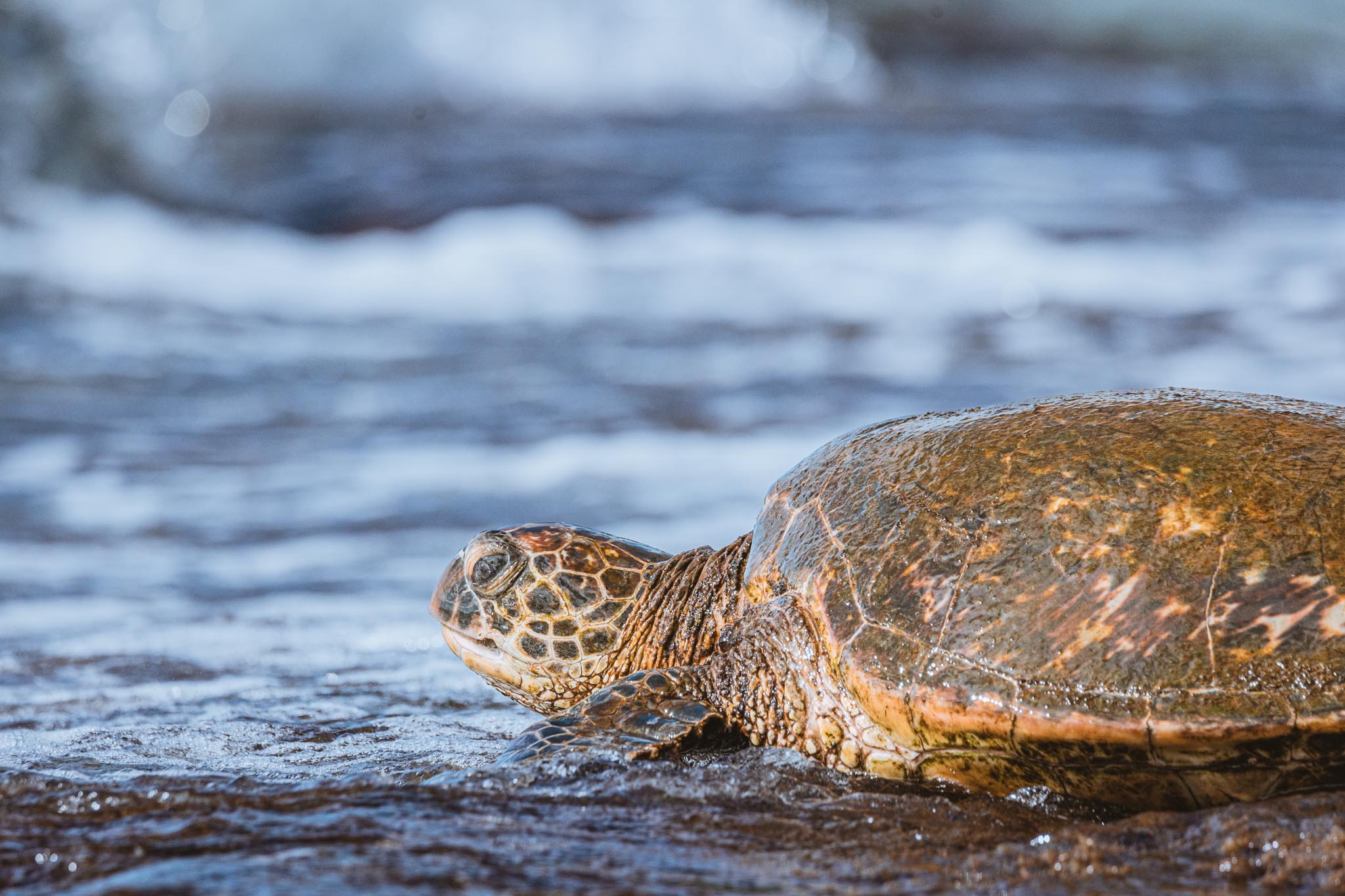
Turtle resting at the waterline
Honu - Green Sea Turtle WL-01d
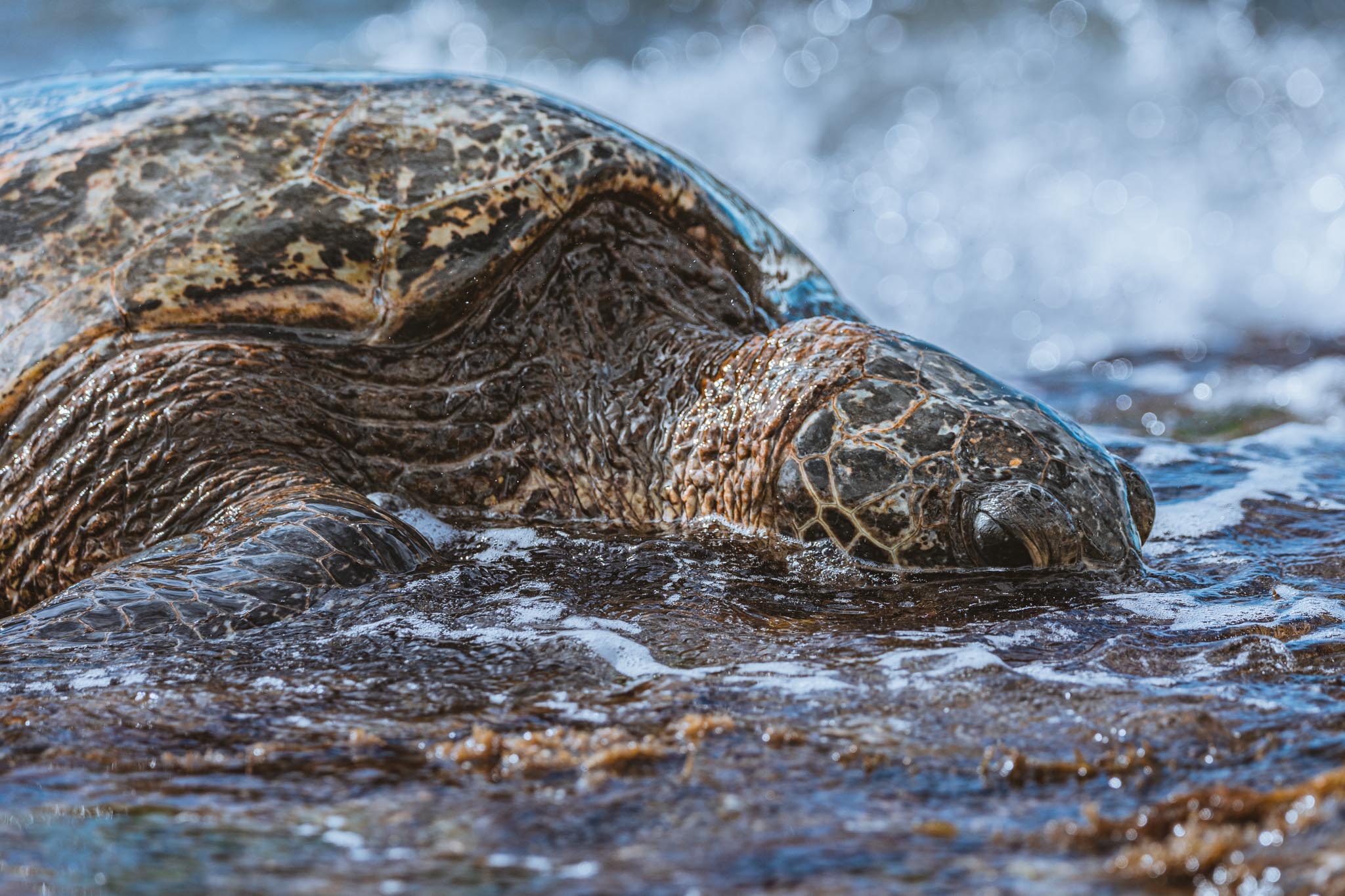
Close turtle profile in the wash
Honu - Green Sea Turtle WL-01e

native - listed 1978

Honu - Green Sea Turtle

Green sea turtles were hunted hard enough that by the mid-1900s they'd stopped nesting on the main islands altogether. Federal protection in 1978 turned that around - the honu hauled out on this beach is one of a population that's grown roughly 5% a year since.
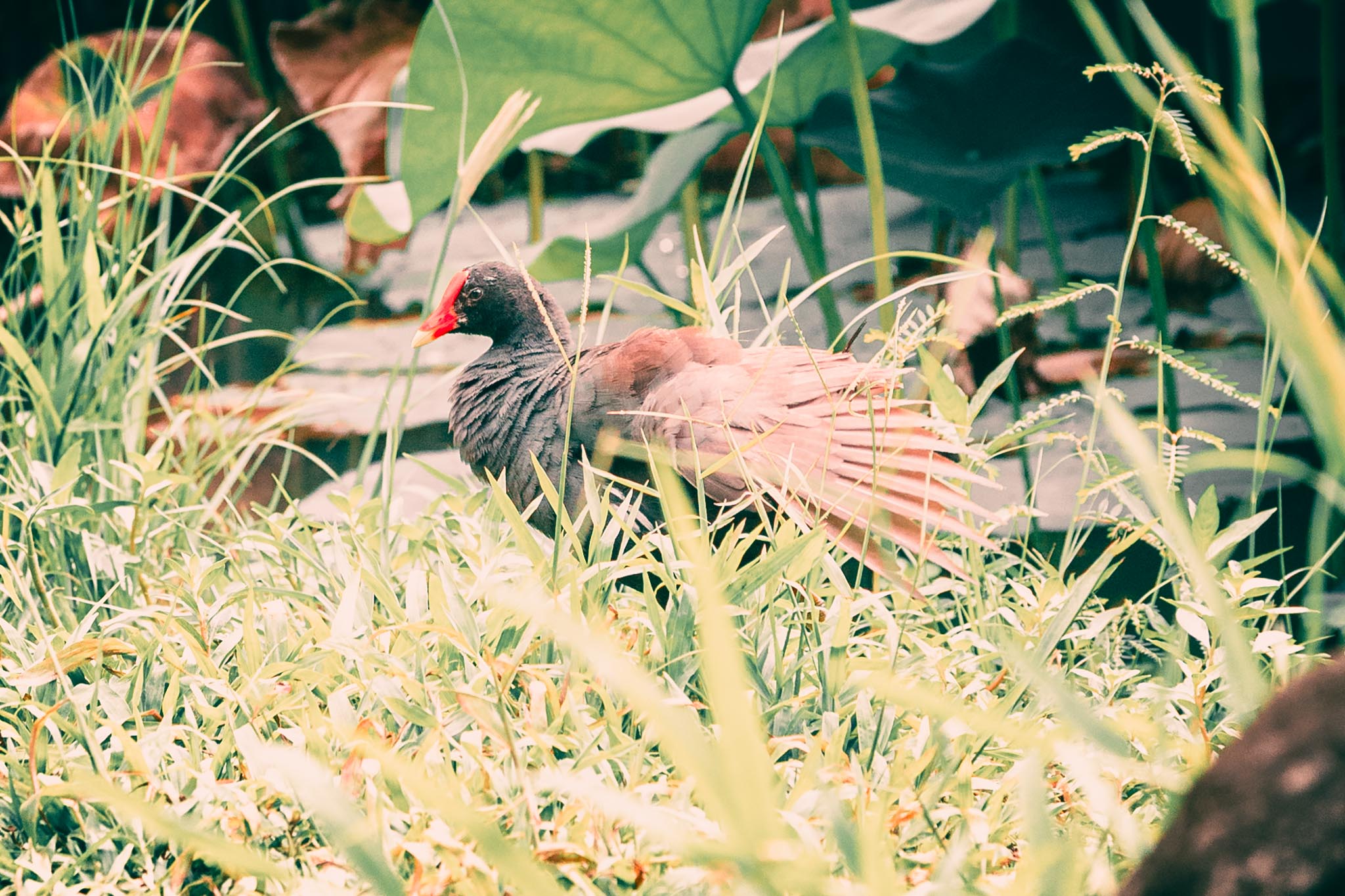
Gallinule swimming among aquatic plants
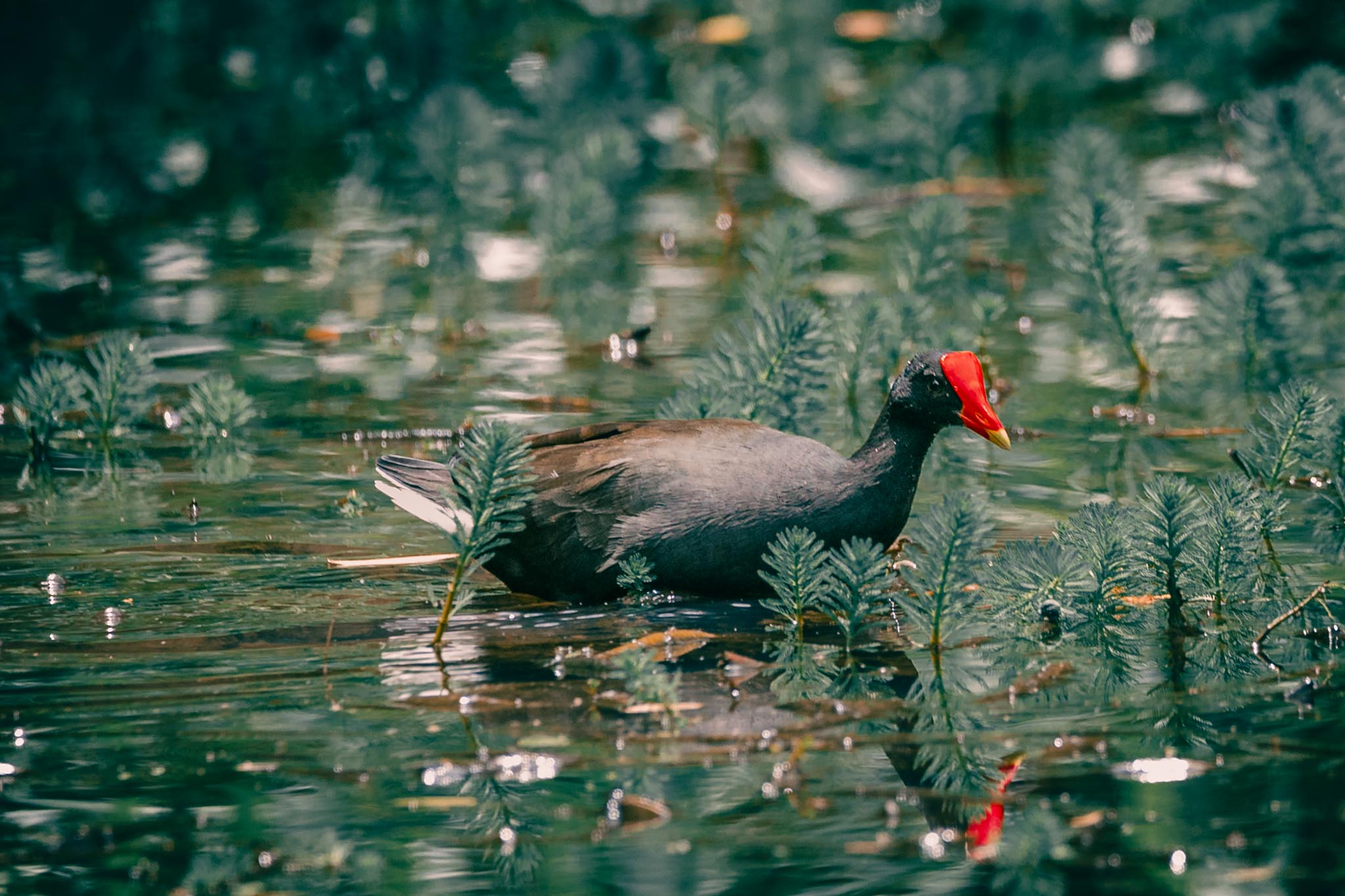
Alae Ula - Hawaiian Gallinule "Burnt forehead" - the bird that brought fire. 21.4300N 157.8000W - WL-02 - 2024
Gallinule backlit in grass
Alae Ula - Hawaiian Gallinule WL-02b

native - endangered

Alae Ula - Hawaiian Gallinule

Legend says this bird stole fire from the gods and scorched its own forehead carrying it home - hence the red shield. By the 1960s, hunting and wetland loss had cut the real population to around sixty birds statewide.
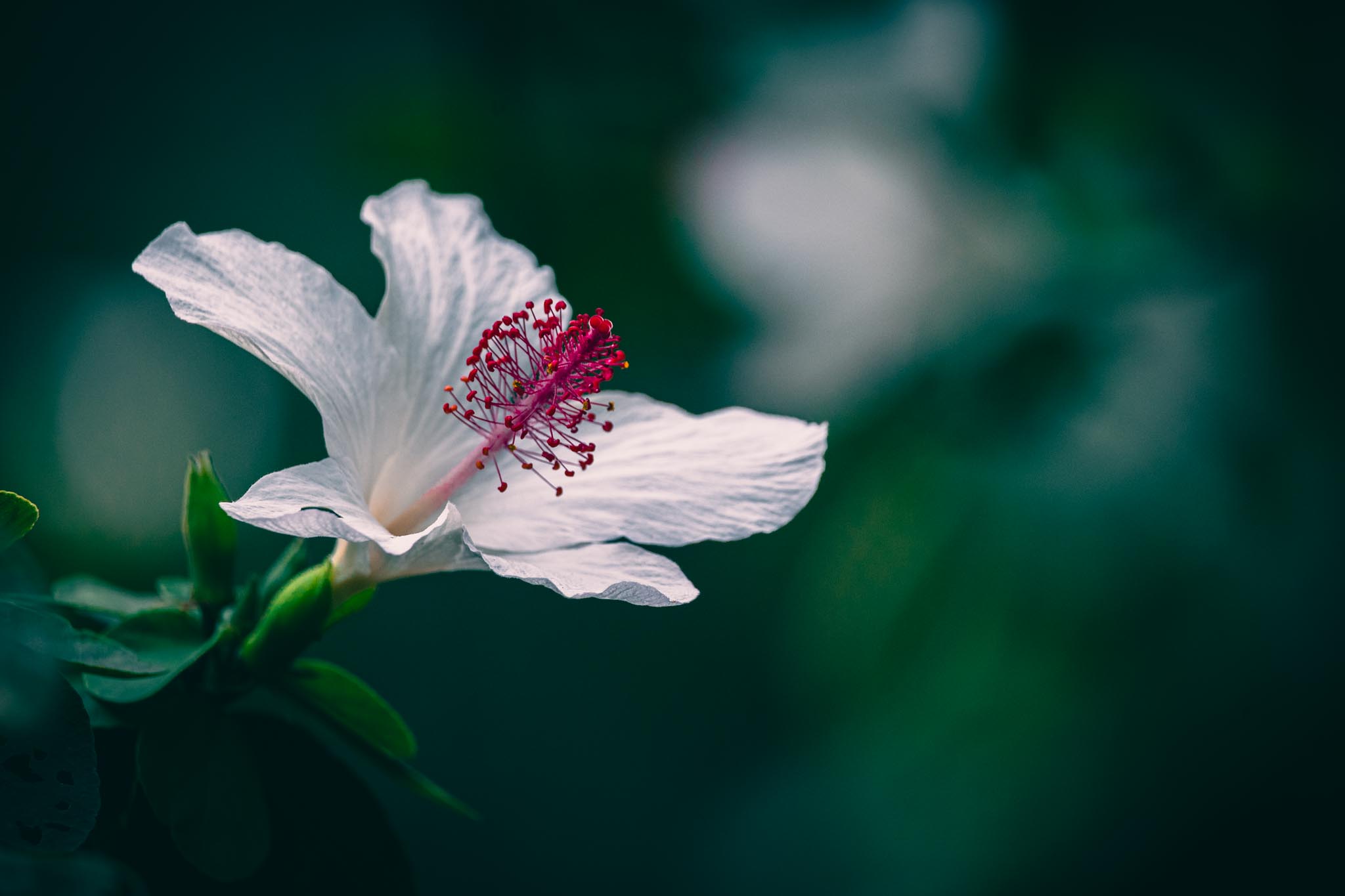
Pale hibiscus flower against dark foliage
Waimea Valley Flora Waimea Valley protects thousands of tropical and subtropical plant taxa. 21.6408N 158.0530W - WL-04 - 2024
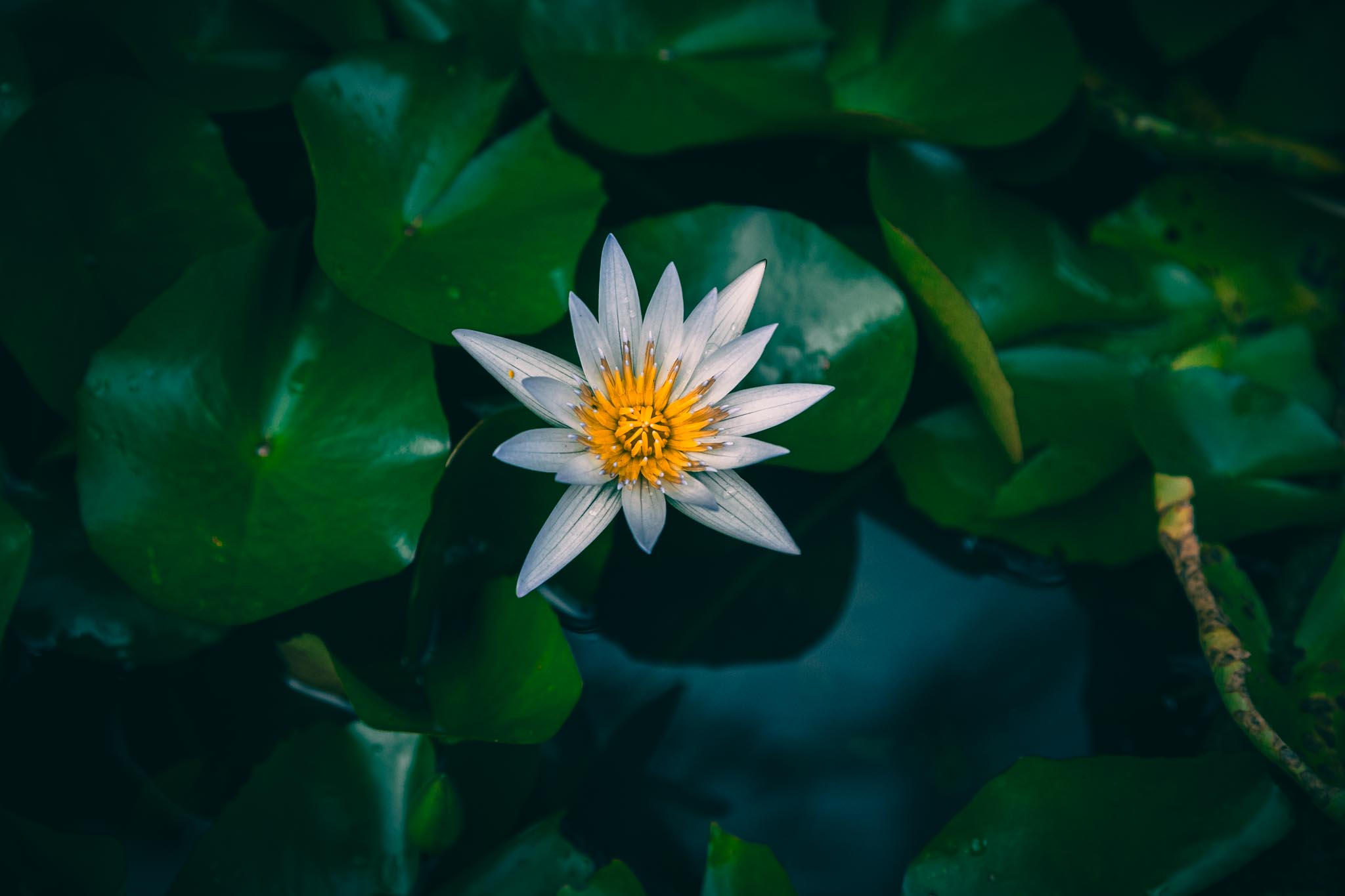
White water lily floating in green water
Waimea Valley Flora WL-04b
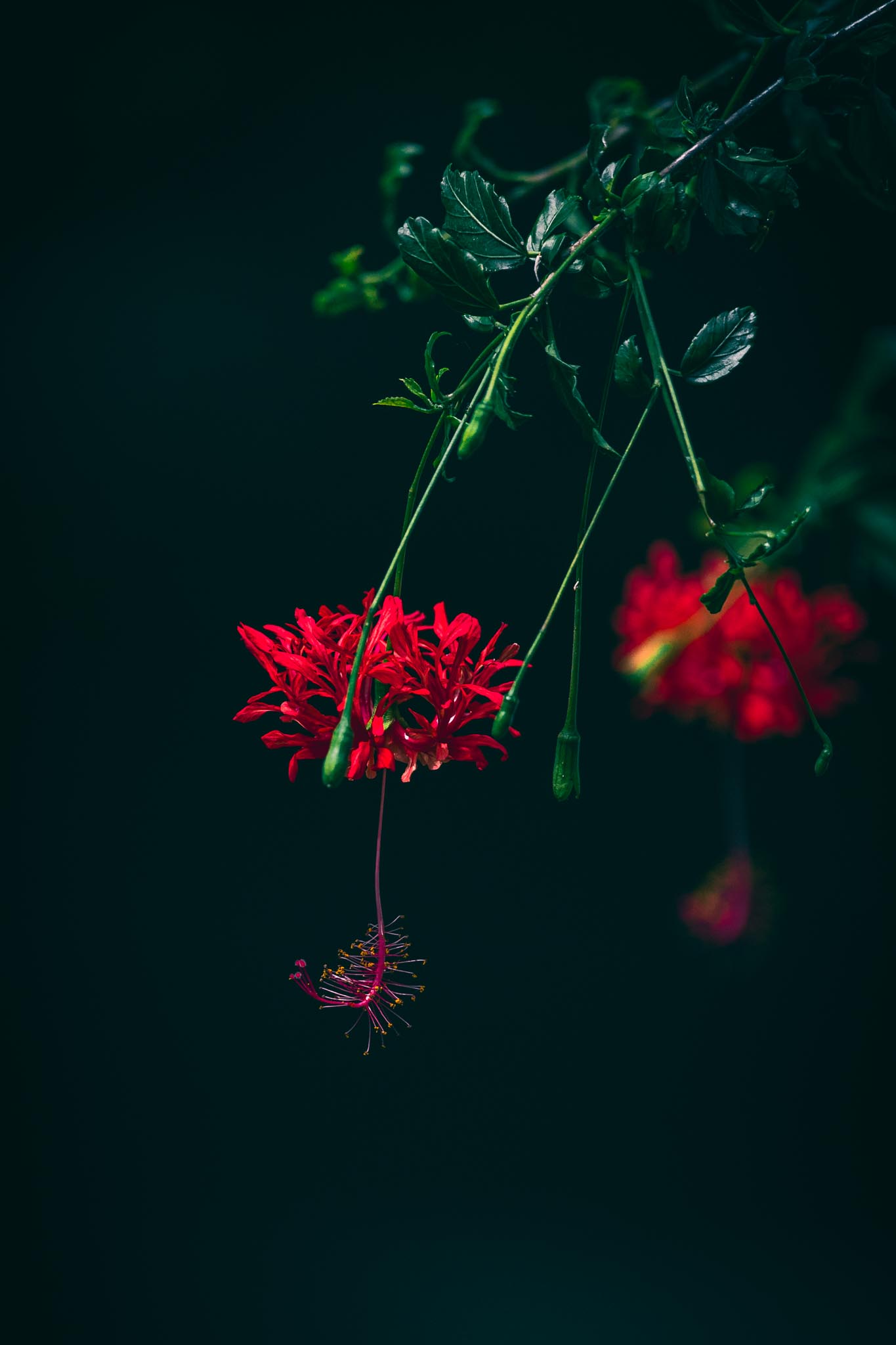
Red hanging flowers in deep shade
Waimea Valley Flora WL-04c
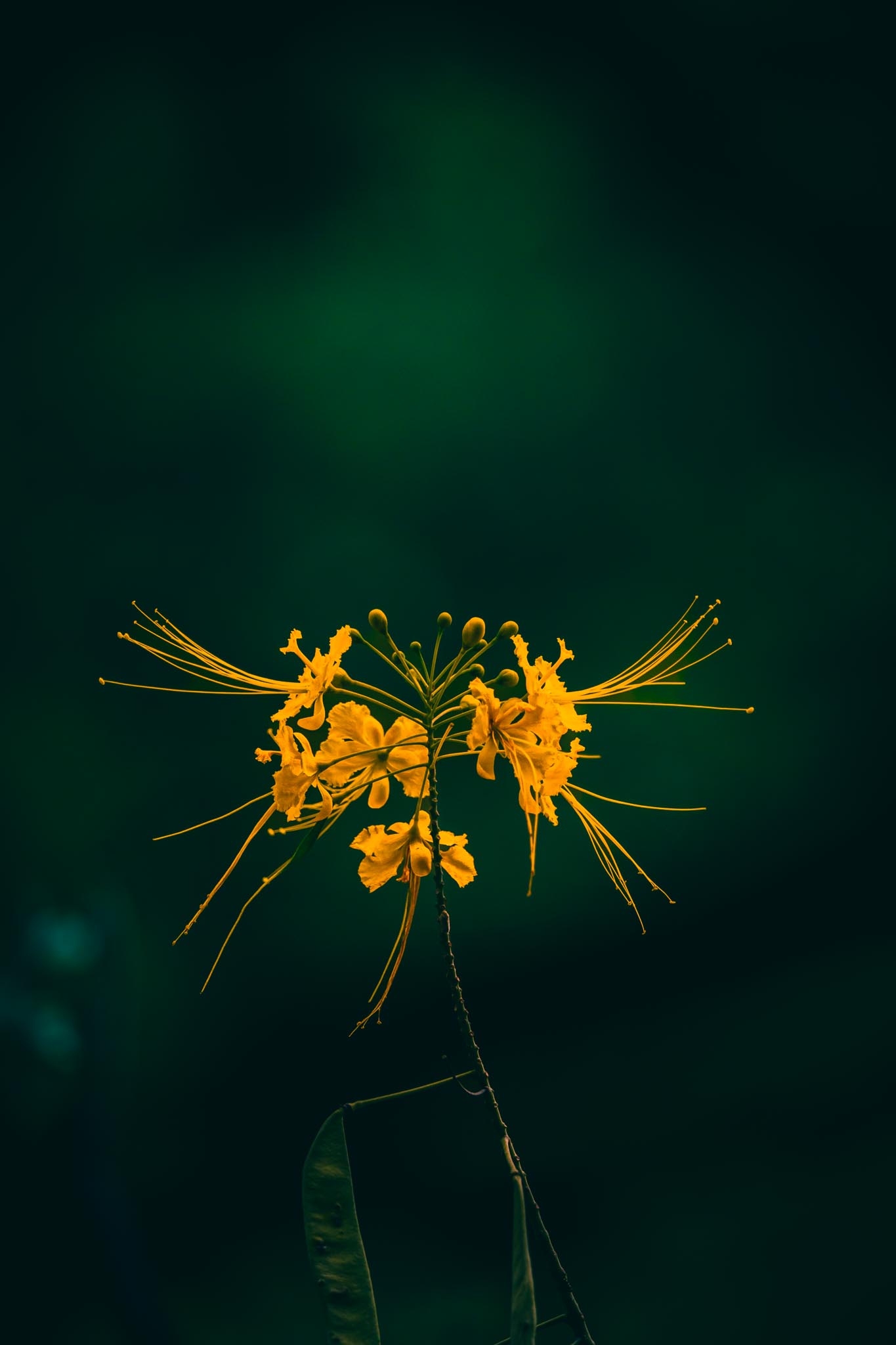
Small yellow flowers in low light
Waimea Valley Flora WL-04f
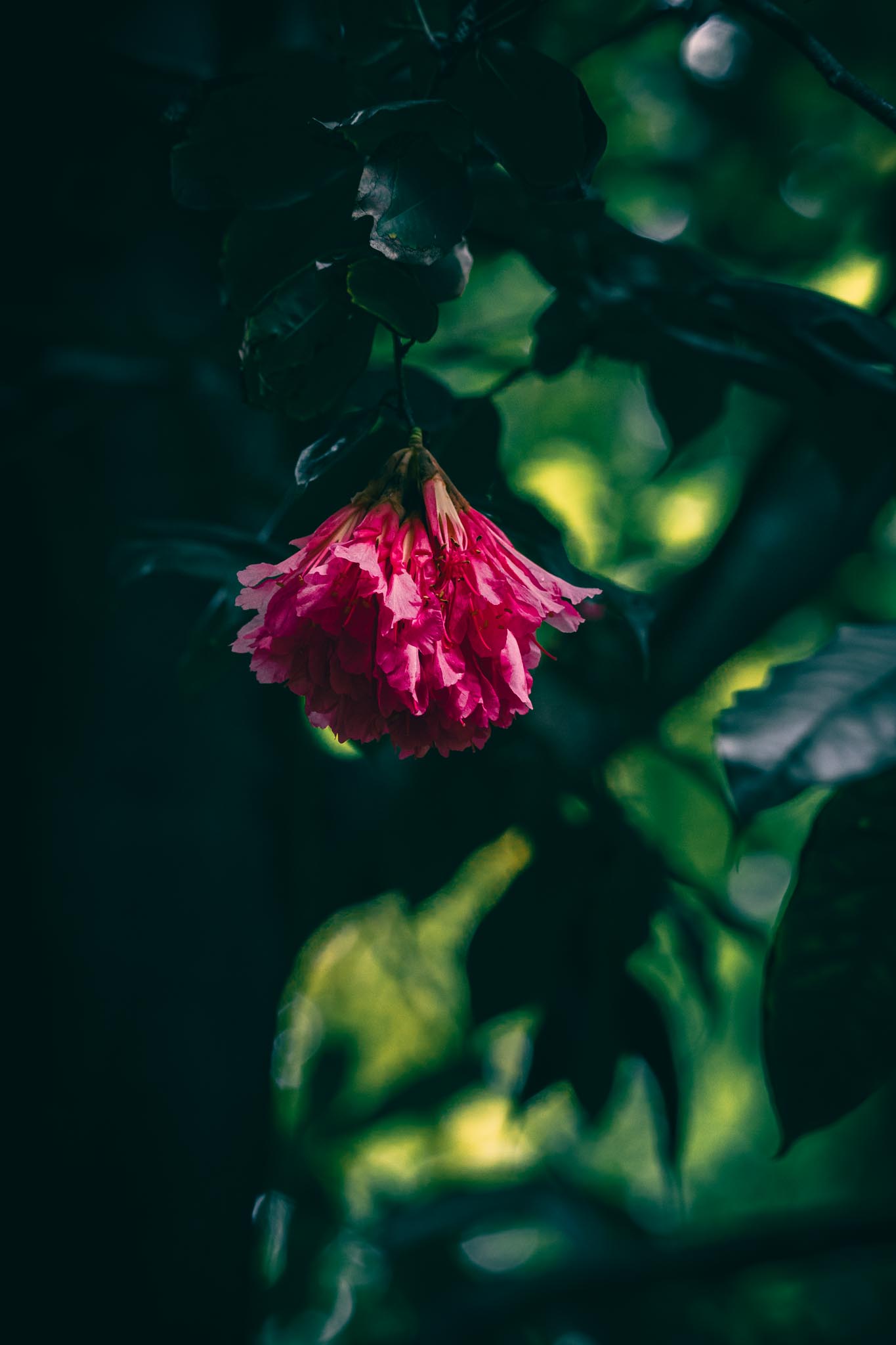
Pink flower tucked into dark greenery
Waimea Valley Flora WL-04e

hibiscus - water lily - valley blooms

Waimea Valley Flora

The valley is a living botanical archive: cultivated collections, Polynesian-introduced plants, and tropical blooms gathered in one wet windward corridor.
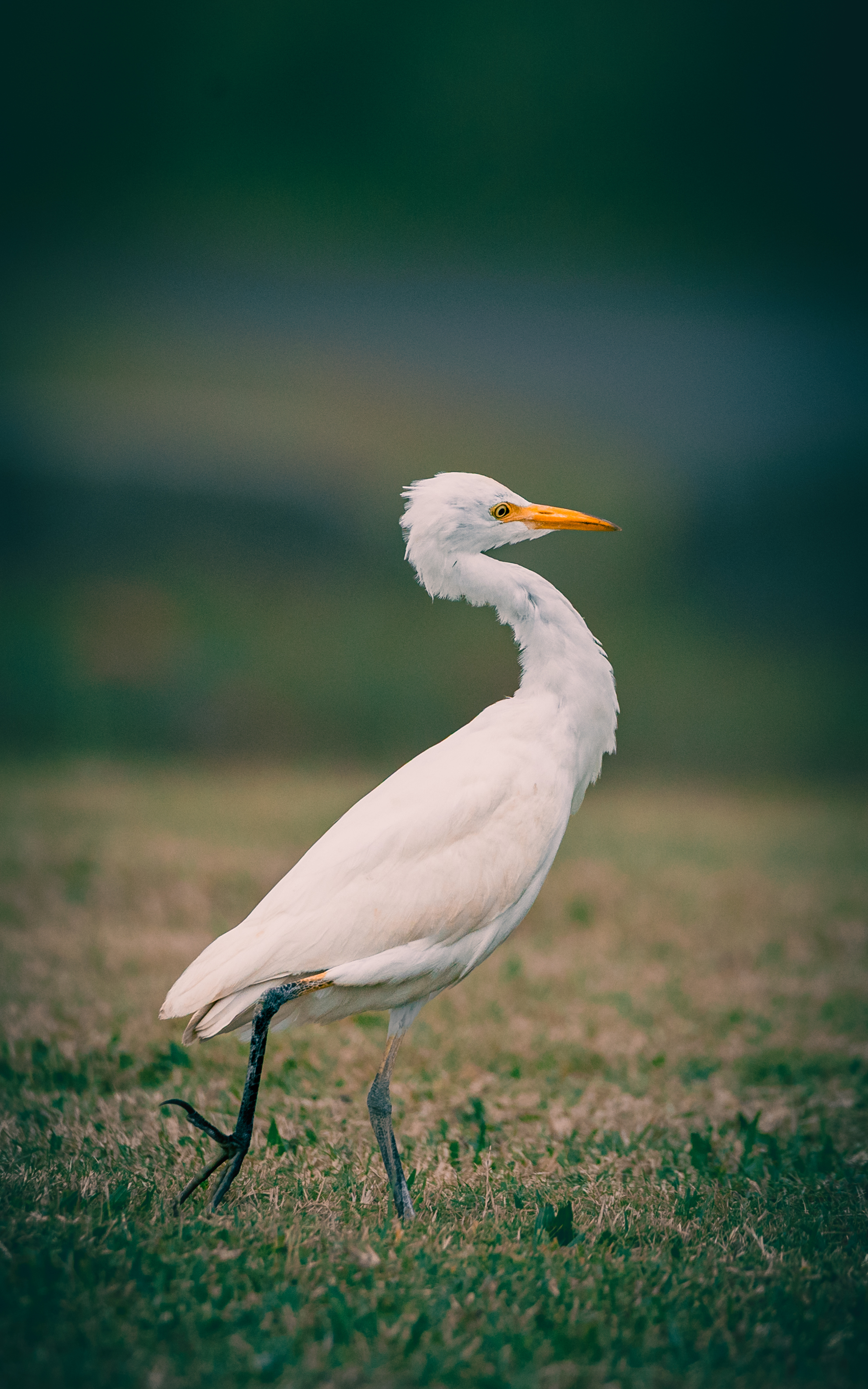
Cattle egret mid-stride, foot lifted
The Introduced 150 released 1959; ~30,000 by the 1980s. 21.5000N 157.8400W - WL-03 - 2024
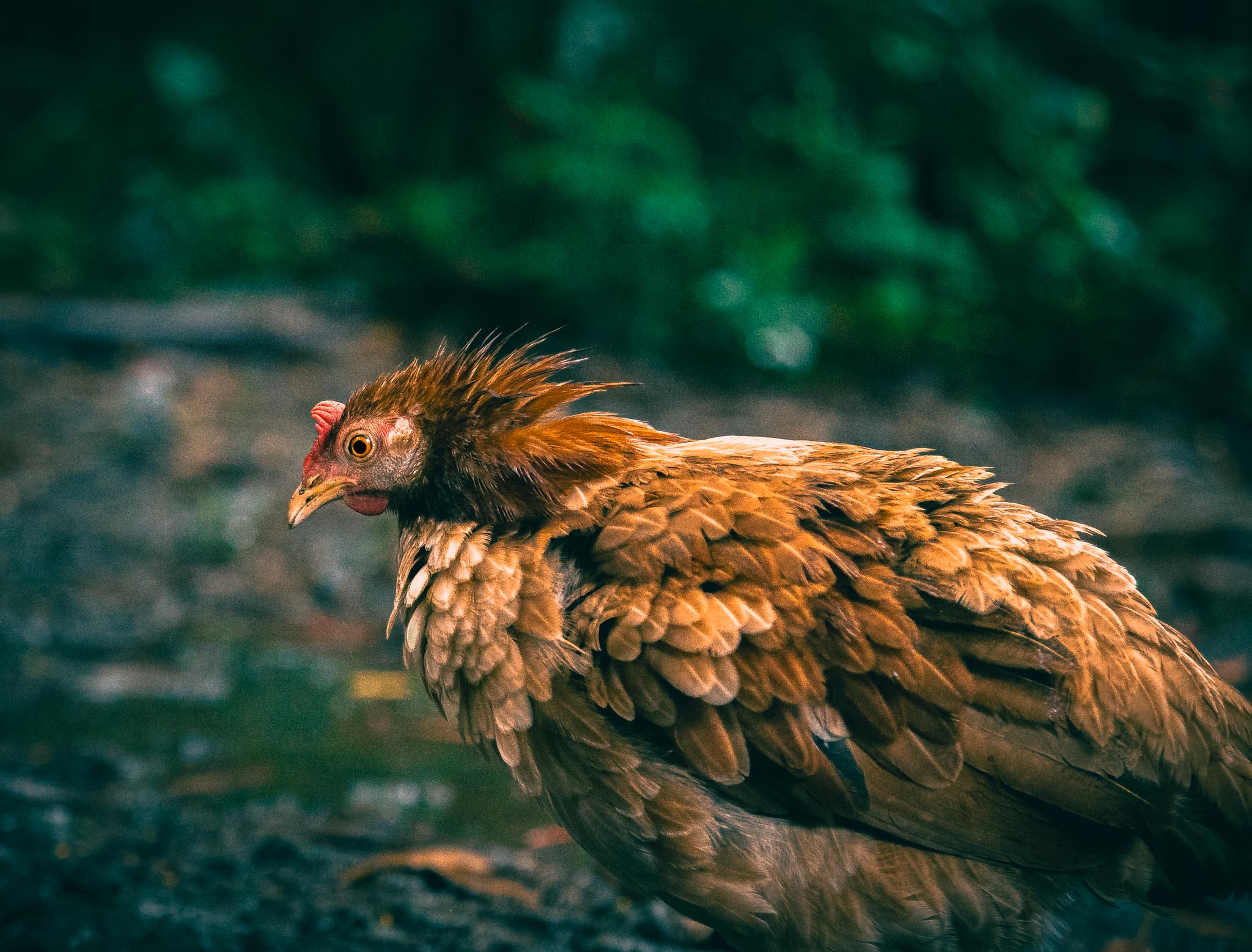
Free-roaming chicken in wet forest light
The Introduced WL-03b
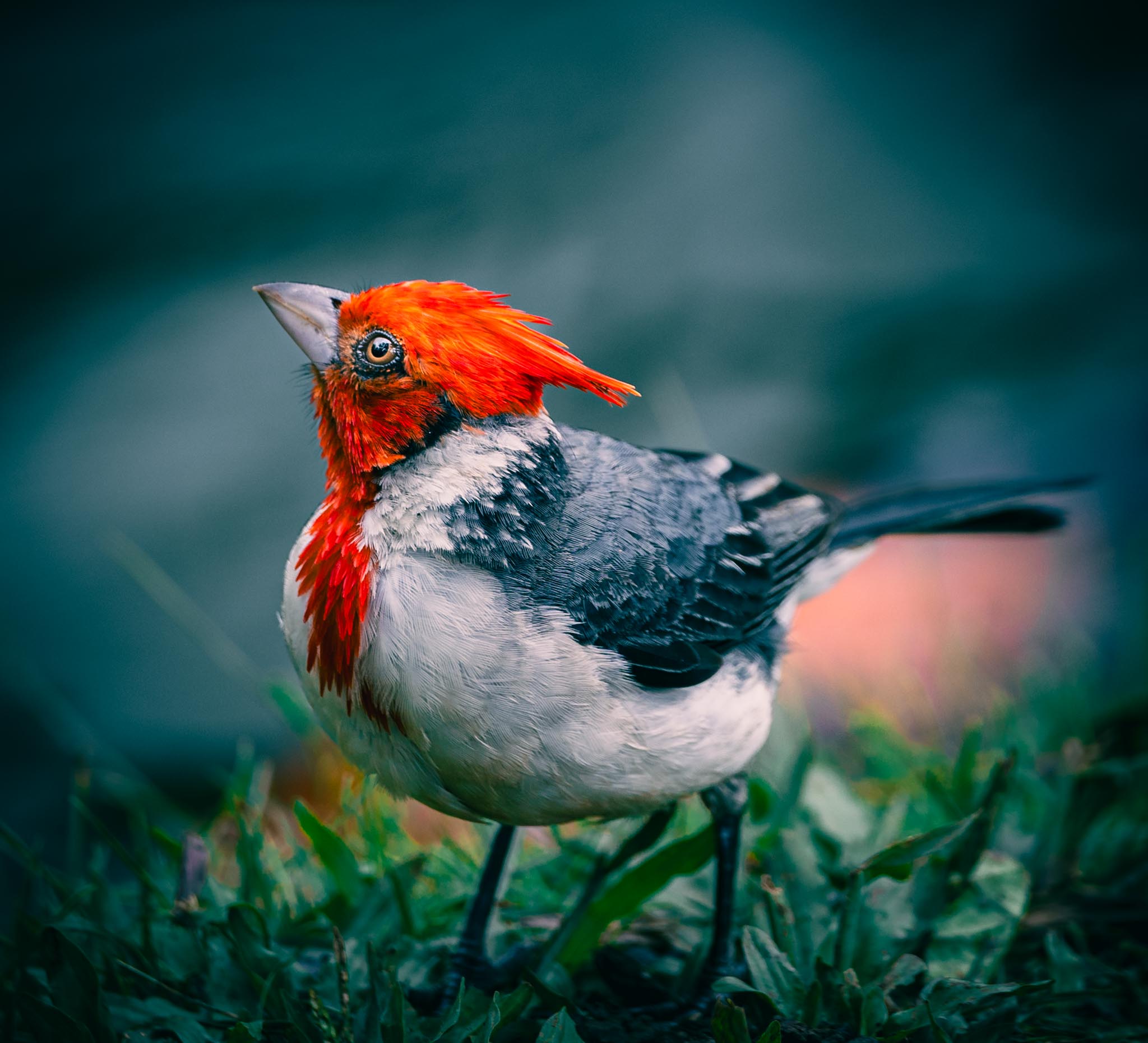
Red-crested cardinal in grass
The Introduced WL-03c
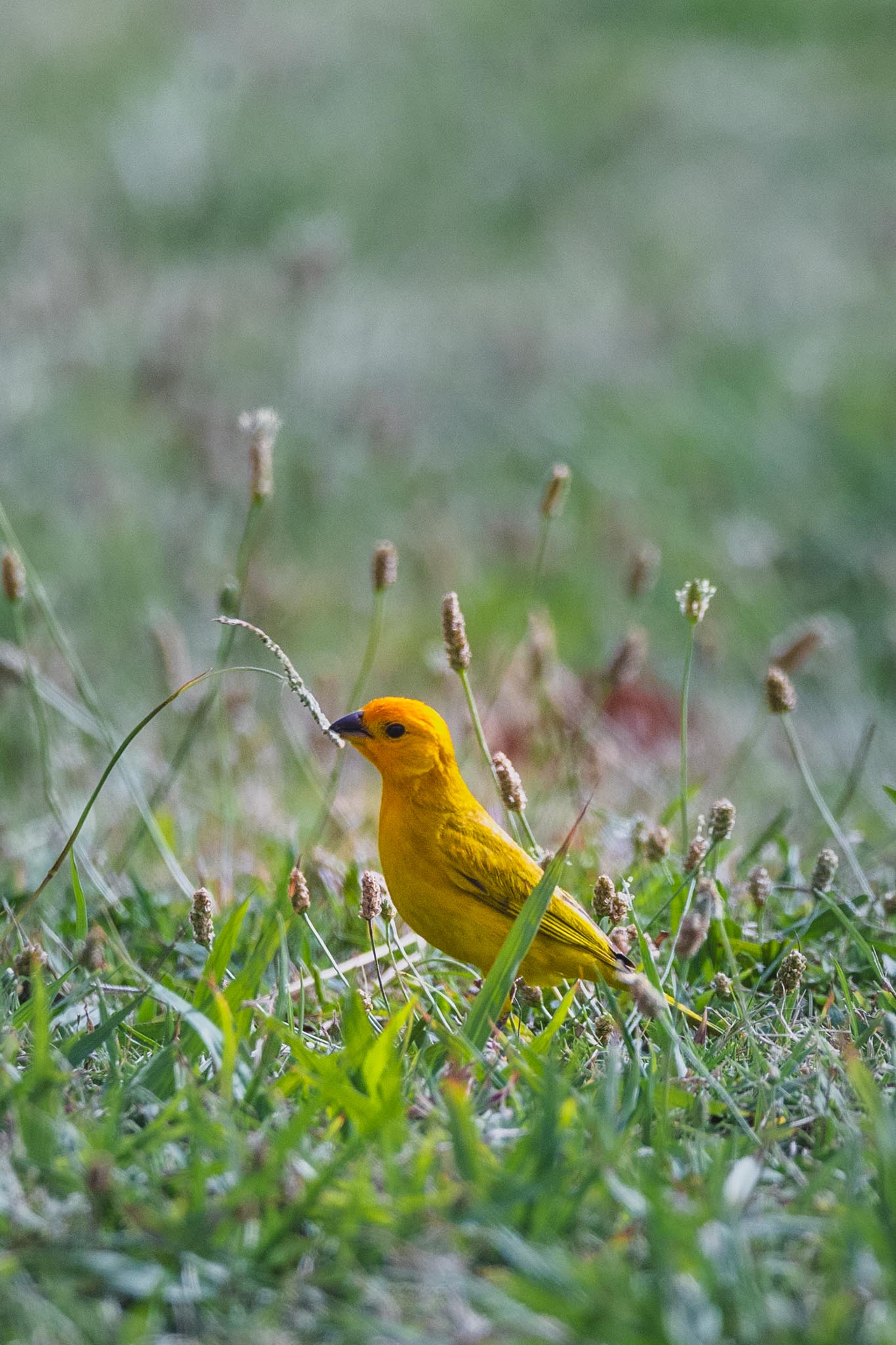
Yellow introduced songbird in low grass
The Introduced WL-03d
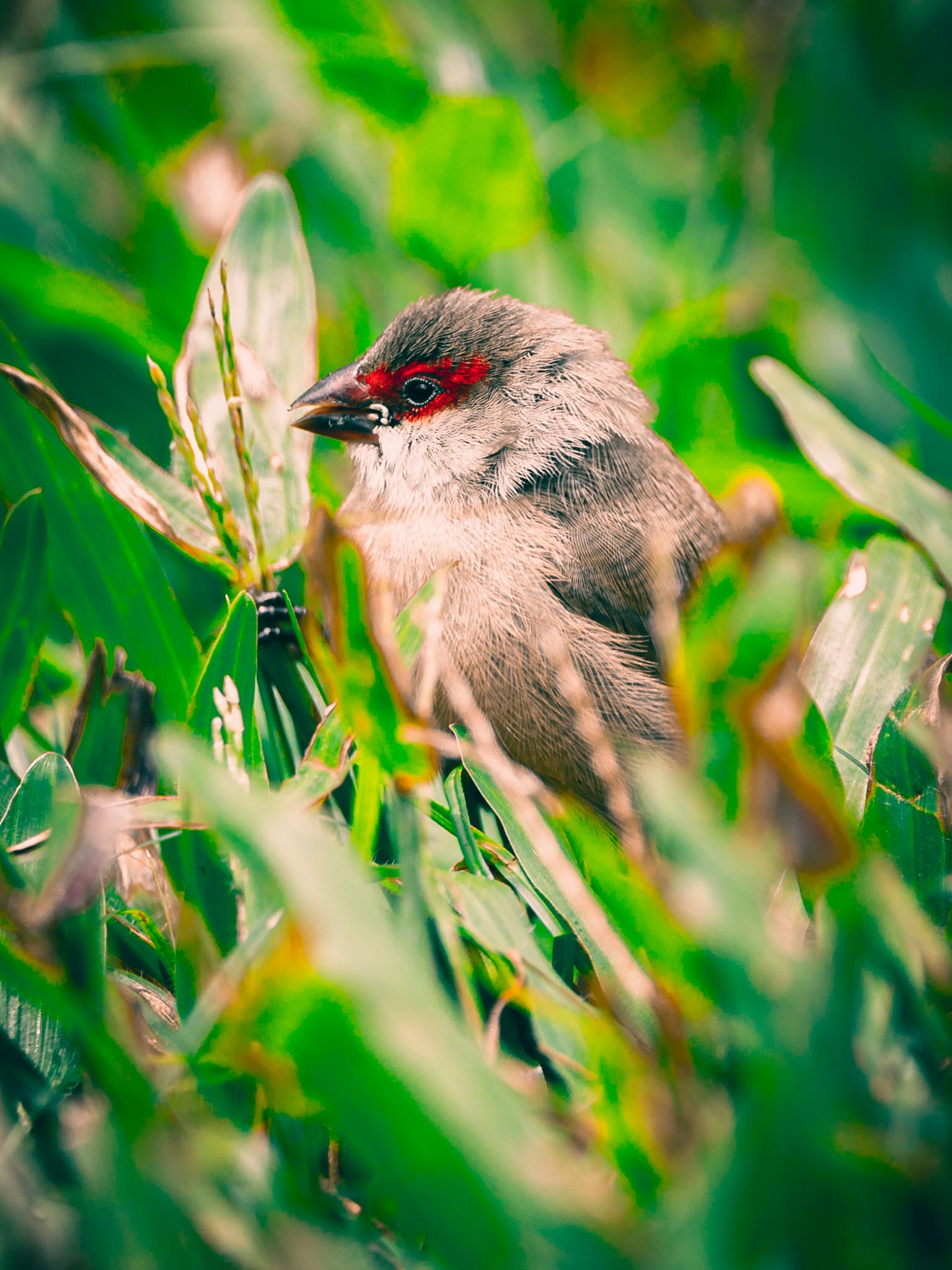
Small introduced bird tucked into green grass
The Introduced WL-03e
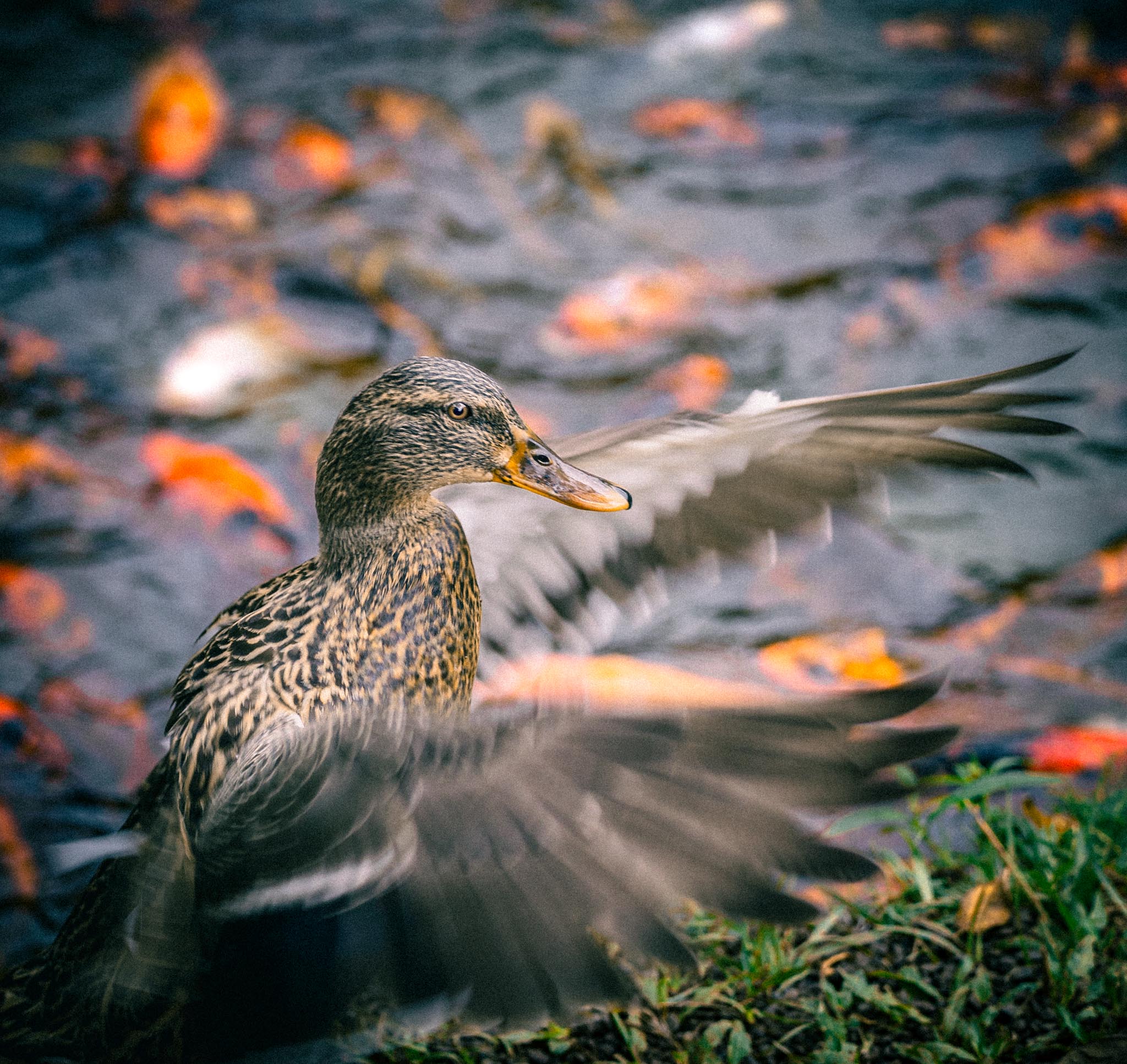
Introduced bird lifting off from the pond edge
The Introduced WL-03g

egret - chicken - cardinal - parakeet

The Introduced

The introduced board is denser now: cattle egret, red-crested cardinal, yellow songbird, city myna or bulbul, escaped parakeet, and the free-roaming chicken as the domestic species gone feral.

Urban

Waikiki was cottages until 1965. Then the skyline opened up and never closed.
05 / 06
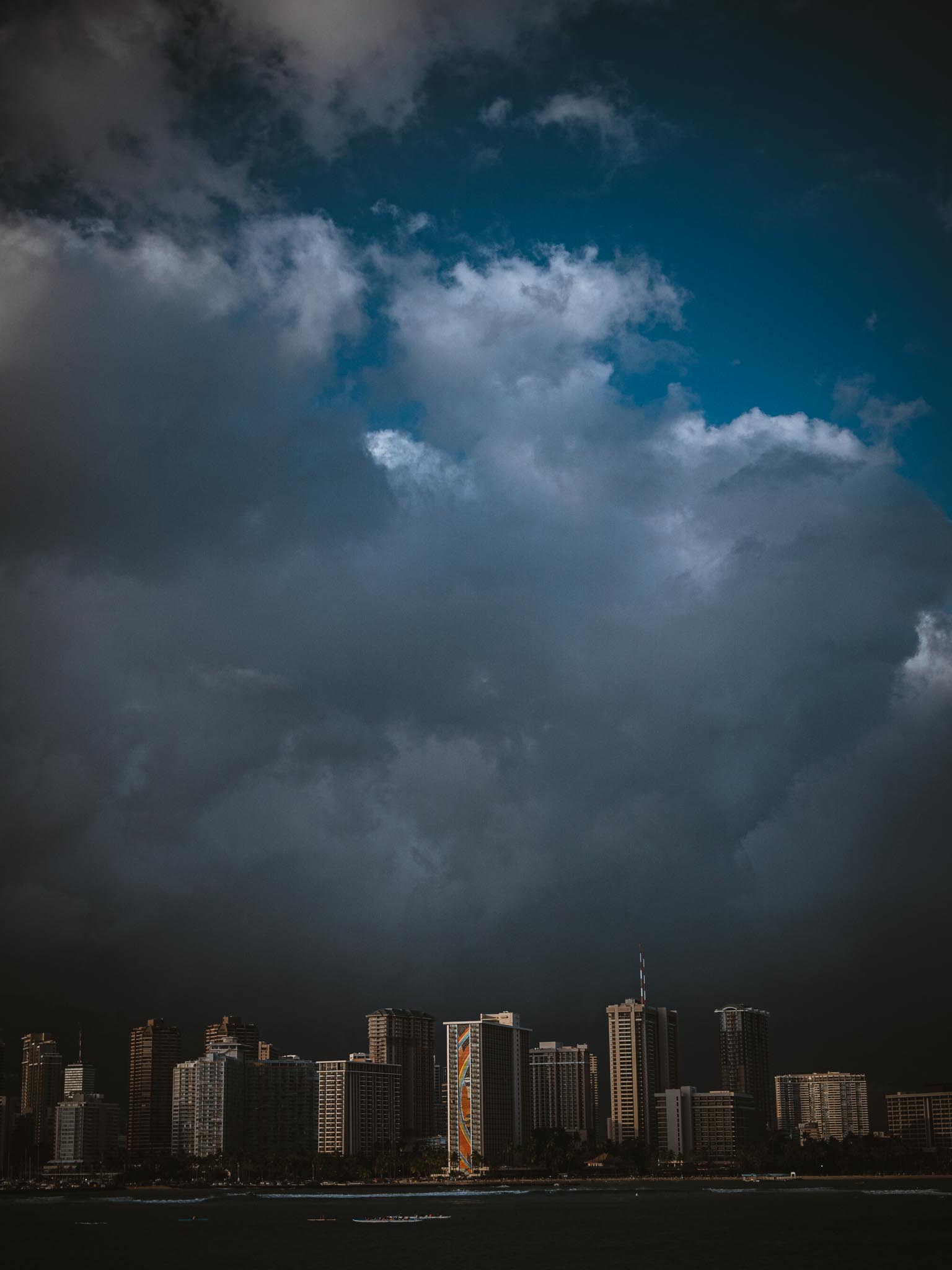
Storm cloud over a single lit tower
Waikiki Skyline Ilikai, 1965 - the first Waikiki condo tower. 21.2790N 157.8290W - UR-01 - 2024
Urban shoreline structure under heavy sky
Waikiki Skyline UR-01b
Mural tower against a near-black sky
Waikiki Skyline UR-01c
Balcony pattern from below
Waikiki Skyline UR-01d

Ilikai, 1965

Waikiki Skyline

Waikiki was low-rise beach cottages until 1965, when the 26-storey Ilikai went up and broke the skyline open. Advances in jet travel cut the West Coast flight to under five hours; visitor numbers sextupled that decade, and the buildings kept climbing to match.

Human Moments

The quiet close. No history, no citations - just the trip.
06 / 06
Human moment framed in low evening light
Under the Banana Leaves The archive ends without a citation. 21.3890N 157.8000W - HM-01 - 2024
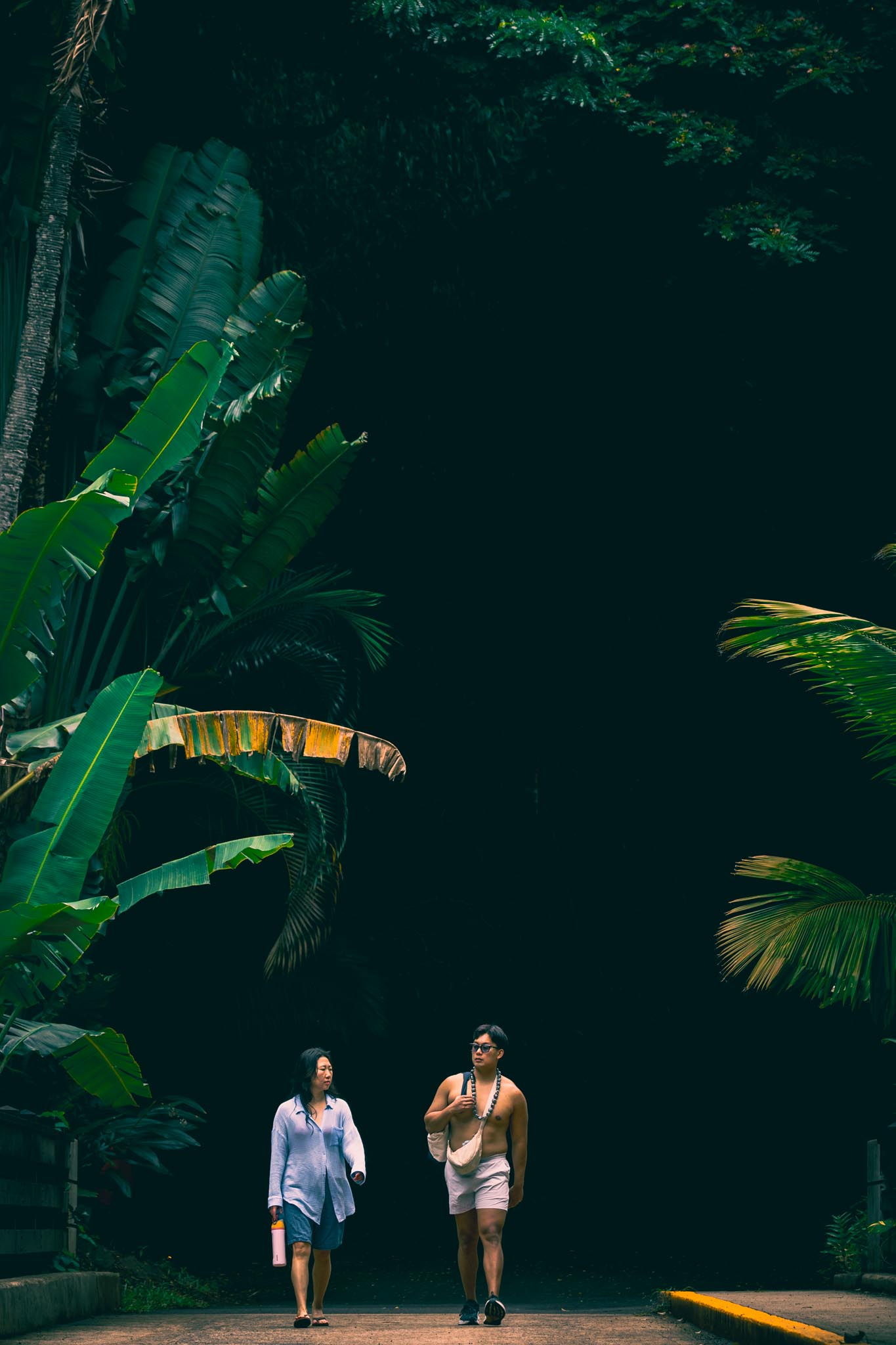
Couple walking a shaded jungle path
Under the Banana Leaves HM-01b
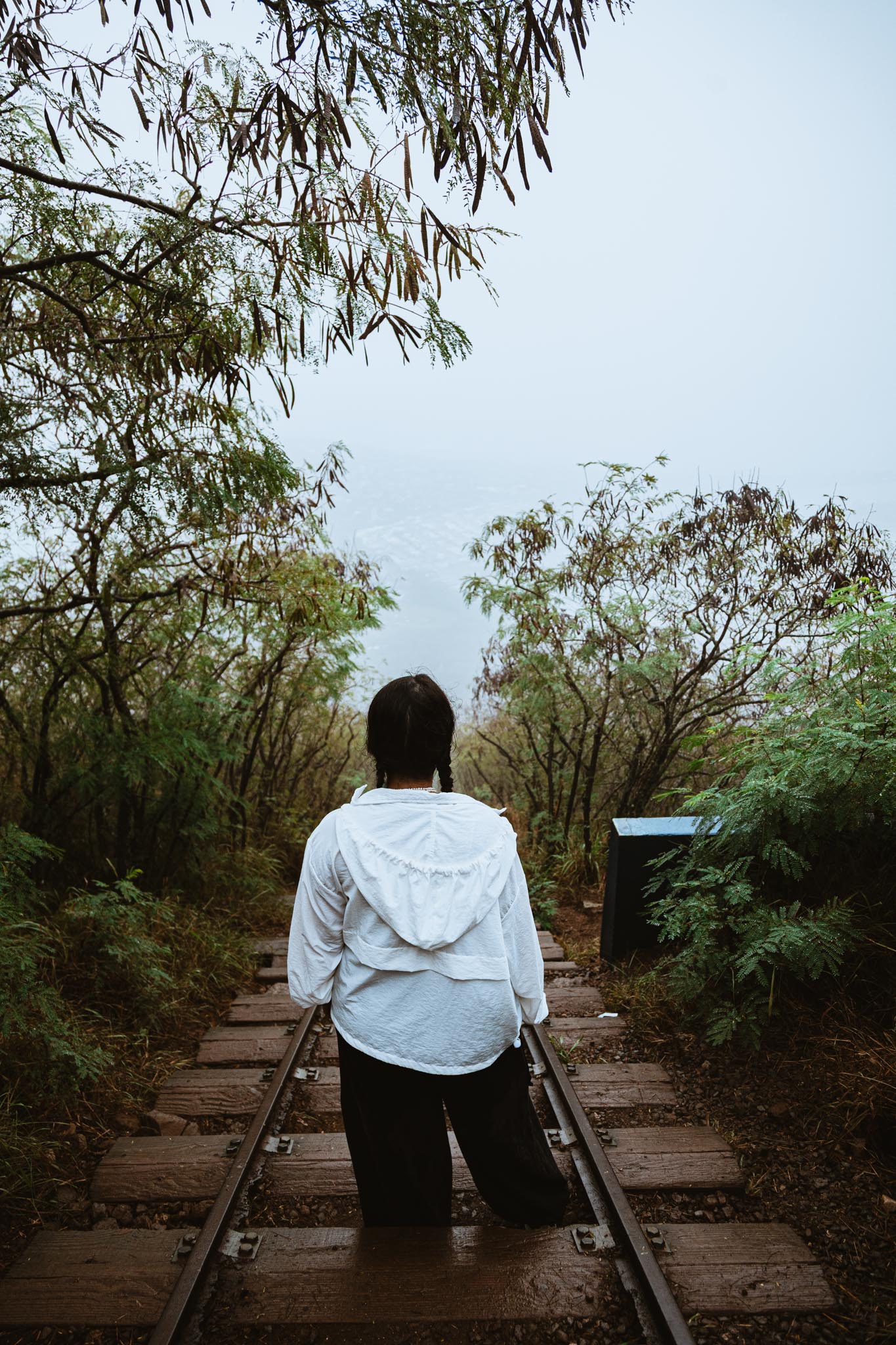
Silhouette on the fogged stairs
Under the Banana Leaves HM-01c
Quiet human moment framed in early-trip light
Under the Banana Leaves HM-01d
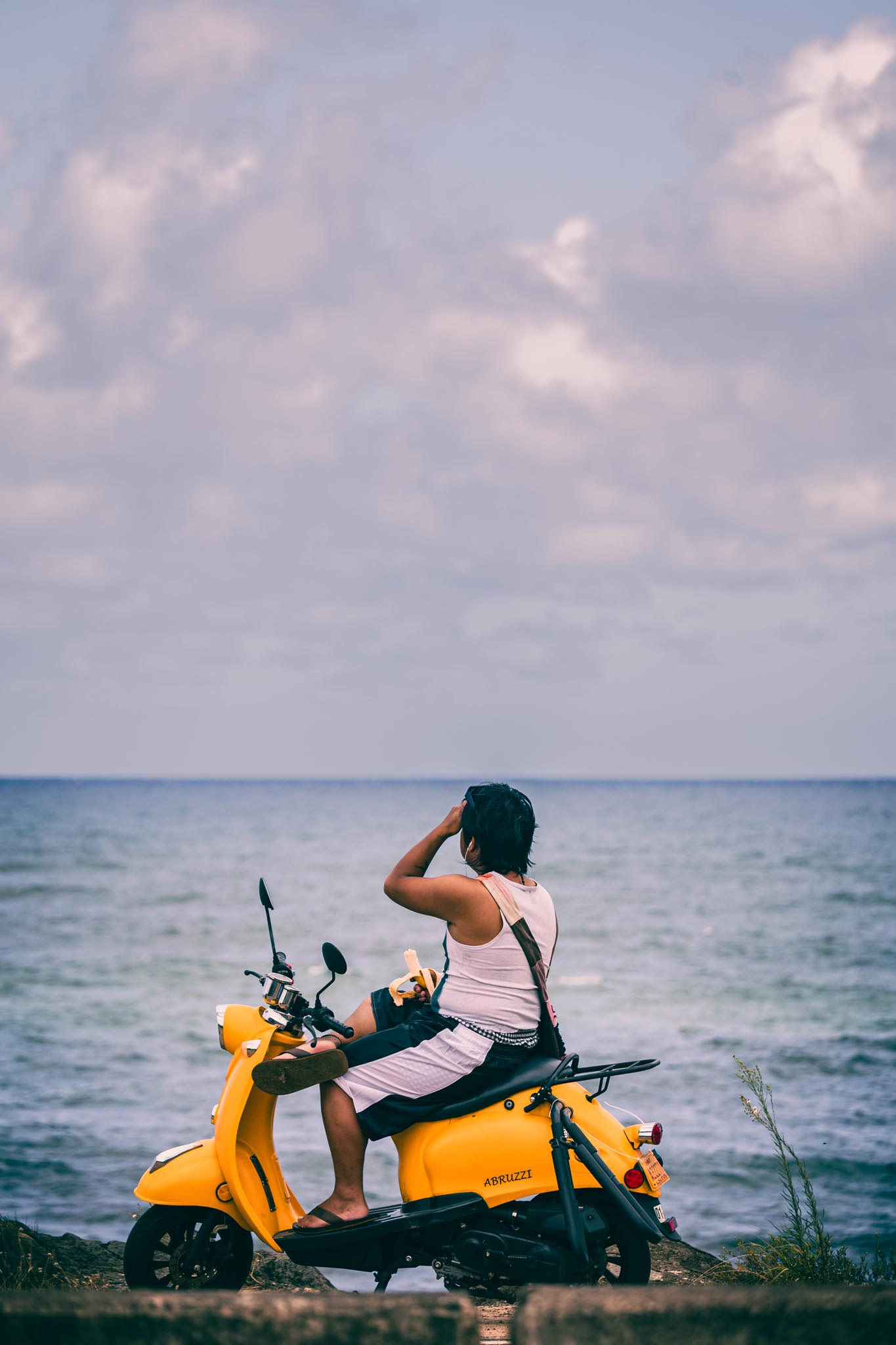
Scooter portrait near the shoreline
Under the Banana Leaves HM-01e

no archival pairing

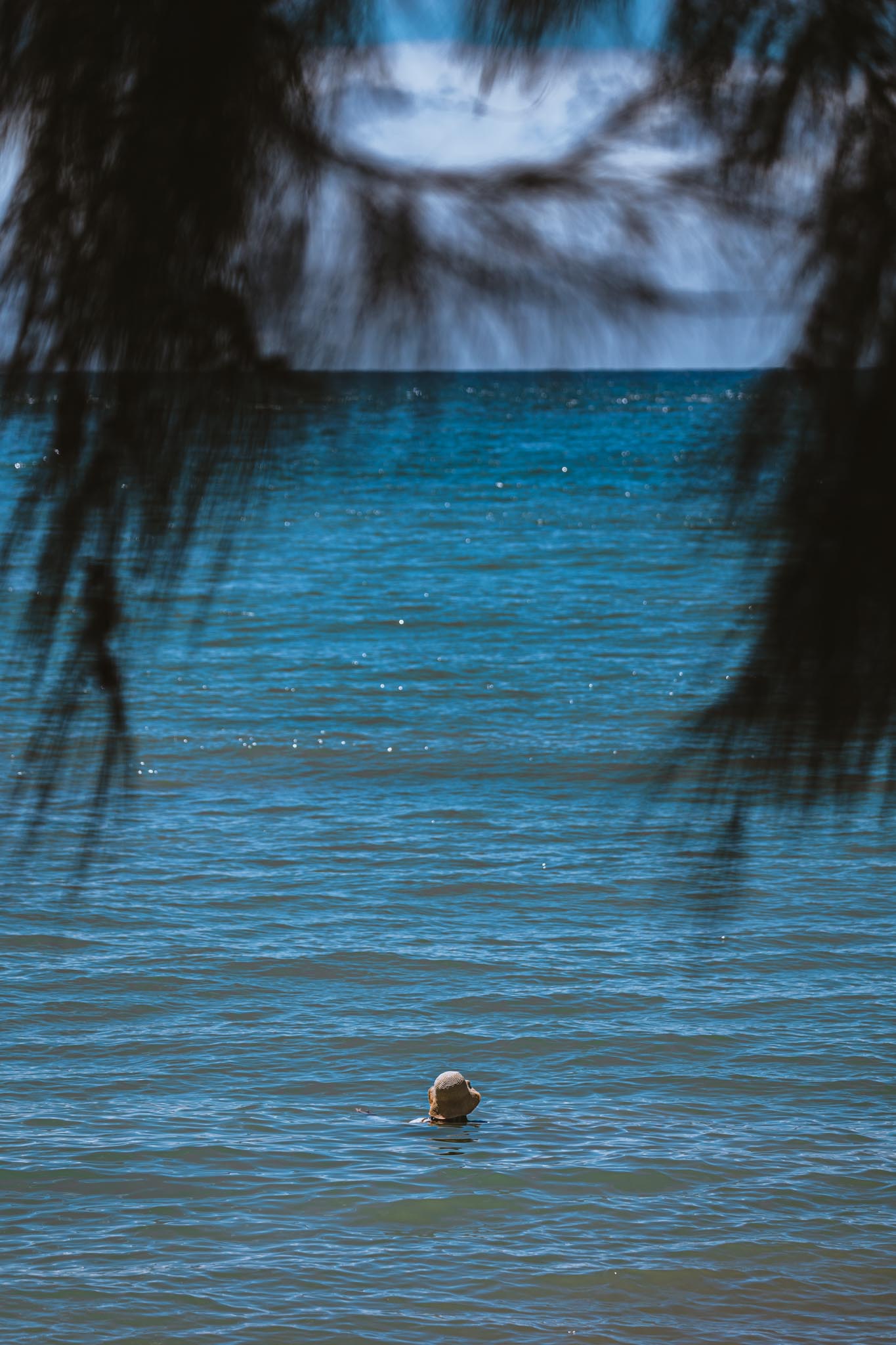
Under the Banana Leaves

No history needed here - just her, laughing, under a leaf big enough to be its own roof. The parts of the trip that don't fit any category: a hand on a shoulder, a laugh mid-sentence, the night before it becomes a memory.